





Exploring Eastern Motifs in Needlework by the Deerfield Society of Blue & White
by Jade Emilia Shum
Historic Deerfield’s Summer Fellowship Program provided a unique educational and professional experience within the confines of a summer-long session, but the skills I developed and the connections I made will last for years to come. Thanks in part to the generous support provided by the Decorative Arts Trust, I was able to broaden my background in art history and archaeology into other disciplines, like material culture studies, and this interdisciplinary thinking has enhanced my research and analytical skills.
The capstone of the program is the production of an article-length research paper. I was drawn to the Deerfield Art and Crafts movement, specifically the Deerfield Society of Blue & White Needlework—which pulled from the Arts and Crafts movement (1896–1920) as well as the Colonial Revival (1870s–1930s)—as a way to investigate how its practitioners crafted an impression of early America within an embroidered language of motifs, particularly with the usage of non-Western European motifs. In 1896, the Blue & White Society was created by Ellen Miller and Margaret Whiting with a goal of reviving the craft of early Colonial American crewel work. Their goal was to renew skills lost in an industrialized United States by taking inspiration from surviving Colonial examples in the neighboring Memorial Hall Museum’s collection. Although much of their own surviving documentation (i.e., pamphlets, personal correspondence, and or articles) emphasized these crafts and themselves to be “of old Yankee stock,” their use of Oriental motifs was a prominent and recognized element to their work.1
As a foundational text informing my analysis, I looked to Edward Said’s Orientalism (1978), which foundationally explains the imagined Near/Far “East” against the White European “West.” More recently, Anne Anlin Cheng’s “Ornamentalism” (2018), argues that the “Yellow body” is recalled through inorganic, decorative objects like fine Chinese porcelain and its many blue-and-white imitators.2 Focusing on The Peacock (1908) by Ellen Miller (figure 1), my paper sought to reexamine these themes more closely, not just to re-orient the archive but to compare their other embroidered works to surviving written records by Society members and by their peers.
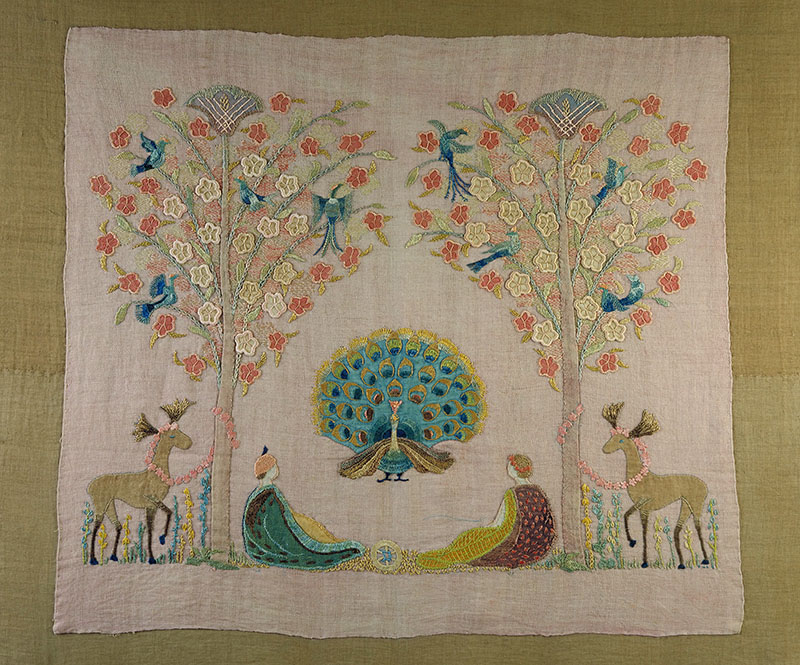
Figure 1. Ellen Miller, 𝘛𝘩𝘦 𝘗𝘦𝘢𝘤𝘰𝘤𝘬, 1908, Screen Panel, Memorial Hall Museum.
Although it is well known that the Blue & White Society’s design sensibilities and interests echoed those of the Arts & Crafts Movement and Colonial Revival, I believe that their evocation of an imagined Orient is significantly overlooked. Their needlework built upon the popular, nostalgic, and romantic narrative of Colonial America at the turn of the 20th century, the inclusion of Oriental motifs revealed the creation mythology of the United States. However, their work (like their ancestors’ handicrafts) was English but not quite. It conjured the gravitas of an “ancient culture” while avoiding the configuration of “backwardness” by removing the original cultural context and inserting them into the medium of American needlework. The Blue & White Society’s appropriation of the Orient served the fashionable tastes of early-20th-century Anglo-Saxon Protestant sensibilities. While revealing the complexity of American art movements that expressed admiration of Asiatic and Eastern cultures, the makers simultaneously misrepresented said cultural references as the dominant colonial authority. The purpose of investigating Orientalist imaginings within these kinds of art societies and movements is not to qualify the Blue & White Society’s use of Oriental motifs as either good or bad, but rather to question the ways in which the Colonial America mythos is imagined, particularly as this type of nostalgia often came with anti-immigrant and pro-nationalistic sentiment.
An example of the arts and material culture similarly chronicling the use of Oriental motifs by European artists is in Orientalism: Between Fact and Fantasy, The Metropolitan Museum of Art’s current exhibition, which juxtaposes the appropriated and imagined visual culture to their original Near Eastern contexts. In comparison, only a few years before, The Met exhibited China: Into the Looking Glass, which primarily relied on Orientalist appropriations and imaginations across centuries of Euro-American visual culture, spurring Anne Anlin Cheng to write “Ornamentalism” and inspired my own interest in the subject.
The best part of Historic Deerfield’s Summer Fellowship Program was the extent it encouraged curiosity and exploration, whether it be in our research goals or the many opportunities provided for us to meet people of all museum and collections backgrounds.
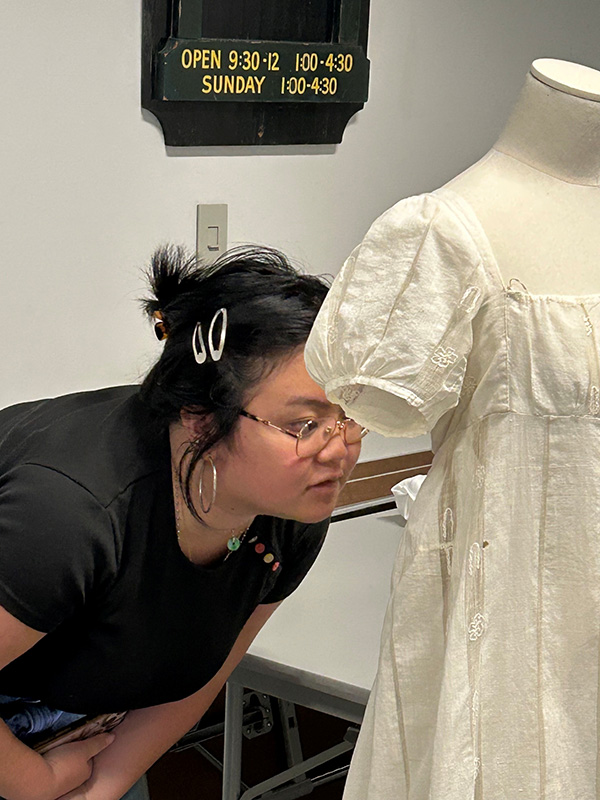
Figure 2. Close examination of an early-19th-century chemise.
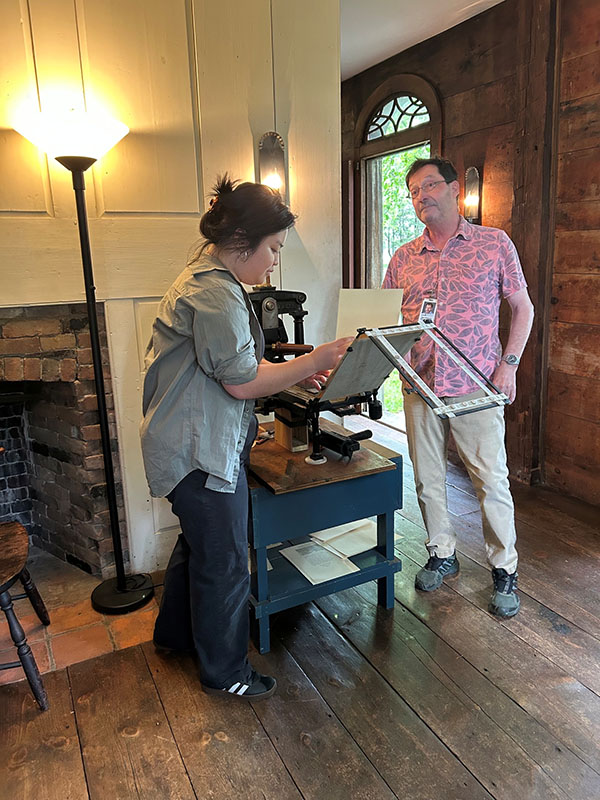
Figure 3. Hands-on at the printmaking shop of Historic Deerfield.
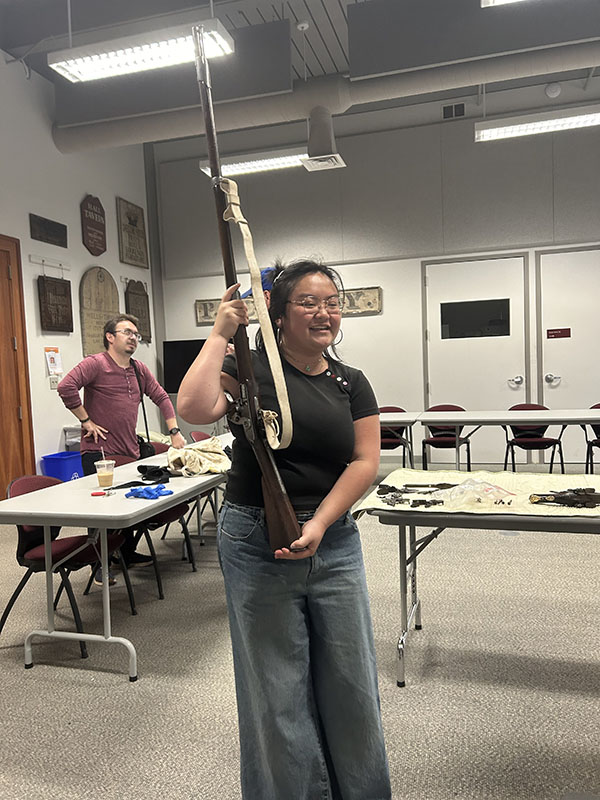
Figure 4. Excitedly holding a musket after an arms and ammunition class.
Between the behind-the-scenes tours at the Concord Museum or the Portsmouth Atheneum, or the house tours across Plymouth, I learned a great deal about cultural institutions and the many types of jobs people could hold in the field in addition to studying the incredible artifacts we were able to see, touch, and experience.
1. G & C, Sep. 16, 1899 (quoted from Springfield Republican, Sep 11, 1899), Reprinted in Flynt, Suzanne, Poetry to the Earth, 34. Whiting, Margaret, “Notes on Village Industries and the Deerfield Society of Blue and White Needlework,” 1901.
2. Anne Anlin Cheng, “Ornamentalism: A Feminist Theory for the Yellow Woman,” Critical Inquiry 44 (2018): 415-446. https://doi.org/10.1086/696921.
Jade E. Shum is a recent graduate of the University of Massachusetts, Amherst. She will be at Kilts Farm in Upstate NY this coming Spring as a Collections Intern and Historic Trades Workshop Assistant.
About The Decorative Arts Trust Bulletin
Formerly known as the "blog,” the Bulletin features new research and scholarship, travelogues, book reviews, and museum and gallery exhibitions. The Bulletin complements The Magazine of the Decorative Arts Trust, our biannual members publication.
Click Images to Enlarge
Did you know that clicking on the images in Bulletin posts will allow you to get a closer look? Simply click on an image, and a larger version will open in a pop-up window.