






Historic Wallpapers of the Cousins Apartment at Strawbery Banke Museum
by Elizabeth Farish
The Penhallow-Cousins House in the Puddle Dock neighborhood of Portsmouth, NH, is overseen by Strawbery Banke Museum, the recipient of a 2026 Decorative Arts Trust Failey Grant. Built c. 1750 by Samuel Penhallow, a respected magistrate and deacon of the North Church, the house originally stood at the southeast corner of Court and Pleasant Streets. In 1862, the building was moved about a quarter mile to its current location at 91 Washington Street and was converted into multi-family housing. By the 1930s, Puddle Dock was a multiethnic neighborhood. Starting in the 2010s, Strawbery Banke embarked on a major restoration and reinterpretation of the house, exploring Black family life in New England during the 1930s and 1940s. The exhibit draws on archaeological research and oral history from Geraldine “Jeri” Cousins Palmer, who lived in the house as a child with her parents Kenneth and Eleanor from 1937–43. The Cousinses’ apartment opened April 24, 2026, as a new exhibition to visitors. As part of the effort to restore the family’s home, five historic wallpapers were reproduced.
There were many layers of wallpaper extant on the Penhallow-Cousins House walls, some dating to the 18th century. While taking samples of each paper for the archive, experts, including renowned wallpaper expert and Historic New England curator emeritus, Richard Nylander, determined which paper would fit the period of interpretation in each room. Papers from the period were influenced by nature, the fading Art Nouveau and Art Deco movements, the geometric patterns that were soon to come, and the Colonial Revival movement. Each of these papers have been reproduced by Waterhouse Wallhangings.
In the parlor, the best room in the house, hung a deep pink floral paper (figure 1). In the Cousinses’ kitchen, visitors will see a more geometric paper featuring a green trellis print that provides a backdrop for an ivy leaf and tea service motif (figure 2). This style of kitchen paper remained popular into the 1950s as evidenced in other Strawbery Banke exhibits, like the kitchen paper in the Abbott House and Store, which was built in the 1720s and the museum now interprets it to the World War II period.
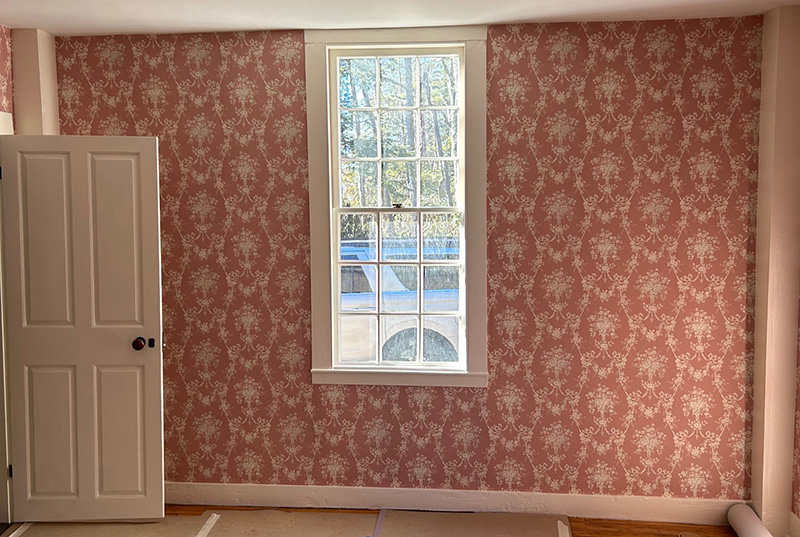
Figure 1. Pink floral paper in the parlor.
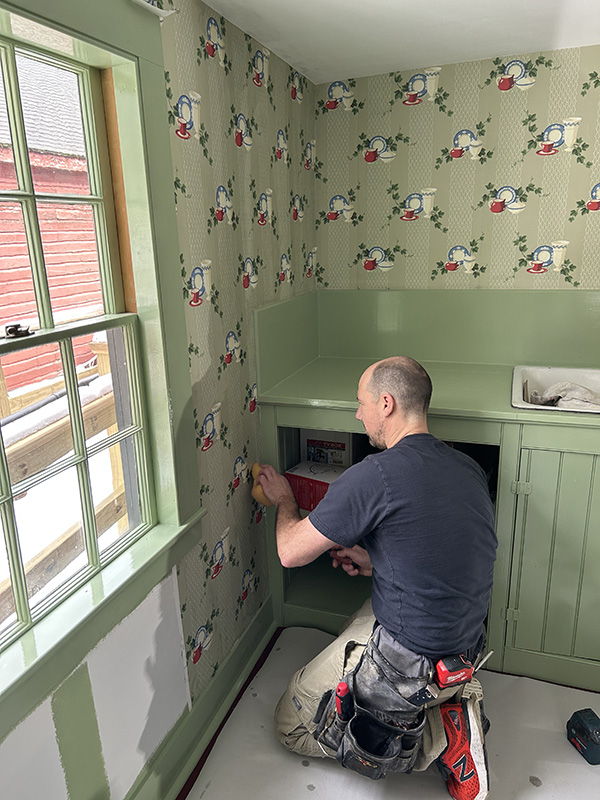
Figure 2. Paul Simpson of Coastal Wall Coverings installs the kitchen paper in the newly created kitchen in the Cousinses’ apartment. Courtesy Strawbery Banke Museum.
In the hallway, we found a ubiquitous Colonial Revival scenic paper (figure 3) featuring a man tipping his hat to a lady in front of a Colonial-style house, a tall ship, and a horse and carriage. These images appear on a beige field in muted tones.
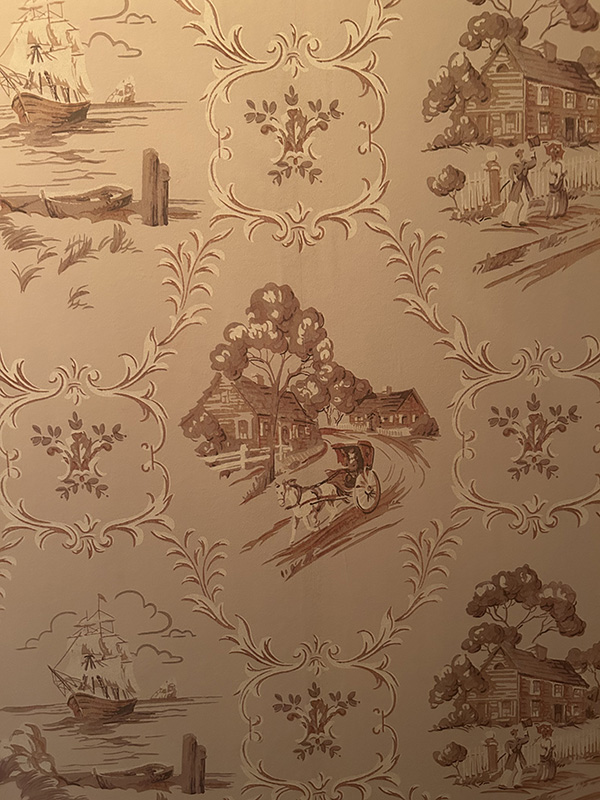
Figure 3. Colonial Revival scenic paper in the hallway.
Each of the two bedrooms upstairs boast a floral paper. In Eleanor and Kenneth’s room, a gray field bursts with bright bouquets of pink, yellow, and blue flowers (figures 4 and 5).
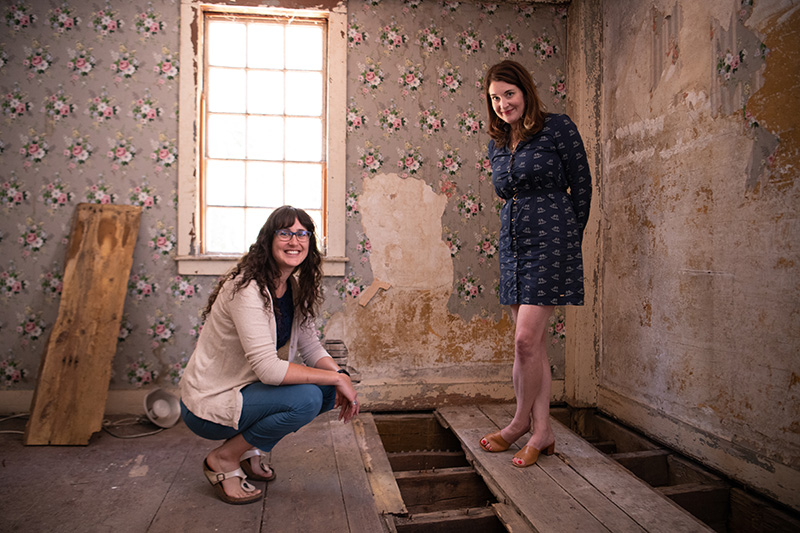
Figure 4. Archaeologist Alix Martin (left) and Curator Elizabeth Farish (right) in a second-floor bedroom before restoration. Photo courtesy David J. Murray/ClearEyePhoto.com.
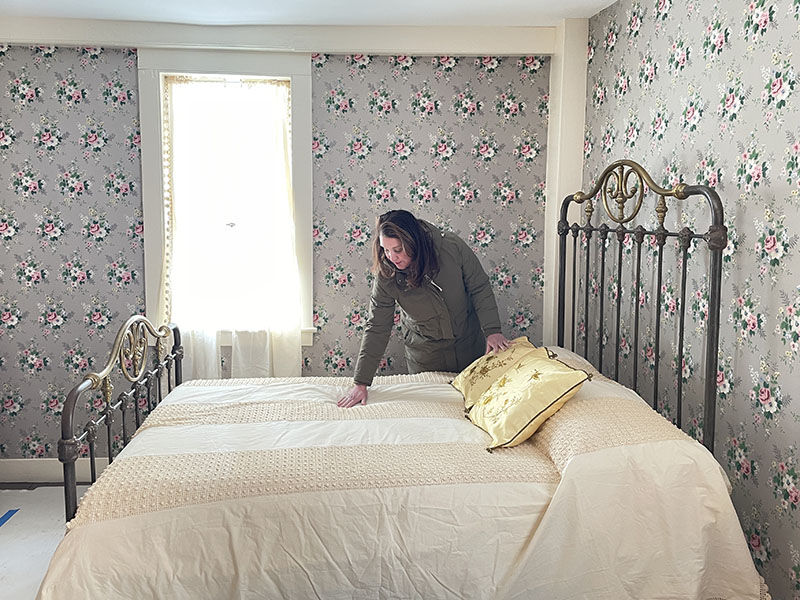
Figure 5. Curator Elizabeth Farish in the newly papered second floor bedroom. Courtesy Strawbery Banke Museum.
In the smaller bedroom, where Jeri slept, a sweet blue rosebud pattern adorns the walls.
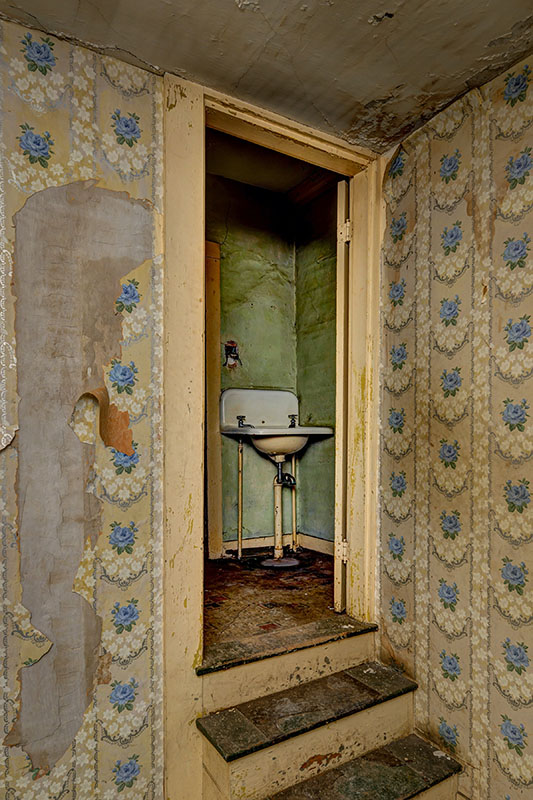
Figure 6. A view from Jeri’s bedroom up into the bathroom before restoration. Courtesy David J. Murray/ClearEyePhoto.com.
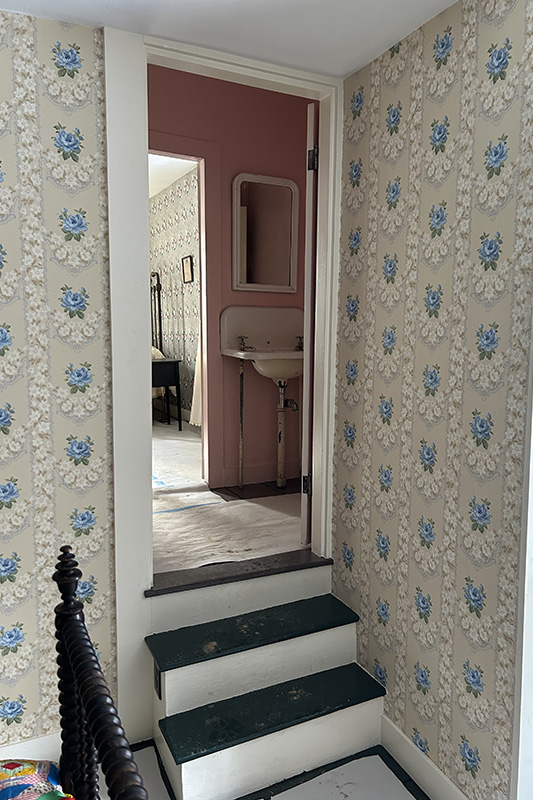
Figure 7. A view from Jeri’s bedroom up into the bathroom after restoration. Courtesy Strawbery Banke Museum.
We don’t know if these wallpapers were chosen by the Cousinses or by their landlord. We do know that changing or updating wallpapers had become common practice in the 20th century. The Industrial Revolution had a big impact on the mass production of wallpapers. They became much less expensive when mass produced, allowing people from most socioeconomic backgrounds to access them, enabling them to update their living space.
The new exhibit centers on the life of Jeri and her family. Her remembrances, captured through oral histories and family photos collected by Chief Curator Elizabeth Farish and The Black Heritage Trail of NH, provide a window into her waterfront childhood, domestic life in the 1930s, and the diversity of the Puddle Dock neighborhood. Typical of many growing up in a maritime community, she recalls fishing with her grandfather, eating the fresh catch prepared by her mother, and swimming in the river with neighborhood children. The recreated kitchen, featuring checkered linoleum floors and an ice box, evokes Jeri’s experiences of watching her mother cook fish and pies.
Examples of dishware found during the archaeological dig will be on display including Dudson Brothers stoneware and Carnival glass. Diffusing cooking scents enhance the memories of our visitors. The exhibit also centers on the strength of the local Black community. Jeri’s family and friends intentionally built ties and celebrated Black culture. In addition to the generous support of the Decorative Arts Trust’s Dean F. Failey Grant, the exhibit and restoration of the Penhallow-Cousins House was also partially supported by the National Endowment for the Humanities, New Hampshire’s Land and Community Heritage Investment Program, and many other generous supporters.
See Strawbery Banke’s website for more information on how to visit the newly restored Penhallow-Cousins House and to view an exhibition about the Cousins family.
Elizabeth Farish is Strawbery Banke’s Chief Curator.
About The Decorative Arts Trust Bulletin
Formerly known as the "blog,” the Bulletin features new research and scholarship, travelogues, book reviews, and museum and gallery exhibitions. The Bulletin complements The Magazine of the Decorative Arts Trust, our biannual members publication.
Click Images to Enlarge
Did you know that clicking on the images in Bulletin posts will allow you to get a closer look? Simply click on an image, and a larger version will open in a pop-up window.