






Examining 16th-Century Altar Tapestries
by Julia LaPlaca
With the support of a Decorative Arts Trust Research Grant, I spent a week in New York City conducting research for my dissertation titled Woven Flesh, Woven Stone: The Affordances of Tapestries in Altar Environments, 1350–1580. During this tremendously productive trip I was able to practice close looking and document details that I could not have seen in reproductions. I viewed six tapestries across the collections held at the Metropolitan Museum of Art and its northern outpost of Medieval art, the Cloisters.
This access gave me essential data for my dissertation, which examines tapestries made to adorn altars across transalpine Europe. Altar tapestries are smaller than their more famous wall-sized counterparts and generally depict religious images. They have complex manufacturing histories and a multi-functionality that make them rich subjects for deeper theoretical investigations. Specifically, I consider how altar tapestries worked reflexively as “meta” objects that draw attention to their medium and material in addition to their woven narratives.
I was privileged to study Scenes from the Life of the Virgin Mary (57.126, figure 1) before opening hours at the Cloisters. The staff graciously moved furniture away from the tapestry and provided a ladder and high quality movable lights so I could take detailed pictures. Images of tapestries from museum websites are often suitable for overall views but not details that capture the weaving technique. I greatly benefitted from examining the tapestry with one of The Met’s textile conservators, Kisook Suh, who helped me answer technical and materiality questions. For example, we determined that the fascinating detail of a sudarium (figure 2), also known as the “Veronica veil” at the top of the tapestry, was woven with silk. A revered religious image in the Medieval and early Modern period, the sudarium is the cloth used to wipe Christ’s face during his passion that was miraculously imprinted with an image of his face. In my dissertation, I will explore how the sudarium functions as a “meta-textile,” particularly when viewed on an altar.

Figure 1. 𝘚𝘤𝘦𝘯𝘦𝘴 𝘧𝘳𝘰𝘮 𝘵𝘩𝘦 𝘓𝘪𝘧𝘦 𝘰𝘧 𝘵𝘩𝘦 𝘝𝘪𝘳𝘨𝘪𝘯, c. 1500, Strasbourg, Alsace, present-day France. Linen warp; wool, linen, silk, silver, and gilt wefts; wool pile yarns. The Cloisters at The Metropolitan Museum of Art, Gift of Charles F. Iklé, 1957, 57.126.

Figure 2. 𝘚𝘤𝘦𝘯𝘦𝘴 𝘧𝘳𝘰𝘮 𝘵𝘩𝘦 𝘓𝘪𝘧𝘦 𝘰𝘧 𝘵𝘩𝘦 𝘝𝘪𝘳𝘨𝘪𝘯 (detail showing the sudarium).
I also had a study session at the Antonio Ratti Textile Center and Reference Library with Kisook and curators Dr. Shirin Fozi, the Paul and Jill Ruddock Associate Curator of Medieval Art and the Cloisters, and Dr. Elizabeth Cleland, the Curator of European Sculpture and Decorative Arts. This was an incredible opportunity to learn from textile specialists in real time. Among these tapestries, the Dalmatic with a Sudarium (54.176.1, figures 3 and 4) will feature in my second chapter on meta textiles. This is an unusual example of a liturgical tapestry garment. The weave mimics the effects of a brocaded velvet. The dalmatic also incorporates a sudarium, embroidered onto the woven matrix.

Figure 3. 𝘋𝘢𝘭𝘮𝘢𝘵𝘪𝘤 𝘸𝘪𝘵𝘩 𝘵𝘩𝘦 𝘚𝘶𝘥𝘢𝘳𝘪𝘶𝘮, 1570, Netherlands, probably Gouda. Wool, silk, linen. The Metropolitan Museum of Art, Rogers Fund, 1954, 54.176.1.
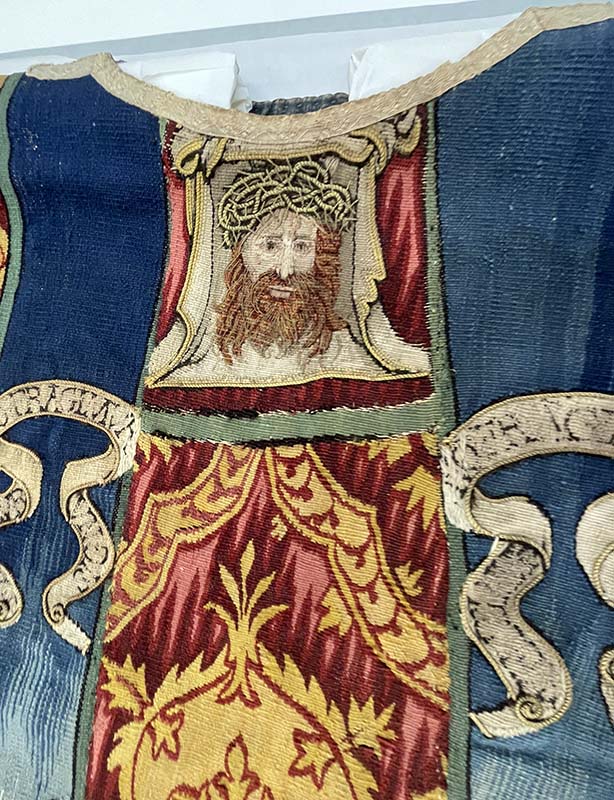
Figure 4. 𝘋𝘢𝘭𝘮𝘢𝘵𝘪𝘤 𝘸𝘪𝘵𝘩 𝘵𝘩𝘦 𝘚𝘶𝘥𝘢𝘳𝘪𝘶𝘮 (detail), 1570, Netherlands, probably Gouda. Wool, silk, linen. The Metropolitan Museum of Art, Rogers Fund, 1954, 54.176.1.
I am interested in how textiles like the dalmatic uses one technique (the tapestry weave) to achieve the effects of a totally different kind of textile (brocade). The dalmatic raises intriguing questions about how “faux” or “imitative” textile designs were used and perceived. Were such textiles made to trick the eye or prompt appreciation of the weaver’s art? I plan to pursue these questions in my dissertation and have been accepted to share some of my work on this topic in a panel at the next International Congress of Medieval Studies (May 2026).
At the Ratti Center, I was able to analyze three other altar tapestries in the Met’s collection. This was an important opportunity, because it’s rare to be able to examine and compare multiple tapestries at the same time. All three were woven in the Southern Netherlands circa 1500 but have startlingly different styles. This shows how quickly tapestry design tastes changed between the late fifteenth and early sixteenth-century. Comparing the tapestries was also a great lesson in the fascinating history of tapestry conservation. We speculated about what is original and what represents re-weaving from a later restoration. Doing this close looking, in person, allowed me to learn and absorb information in a quicker, more memorable and tangible way than I could have through reproductions.
Julia LaPlaca is PhD candidate in the History of Art department at the University of Michigan.
About The Decorative Arts Trust Bulletin
Formerly known as the "blog,” the Bulletin features new research and scholarship, travelogues, book reviews, and museum and gallery exhibitions. The Bulletin complements The Magazine of the Decorative Arts Trust, our biannual members publication.
Click Images to Enlarge
Did you know that clicking on the images in Bulletin posts will allow you to get a closer look? Simply click on an image, and a larger version will open in a pop-up window.