






Imagining the Roanoke: Waterways and the Making of Identity in Eastern North Carolina
by Blaine Howard
The William C. and Susan S. Mariner Fellowship for Emerging Museum Professionals, sponsored by the Decorative Arts Trust, provided me with the invaluable opportunity to participate in the Summer Institute at the Museum of Early Southern Decorative Arts (MESDA). This experience significantly advanced my understanding of material culture while contributing meaningfully to my professional development. Through lectures, object-based research, field studies, and interactions with renowned scholars, Summer Institute sharpened both my methodological approach and my perspective on the field of decorative arts.
One of the most transformative aspects of the program was its emphasis on object-centered research. We were assigned objects at random from MESDA’s collection, which pushed me out of my comfort zone and encouraged me to engage with an unfamiliar form. My research focused on an early-19th-century North Carolina fireboard (figure 1) and explored how its imagery reflected the commercial identity and aspirations of communities along the Roanoke River.
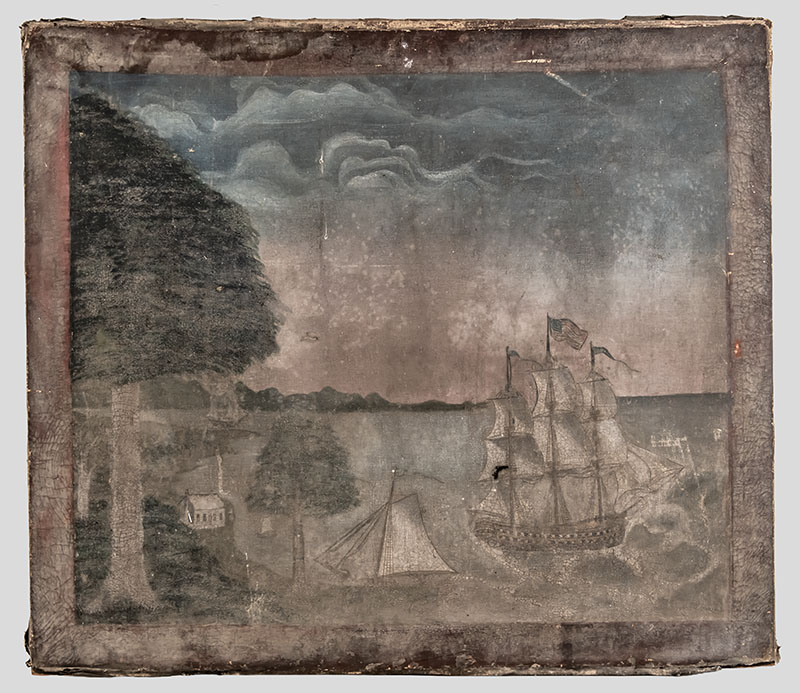
Figure 1. Fireboard, 1780–1850, Tillery, NC. Canvas, paint, yellow pine. MESDA Purchase Fund, 4964. Collection of the Museum of Early Southern Decorative Arts (MESDA).
One of the challenges, and pleasures, of working with material culture is that objects rarely arrive with complete histories. We do not know who created the fireboard nor who owned it. Its broad date range, 1780–1850, reflects these uncertainties. Time has also obscured the image itself. Abrasion, discoloration, and surface wear make many details difficult to discern.
Although much of its history has been lost, the object itself retains traces of the people who made and used it. The object depicts a carefully crafted visual statement depicting an idealized, populated landscape reflecting a livelihood shaped by waterways, labor, and movement. Its patriotic symbolism connects that local experience to a broader American narrative. The object reveals how 19th-century Eastern North Carolinians understood themselves through both regional and national identities.
A broad rust-colored painted border surrounds the landscape, and the composition is dominated by a large sailing vessel carrying an American flag. Smaller vessels occupy the surrounding waters, while trees, a shoreline structure, and distant landforms complete the scene. Under black light, additional figures and features emerge from the composition. What initially appears to be a relatively simple maritime scene is actually a populated landscape. An additional large, two-masted vessel emerges from the far left, and silhouetted figures fish from a sailboat. A path connects the structure to the water’s edge, flowers emerge from the foreground vegetation, and a horse alongside farming equipment is revealed at the bottom. The composition is not simply about vessels, but the people whose lives were organized around them.
Fragments of newspapers survive on the reverse (figure 2), likely added as insulation, or perhaps as protection from pests. Through keyword analysis, portions of the backing paper can be identified as The Raleigh Daily News, published in Raleigh, NC, between 1872 and 1880. Other sections of the newsprint are from The Roanoke News, a Weldon, NC, publication issued from 1878 to 1922.1 This discovery is significant because it geographically anchors the fireboard in Halifax County, along the Roanoke River. Although this evidence cannot conclusively prove where the fireboard was painted, it strongly suggests that the object remained within Halifax County for a considerable portion of its life. This regional connection matters because both the form and content of the fireboard appear distinctly North Carolinian.
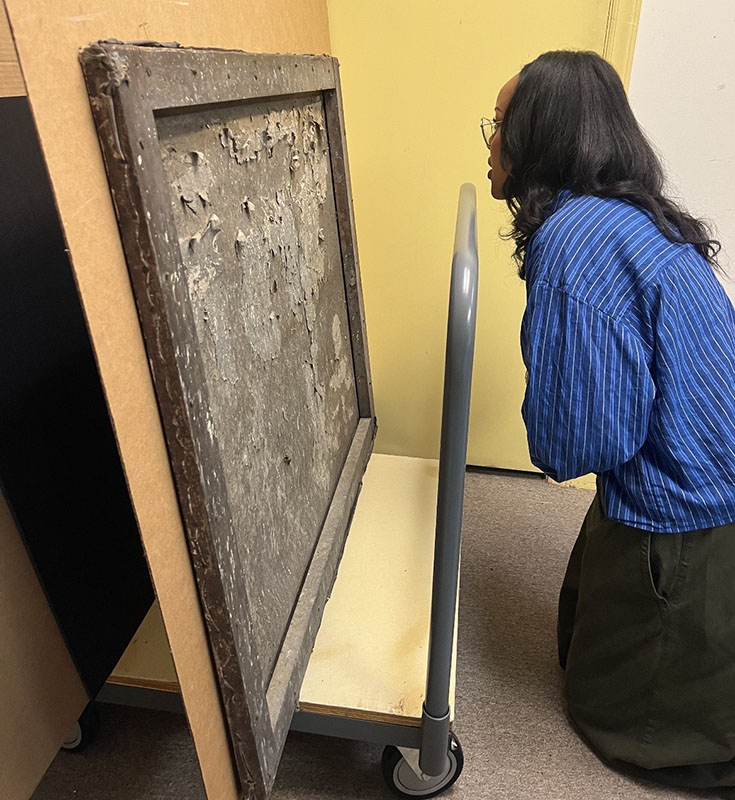
Figure 2. The author studying newspaper fragments on the reverse of the fireboard.
Although quite different at first glance, a fireboard (figure 3) associated with Enfield, NC, approximately ten miles west of Tillery, shares several notable characteristics with MESDA’s object. It features trompe l’oeil framing, a maritime landscape, and compositional elements that organize the scene around a dominant foregrounded feature. Both objects combine landscape with symbolism, and both appear less concerned with documenting a specific place than with evoking a particular relationship between people and waterways. The similarities are striking enough to suggest a shared regional artistic tradition, or perhaps a common artistic circle.
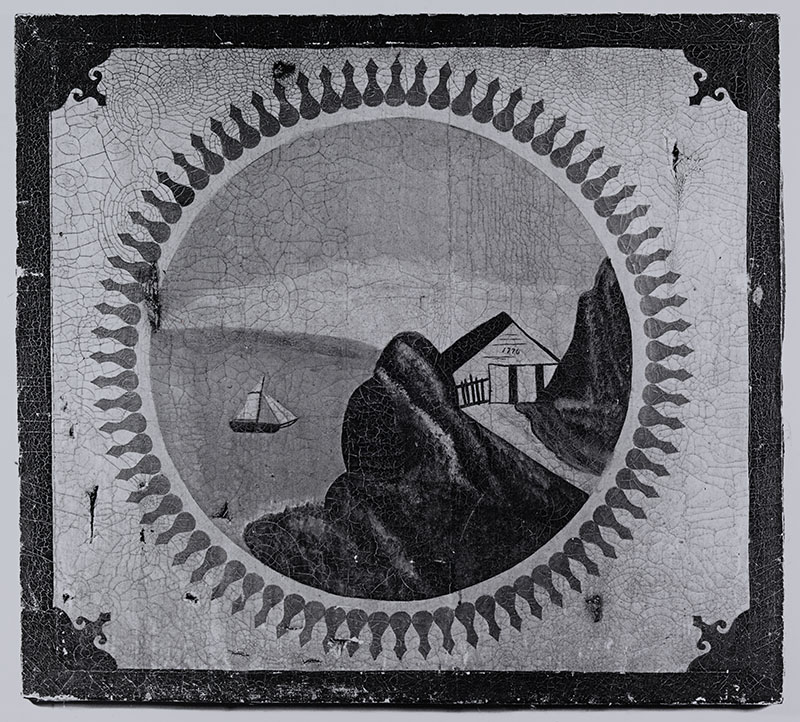
Figure 3. Photo of fireboard, 1800–60, Enfield, NC, unknown artist. Private Collection. MESDA Object Database Files S-29323.
A second comparison (figure 4) comes from another painting associated with Tillery. Again, we encounter a prominent foregrounded element, structures appear along a shoreline, and figures interact with waterways. Perhaps an itinerant ornamental painter created these works in succession, traveling between Weldon, Tillery, and Enfield. Considered together, these objects suggest that eastern North Carolinians repeatedly chose to decorate their interiors with idealized scenes that represented the waterways with which they interacted.
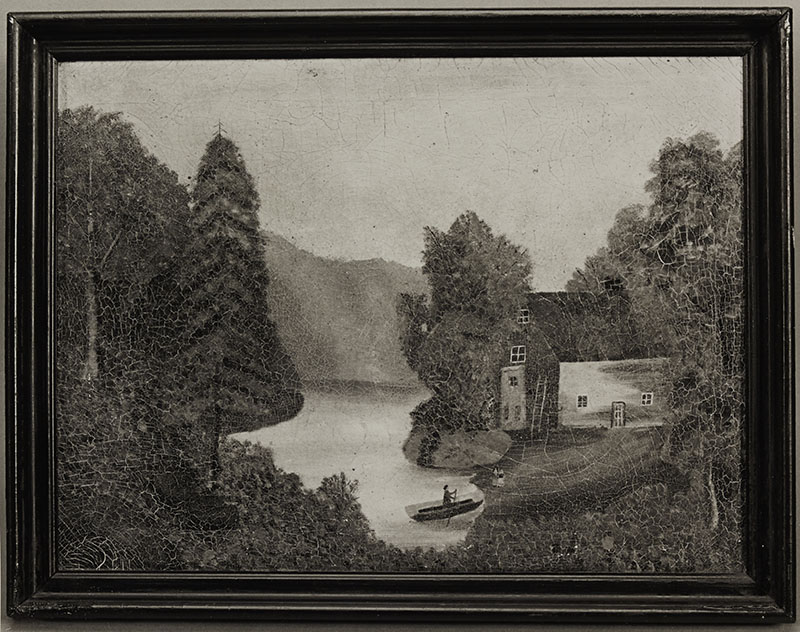
Figure 4. Photo of painting from 1800–60, Tillery, NC, unknown artist. Private Collection. MESDA Object Database Files S-29616.
The most prominent vessel in MESDA’s fireboard is a little different from those depicted in the other Halifax County landscapes. One of the principal ways contemporaries distinguished warships from merchant vessels was by the quantity of gun ports, the openings along the hull through which cannons projected. The artist appears to have emphasized this characteristic, with a staggering 33-gun ports, suggesting that the ship was intended to be read as a warship.2 Such a ship almost certainly could not have traveled as far inland as Tillery, or anywhere in Halifax County. Although smaller craft regularly navigated the Roanoke River, a vessel of this scale could likely have proceeded no farther inland than Plymouth, in Washington County. For that reason, I do not believe the painting represents a literal view of Halifax County. Instead, the image appears idealized, in which accuracy is secondary to symbolism.
The flag may provide an important clue to what the painter and patron intended the vessel to symbolize. The flag’s design transforms the ship from a generic warship into an American one. Preceding the call for American Independence, Halifax emerged as the political heartbeat of Revolutionary North Carolina. It was here that the Fourth Provincial Congress convened to adopt the Halifax Resolves on April 12, 1776, an act that unanimously instructed the colony’s delegates to support independence from Great Britain.3 This legacy of being “first in freedom,” the catalyst for North Carolina becoming the first state to formally support independence, remains a defining element of regional identity.4 Halifax’s role in this pivotal moment was not incidental. Its status as a regional political and commercial center along the Roanoke River provided the essential infrastructure and connectivity required for political coordination during the revolutionary crisis.5
Working with limited archival documentation challenged me to rely on close visual analysis and material evidence, reinforcing the importance of allowing the object itself to guide historical interpretation. Summer Institute’s resources, faculty mentorship, and access to MESDA’s collections enabled me to develop an argument that would not have been possible through the written record alone. This experience introduced me to research methodologies that I will continue to apply in my graduate studies and future museum work (figure 5).
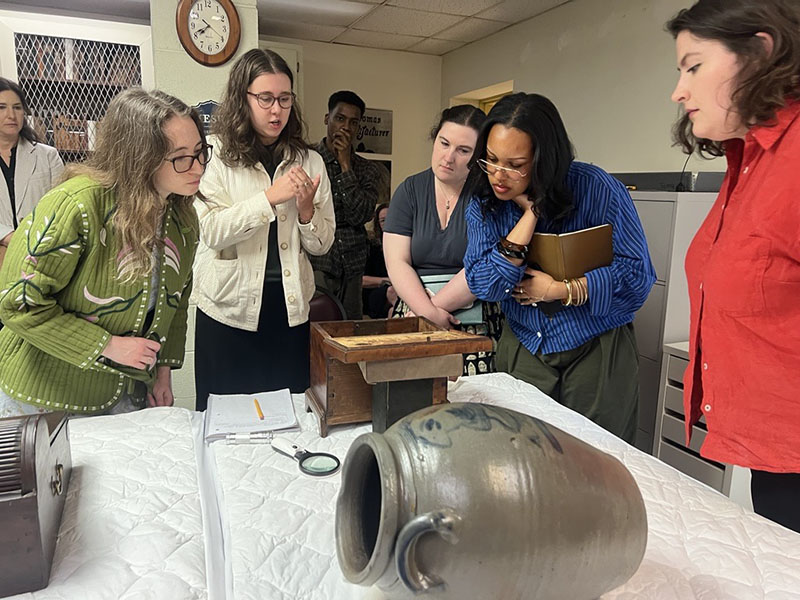
Figure 5. Discussing the material, construction, and history of a fellow’s object during a collaborative analysis session.
Equally impactful were the professional connections fostered throughout the program. Studying material culture alongside a diverse cohort of scholars and museum professionals from different backgrounds created an environment of collaboration and shared learning. This environment expanded my network and introduced me to a wide range of perspective and expertise within the field (figure 6). Preparing and delivering a public lecture at the conclusion of Summer Institute also strengthened my confidence as a researcher and communicator.

Figure 6. Left to right: Tiffany Momon, PhD (Director, Center for Historic Preservation, Middle Tennessee State University), the author, and Torren Gatson, PhD (Associate Director of the Center for Historic Preservation and Associate Professor in the Department of History at Middle Tennessee State University).
I am sincerely grateful to the Mariners and to the Decorative Arts Trust for making this opportunity possible. The fellowship not only enhanced my knowledge of material culture and object-based scholarship but also strengthened my commitment to a career in public history and museum work. I look forward to applying the skills and professional relationships developed through the MESDA Summer Institute throughout my graduate education and beyond.
- The Raleigh News (Raleigh, NC), 1872–1880, Newspapers.com; The Roanoke News (Weldon, NC), 1878–1922, Newspapers.com.
- David R. MacGregor, Merchant Sailing Ships, 1815–1850 (Annapolis, MD: Naval Institute Press, 1984); William N. Still Jr. and Richard A. Stephenson, Shipbuilding in North Carolina, 1688–1918 (Raleigh: North Carolina Office of Archives and History, 2021); Dictionary of American Naval Fighting Ships (Washington, DC: Naval History Division, Department of the Navy, 1968).
- William L. Saunders, ed., The Colonial Records of North Carolina, vol. 10 (Raleigh: P. M. Hale, Printer to the State, 1890), 512–13.
- North Carolina Department of Natural and Cultural Resources, “Revolutionary NC.”
- Historic Halifax State Historic Site, “Historic Halifax State Historic Site Hosts ‘Halifax Resolves Days: Prelude to Revolution’ on April 11–12, 2025,” March 25, 2025.
Blaine Howard is an MA student in the History department of Middle Tennessee State University.
About The Decorative Arts Trust Bulletin
Formerly known as the "blog,” the Bulletin features new research and scholarship, travelogues, book reviews, and museum and gallery exhibitions. The Bulletin complements The Magazine of the Decorative Arts Trust, our biannual members publication.
Click Images to Enlarge
Did you know that clicking on the images in Bulletin posts will allow you to get a closer look? Simply click on an image, and a larger version will open in a pop-up window.