






Frank Lloyd Wright in Japan: Decorations and Implications
by Andrea Jung-An Liu
The focus of my dissertation research in the Department of the History of Art at the University of California, Berkeley, began one summer in Yokohama, when I walked past a building with ornamentation that was unmistakably influenced by Frank Lloyd Wright. The Sōtsū Yokohama Building (figure 1), completed in 1930, features an exterior adorned with geometric terracotta tiles that clearly reference Wright’s Imperial Hotel design (1923). Although the architect of the building is unknown, this anonymity highlights the influence of Wright in 1920s and 1930s Japan. This encounter prompted a critical examination of the role of ornamentation and prevailing attitudes toward Wright’s style in Japanese architecture of the 1920s and 1930s, a period characterized by debates between functionalist aesthetics and decorative expression.

Figure 1. Entrance of the Sōtsū Yokohama Building, Yokohama.
The influence of Japanese art and culture on Frank Lloyd Wright is well known. His first encounter with Japanese design came at the 1893 Chicago World’s Fair, where he visited the Hōō-dō pavilion, a reconstruction of the 11th-century Byōdō-in. In 1905, Wright made the first of seven trips to Japan, experiences that would later inform many of his projects. His passion for Japanese prints also grew during this time: in 1906, the Art Institute of Chicago mounted Hiroshige: An Exhibition of Color Prints drawn from his collection. Reflecting later in his autobiography A Testament (1957), Wright wrote: “The ukiyo-e and the Momoyama, Japanese architecture and gardening, confirmed my own feeling for my work and delighted me, as did Japanese civilization which seemed so freshly and completely of the soil, organic.”1
To map the complex relationship between ornament, Japanese Modern architecture, and Wright’s influence, I visited two sites to conduct foundational research: the Meijimura, an open-air architecture museum in Nagoya, where Frank Lloyd Wright’s Imperial Hotel Lobby (1917–23) was relocated and restored, and the Yodoko Guest House (formerly the Yamamura Residence, 1918–24), one of the few Wright-designed residences extant in Japan. These structures are among the best-preserved surviving examples of Wright’s work in Japan, out of a total of 16 projects; other extant sites include the Jiyū Gakuen Myōnichikan in Tokyo. These visits were supported in part by a Decorative Arts Trust Research Grant.
The Yodoko Guest House (Former Yamamura Residence)
The Yodoko Guest House (figure 2) in Ashiya, Hyōgo Prefecture, was designed in 1918 and completed in 1924, overlapping with Wright’s work on the Imperial Hotel (1917–23). Like the Imperial Hotel, it was realized by Frank Lloyd Wright in collaboration with his Japanese apprentice Arata Endō. Commissioned as a villa for Tazaemon Yamamura, a prominent sake brewer, the project is said to have been facilitated by an introduction from politician Jirō Hoshijima, Yamamura’s son-in-law and a close friend of Endō since their university days. The building changed hands several times before being acquired in 1947 by the Yodogawa Steel Works, which converted the residence into a guest house. After extensive preservation work beginning in 2016, the house reopened to the public in 2019.
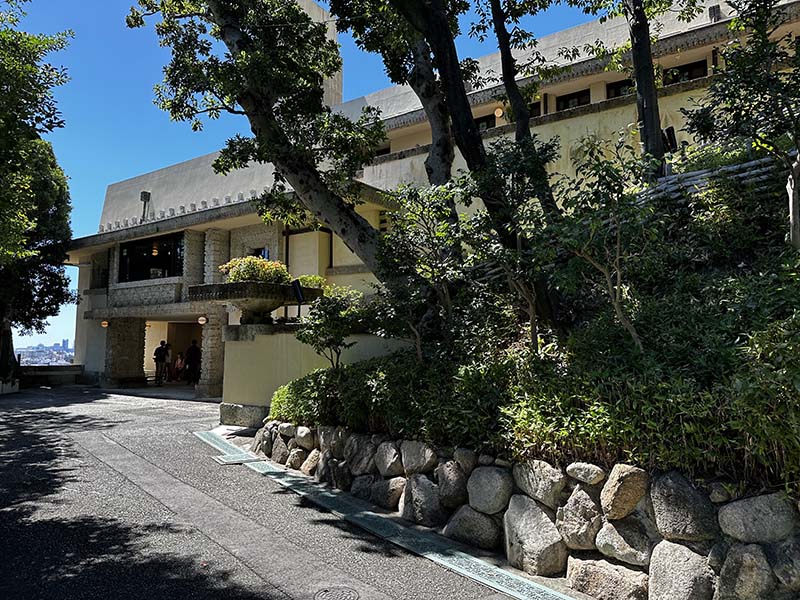
Figure 2. Entrance of the Yodoko Guest House.
Unlike the urban setting of the Imperial Hotel in Tokyo, the Yodoko Guest House is integrated into the landscape (figures 3 and 4)—a setting related to Wright’s later work, such as Fallingwater (1936). Although the building is essentially four stories high, its floors are staggered in a terraced arrangement that follows the slope of the land. As a result, in any given cross-section, the structure appears only one or two stories tall. This use of the natural topography exemplifies Wright’s architectural philosophy of harmonizing land and building as an integrated whole.

Figure 3. Entrance of the Yodoko Guest House.

Figure 4. Yodoko Guest House from across the Ashiya River.
The intricate ornamentation of the local residence bears a strong resemblance to Wright’s contemporaneous Los Angeles textile block houses. For example, similar decorative carvings appear in Hollyhock House (1921) and the Yodoko Guest House, but instead of concrete blocks, the latter uses Ōya stone (figure 5), sourced from Utsunomiya in Tochigi Prefecture. Formed from lava and ash, Ōya stone is lightweight and easy to carve. Although it had long been used in external walls and staircases, Wright’s adoption of Ōya stone for the Imperial Hotel for both ornamentation and structure drew attention to qualities that made it particularly attractive. In the Yodoko Guest House, his use of Ōya stone blocks served not only as decorative elements but also as a means of achieving striking surface textures (figure 6).

Figure 5. Ōya stone carvings at the entrance.

Figure 6. The reception room on the second-floor: characterized by a narrowed entrance emphasizes spaciousness inside, with geometric Ōya stone patterns, ornamental copper panels, mahogany built-ins, and long benches framing large east–west windows that open to the surrounding scenery.
The third floor of the guest house features a Western-style corridor lined with large glass windows framed by decorative copper plates with plant motifs, allowing natural light to create dynamic interior patterns (figure 7). Unlike the other floors, which feature Western-style rooms, the third floor includes a Japanese-style tatami room, added at the request of the original owner and primarily designed by Wright’s student and assistant Endō.
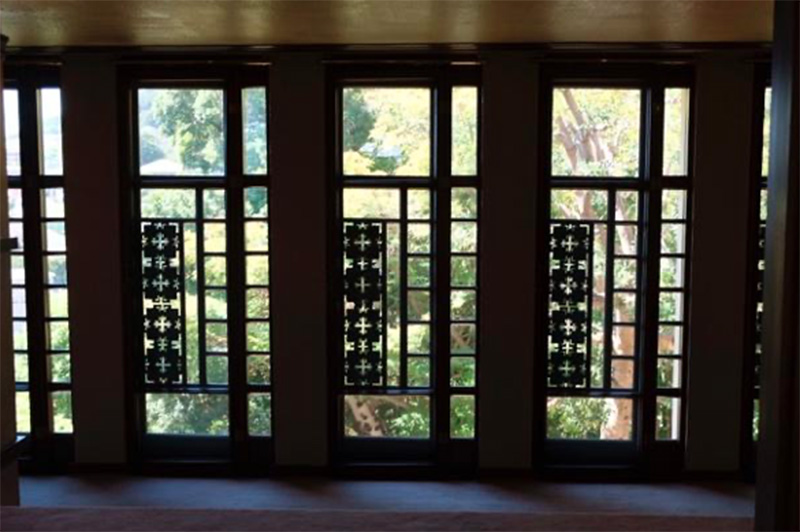
Figure 7. Third floor of the Yodoko Guest House.
The dining room on the fourth floor, with its wood-framed ceiling and symmetrically placed fireplace, opens onto an expansive balcony offering panoramic views of Mount Rokko and the Osaka Bay. From the balcony, more ornamental elements come into view, particularly on Wright’s signature cantilevered beams, which feature relief patterns with interlocking rectangular and square forms (figures 8 and 9), reminiscent of the motifs found in his Mayan Revival architecture. Interestingly, the friezes are executed in concrete, rather than Ōya stone, and echo the Hollyhock motif.

Figure 8. Ornamental elements on the exterior of the Yodoko Guest House, seen from the fourth floor balcony.

Figure 9. Concrete ornament resembling hollyhock motif, paired with patterned Ōya stone structure.
Frank Lloyd Wright’s Imperial Hotel Lobby
Wright’s Imperial Hotel (figure 10) was his largest—and most important—commission in Japan and remains one of his most significant international projects. The hotel exemplifies Wright’s approach to materiality and decoration, and it had a significant impact on the Japanese architectural world.
In addition to carved Ōya stone, Wright developed with local producers the scratch tiles—hollow, textured tiles made to resemble brick that were used to face reinforced concrete—as well as intricate woodwork. Wright’s integration of interior and exterior materials is one of the hotel’s most distinctive features. Whereas architects tend to utilize shifts in material to mark the transition between the inside and the outside, Wright used the same Ōya stone and scratch tiles throughout to reinforce a sense of continuity (figure 11). Combined with abundant windows and garden courtyards, the design asks the visitors to reconsider the boundaries between indoor and outdoor space, not only through spatial openness, but also through the continuity of materials.

Figure 10. Exterior of the Imperial Hotel, as rebuilt at the Meijimura, an open-air architecture museum in Nagoya.

Figure 11. Examining the Ōya stone and scratch tiles at the entrance of the Imperial Hotel Lobby.
Designed in a U-shape around a central reflecting pool, the main lobby featured a three-story atrium with varying floor and ceiling heights, which created a dynamic, cave-like atmosphere accentuated by Maya-inspired decorative motifs.
The original design featured a pyramidal roof. Architectural historian Ken Tadashi Oshima has pointed out the wide range of pyramidal forms, from Mesoamerica to Indonesia, as well as the Japanese pyramidal roof style known as hōgyō-zukuri, showing how Wright’s design was informed by an awareness of architecture from many cultures.2 Although questions remain as to why Wright adopted what is often interpreted as Mayan decorative schemes for the Imperial Hotel and the Yodoko Guest House in Japan, this choice could be understood in the context of rapid internationalization in search of shared global architectural lexicon and the rise of photography as a new medium for architectural knowledge. Detached from site, material, and function, architectural forms in photographs were rendered reproducible, abstract, and transferable, enabling the search for a universal language of architecture across cultures.
Ornament Debate in Japan
At the same time, the question of ornament and decoration remained a critical axis of debate within Japanese architectural culture in the 1920s and 1930s. Even though purist modernists such as the Bunriha Kenchikukai advocated for an architecture stripped of ornament, defined instead by structure, form, and pure spatial relationships, Kon Wajirō, best known for his “modernology,” argued for a more complex understanding of ornament as integral to lived experience. For Kon, ornament was not merely an extraneous “add-on” but a necessary expression inscribed on the surface of architecture and objects, tied to patterns of daily life and human personality. This debate intersected with Wright’s reception in Japan, since his organic approach stood in contrast to the growing embrace of the International Style in the 1930s. European modernists such as Le Corbusier and Walter Gropius exerted increasing influence on Japanese journals and architectural schools, to the extent that critics noted how the earlier Wrightian mode was eclipsed by the new functionalist idiom. Yet the persistence of ornament, evident in the Kanagawa Prefectural Government Office (1928, figure 12), located near the Sōtsū Yokohama Building, with its scratch-textured brown tiles incised with grooves and distinctive geometric patterns characteristic of the Wright style, suggests that Japanese modernism of this period cannot be reduced to ideals of purity, simplicity, and the absence of ornament. Instead, it encompassed multiple strands of experimentation: some architects embraced the stripped functionalism associated with Europe, while others constructed a version of modernity that retained ornament as a culturally resonant and materially expressive dimension of design.

Figure 12. Kanagawa Prefectural Government Office, designed by Karō Obi, completed in 1928.
1. Frank Lloyd Wright, “A Testament,” in Frank Lloyd Wright: Writings and Buildings: Selected by Edgar Kaufmann and Ben Raeburn (New York: Meridian Books, 1960), 303.
2. Ken Tadashi Ōshima and Jennifer Gray, eds., The Wright Imperial Hotel at 100: Frank Lloyd Wright and the World[フランク・ロイド・ライト―世界を結ぶ建築] (Tokyo: Kajima Shuppankai, 2023), 110.
Andrea Jung-An Liu is a PhD Candidate in Modern East Asian Arts and Architecture in the Department of the History of Art at the University of California, Berkeley, and is a Research Fellow at Waseda University, Tokyo.
About The Decorative Arts Trust Bulletin
Formerly known as the "blog,” the Bulletin features new research and scholarship, travelogues, book reviews, and museum and gallery exhibitions. The Bulletin complements The Magazine of the Decorative Arts Trust, our biannual members publication.
Click Images to Enlarge
Did you know that clicking on the images in Bulletin posts will allow you to get a closer look? Simply click on an image, and a larger version will open in a pop-up window.