





Historic Annapolis Awarded 2026 Prize for Excellence and Innovation
by Emily Serpico
The Decorative Arts Trust is excited to announce that Historic Annapolis is the recipient of the 2026 Prize for Excellence and Innovation.
The restoration of the James Brice House (figure 1) in Annapolis, MD, undertaken by Historic Annapolis (HA) in partnership with the State of Maryland, represents one of the most significant preservation projects underway in the United States. Constructed in 1767–74 and designated a National Historic Landmark, the Brice House is an extraordinary example of 18th-century architecture and craftsmanship. It is also a rare documentary record of the labor, materials, and domestic systems that shaped life in colonial Maryland. HA has approached the building as both a work of art and a historical archive, guided by the principle that every space, finish, fragment, and ghost serves as a record of all those connected to the house.
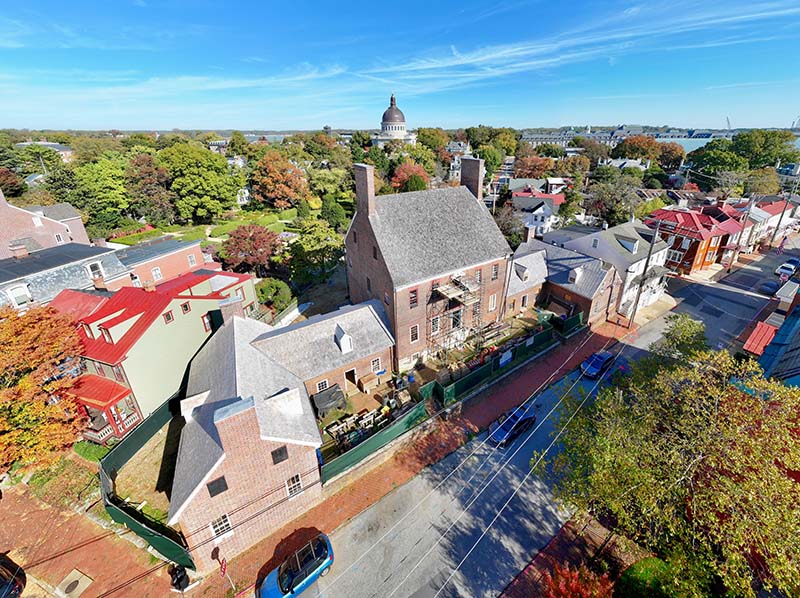
Figure 1. James Brice House, c. 1774, National Historic Landmark in Annapolis, MD. Photo by Jeff Voigt Photography.
Since launching a full‑scale, museum‑grade restoration in 2016, HA has established a process that will serve as a model for future preservation projects. The interdisciplinary team’s work has revealed rare textured plaster surfaces, fragile distemper coatings, and 18th‑century woodgraining through meticulous removal and stabilization techniques. Decorative plaster ornaments concealed beneath many layers of paint have been recovered, and damaged masonry has been repaired using historically compatible materials.
The team includes architectural historians, preservation architects, conservators, engineers, and master tradespeople whose expertise has advanced conservation science and traditional craftsmanship alike. Key members of the restoration effort include Willie Graham, Colonial Williamsburg’s former curator of architecture; preservation architect Bill Neudorfer; Michael Day, HA’s Executive Vice President; and Tyler Tate, President of Lewis Contractors. Additional expertise in historic preservation and conservation is provided by renowned specialists such as Marcia Miller, Maryland Historical Trust’s former Chief of the Office of Research, Survey, and Registration; conservator Christopher Mills; paint analyst Dr. Susan Buck; materials scientist Dr. Kirsten Travers Moffitt; master mason Ray Cannetti; and Colonial Williamsburg’s Vice President of Operations, Matt Webster (figure 2).
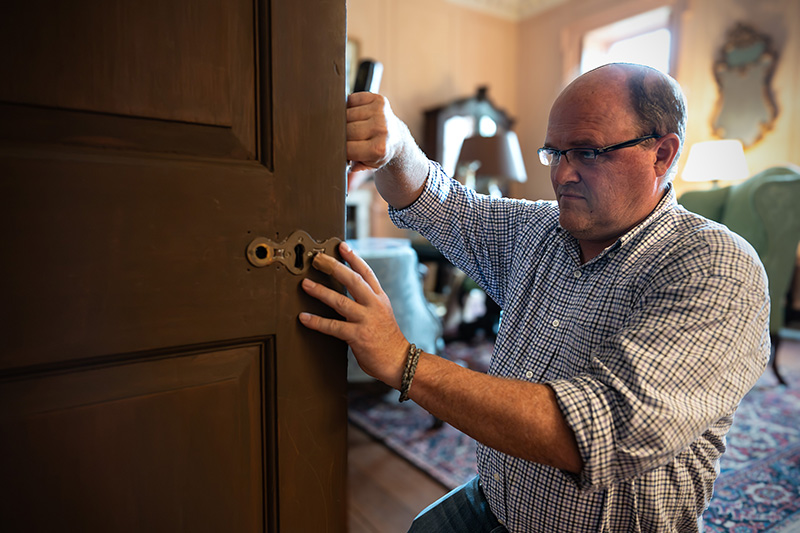
Figure 2. Matt Webster, Vice President of Operations at Colonial Williamsburg, conducts comparative research for the Brice House project on the locks and fittings at the nearby Ridout House, c. 1765. Photo by Willie Graham.
The next phase of work includes one of the most technically demanding components of the entire restoration: comprehensive architectural hardware conservation and reproduction. Prize funding will support several critical elements of these efforts, including the conservation and stabilization of surviving hardware; evidence-based reproduction of missing locks, hinges, bolts, and weights; and the fabrication of historically accurate fireplace cranes.
This work is critical to understanding the building’s surviving hardware, ranging from blind-set mortised dovetail hinges and hand-built mortise locks to drop handles and rare cast-iron butt hinges. This effort will preserve an extraordinarily valuable record of 18th-century fabrication, consumption, and household organization. Each hinge, lock, and brass fitting will be studied and conserved as primary sources of the building’s design, craftsmanship, and domestic hierarchy (figure 3).
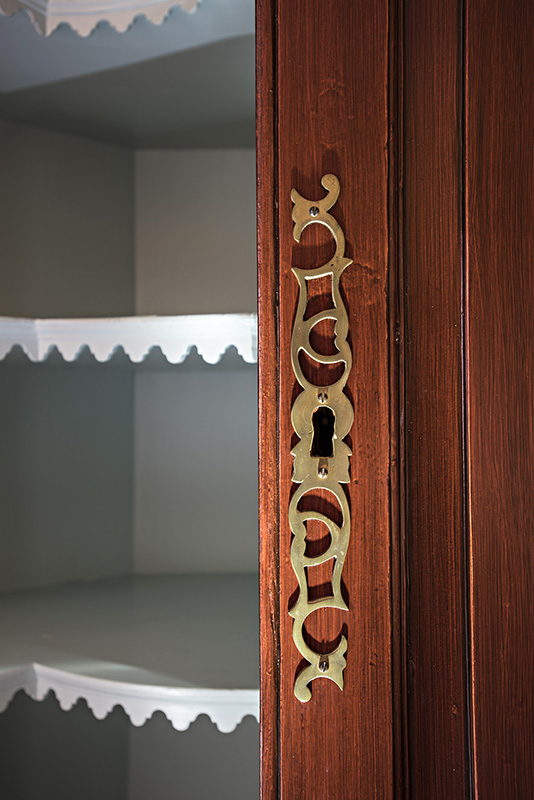
Figure 3. Decorative lock fitting in situ on decorative bowfat (or built-in cabinet) in the dining room of the Brice House. Brass. Photo by Willie Graham.
The Decorative Arts Trust looks forward to sharing updates about this project in the coming months and years.
Emily Serpico is the Membership and Grants Coordinator at the Decorative Arts Trust.
About The Decorative Arts Trust Bulletin
Formerly known as the "blog,” the Bulletin features new research and scholarship, travelogues, book reviews, and museum and gallery exhibitions. The Bulletin complements The Magazine of the Decorative Arts Trust, our biannual members publication.
Click Images to Enlarge
Did you know that clicking on the images in Bulletin posts will allow you to get a closer look? Simply click on an image, and a larger version will open in a pop-up window.