
ONLINE LEARNING
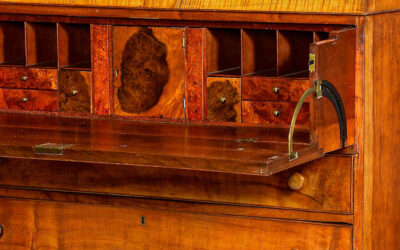
Looking Again at Tennessee Furniture
REVIEW: SPRING 2024 SYMPOSIUM
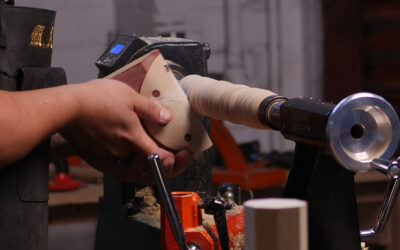
Understanding Craft: A New Digital Tool Debuts
BY EMILY ZAIDEN
Three years in the making, Craft in America is launching the first ever Craft Video Dictionary, thanks to support from the Decorative Arts Trust’s inaugural Prize for Excellence and Innovation. The free online resource gives the public direct, close-up views of the craft processes and techniques behind the decorative arts.
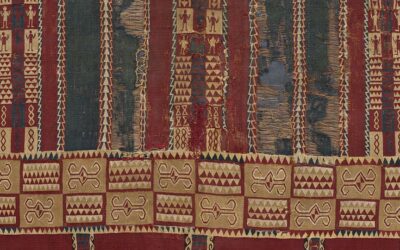
Art and Imagination in Spanish America, 1500–1800: Highlights from LACMA’s Collection
BY THE SAINT LOUIS ART MUSEUM
This summer, the Saint Louis Art Museum (SLAM) is hosting the exhibition ‘Art and Imagination in Spanish America, 1500–1800: Highlights from LACMA’s Collection,’ which features more than 100 works drawn from the Los Angeles County Museum of Art’s notable collection of Spanish colonial art.
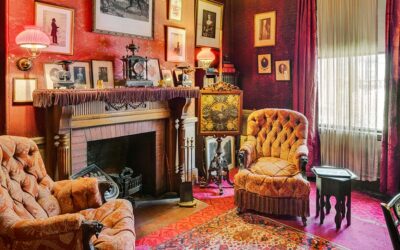
The Importance of Being Furnished: Four Bachelors at Home
BY R. TRIPP EVANS
Historic New England invites visitors into the private world of four “bachelor-aesthetes,” men who defined American style from the Gilded Age to the Jazz Age yet whose lives have remained, until now, mostly in shadow.
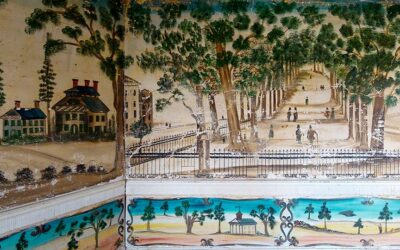
Painted Walls: New Virtual Museum Offers an Immersive Experience
BY MARGARET GAERTNER AND KATHLEEN CRISCITIELLO
The Center for Painted Wall Preservation (CPWP) is dedicated to the research and preservation of 18th- and 19th-century American paint-decorated plaster walls. As part of its mission to document and encourage appreciation of this vulnerable and increasingly rare art form, CPWP identified 40 of the best surviving examples in New England and upstate New York and commissioned photographer Michael Wasserman to photograph and digitally scan 20 of these interiors.

Seafaring Portraits in Bermuda and the Atlantic Basin
BY DAMIËT SCHNEEWEISZ
Miniatures have long held a great capacity for circum-oceanic movement and engagement. In museum collections, these small portrait-objects have straddled the worlds of decorative and fine art and jewelry. They are difficult to categorize, often painted on sheets of vellum or ivory with watercolors and set with hairwork in oft-bedazzled lockets that could be worn or carried on the body.
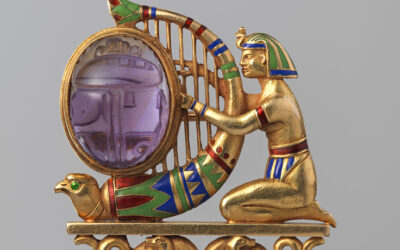
Multi-Sensorial Materials: Egyptomania and the Decorative Impulse
BY LEA C. STEPHENSON
Across the late-19th-CENTURY Anglophone world, artists and collectors fabricated Orientalist fantasies of Egypt as part of a phenomenon that became known as Egyptomania. This sensation included an embodied and material engagement with the modern North African Middle East and the ancient Islamic empire.
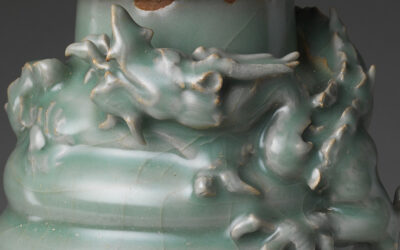
Summer Reading Recommendation: Ceramic Art
BY JESSIE DEAN
‘Ceramic Art’ is the first volume in Princeton University Press’s ART/WORK series, which invites readers to reconsider a section of art history through the lens of materials and conservation. The eight essays in this anthology, edited by Caroline Fowler and Ittai Weinryb, demonstrate the enchanting and elusive nature of ceramics across time and cultures.

The Finest Regency Porcelain Painter: Thomas Baxter in Worcester
BY CHARLES DAWSON
There is no greater name in the history of English Regency porcelain painters than that of Thomas Baxter. His whole life was given to the art of porcelain painting, and his work at the Worcester Flight & Barr factory, the subject of a new book, is among the choicest of the era.

Historic Odessa Collections Published
BY PHILIP D. ZIMMERMAN
One hundred of the objects in the Delaware’s Historic Odessa Foundation’s Wilson-Warner House and the Corbit-Sharp House are addressed in detail in the new book 𝘈 𝘚𝘵𝘰𝘳𝘪𝘦𝘥 𝘗𝘢𝘴𝘵: 𝘊𝘰𝘭𝘭𝘦𝘤𝘵𝘪𝘰𝘯𝘴 𝘰𝘧 𝘏𝘪𝘴𝘵𝘰𝘳𝘪𝘤 𝘖𝘥𝘦𝘴𝘴𝘢, with four chapters exploring the town’s early settlement, families, craftsmen, and preservation.
SAVE THE DATE
- Special Program: Tour of the Newark Museum with retiring Chief Curator Ulysses Dietz November 3
- New York Antiques Weekend January 19-20, 2018
- Emerging Scholars Colloquium January 21, 2018
- Symposium Upper Hudson River Valley: From the Mohawk to the Berkshires May 3-6, 2018
- Symposium New Orleans & the Mississippi Delta November 1-4, 2018
- Study Trip Prague & Vienna with an extension to Budapest With an extension to Budapest October 1–11 and 16–26, 2018; Extension October 12–15