
ONLINE LEARNING
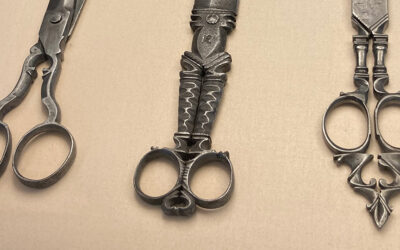
Exploring Luxury Scissors as Works of Art in the Early Modern World
BY CLAIRE SABITT
Although scissors as tools appear at least as early as 2,000 BCE, the first evidence for luxury scissors dates to the late 15th century. By the 19th century, decorative scissors became more widespread, especially in England and France.
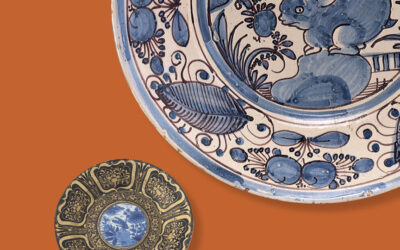
Global Objects: Towards a Connected Art History
BY JESSIE DEAN
The concepts of material, function, and meaning guide a thorough and nuanced review of the world of decorative arts in ‘Global Objects: Toward a Connected Art History’ by Edward S. Cooke, Jr.
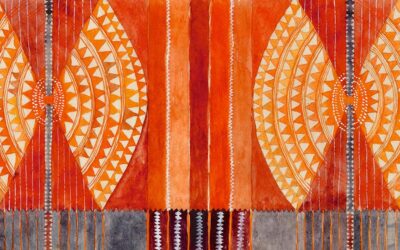
Scandinavian Design and the United States: Cultural Exchanges From 1890–1980
REVIEW: 2022 SPECIAL PROGRAM
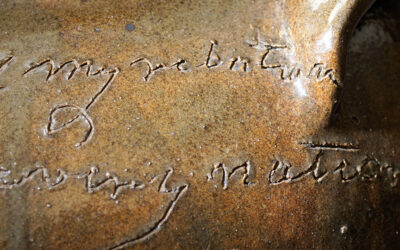
Hear Me Now: The Met’s Landmark Exhibition of Ceramics from the Edgefield District
The Metropolitan Museum of Art’s landmark exhibition “Hear Me Now: The Black Potters of Old Edgefield, South Carolina” focuses on the work of African American potters in the 19th-century American South, in dialogue with contemporary artistic responses.
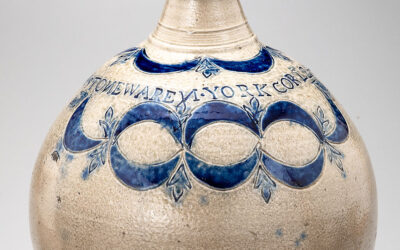
Crafting Freedom: The Life and Legacy of Free Black Potter Thomas W. Commeraw
BY MARGI HOFER AND ALLISON ROBINSON
The New-York Historical Society has organized the first exhibition devoted to the life and work of Thomas W. Commeraw, a Manhattan stoneware potter whose racial identity and remarkable story were long lost to history.

Jefferson’s Retirement Masterpiece: Restoring Poplar Forest
BY TRAVIS MACDONALD
The long, slow restoration of Poplar Forest has been an ambitious undertaking, and in 2023 we celebrate the completion of that 32-year journey.

A Life Full of Art: Collections and Connections at Cranbrook’s Smith House
BY NINA BLOMFIELD
The Decorative Arts Trust Marie Zimmermann Resident Collections Fellowship has been an incredibly valuable opportunity to grow as a scholar and museum professional.

A New Vision for Newport’s Hunter House
BY LESLIE B. JONES, NICOLE J. WILLIAMS, AND MARYKATE SMOLENSKI
The Preservation Society of Newport County reopened its landmark colonial property Hunter House with a new guide-led tour that highlights the experiences of the home’s many occupants, including generations of prosperous merchants and enslaved and free people of African descent.
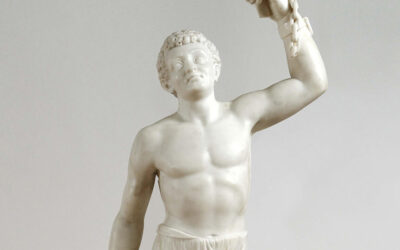
Sculpture at the End of Slavery
BY CAITLIN MEEHYE BEACH
A new book interrogates how a wide range of objects—from antislavery medallions to statues of bondspeople bearing broken chains—gave visual form to narratives about abolition in the 18th and 19th centuries.
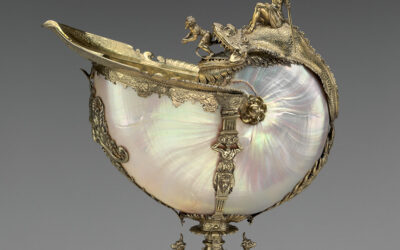
Manipulating Mother-of-Pearl: An 18th Century Coque de Perle Bracelet
BY CYNTHIA KOK
The popularity of coque de perle hints at mother-of-pearl’s transition from a valued rarity to a semi-precious, but abundant, resource with which makers experimented.