
ONLINE LEARNING
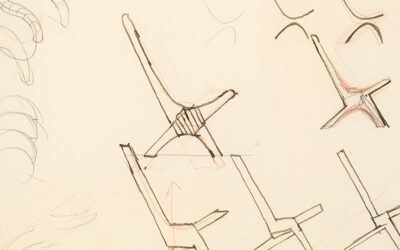
Tracing a Friendship Through Design: Clara Porset and Josef Albers
BY CHRISTINA DE LEON
The Cuban-born designer Clara Porset settled in Mexico City as a political exile in 1936 at the age of 41 and would become one of the country’s leading designers.
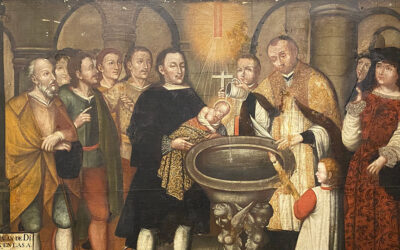
Interrogating Fashion Through Religious Painting in Colonial Spanish America
BY LAURA BELTRAN-RUBIO
I studied dresses portrayed in a c. 1750 scene of the baptism of Saint John, attributed to the famed portrait painter Joaquín Gutiérrez of Nueva Granada, as part of my doctoral research,

The Wonders of Eyre Hall: Illuminating the Treasure of Virginia’s Eastern Shore
BY J. THOMAS SAVAGE, JR.
With the publication of The Material World of Eyre Hall: Four Centuries of Chesapeake History, Eyre Hall on Virginia’s Eastern Shore steps to the front of the line as one of America’s best-documented historic properties.
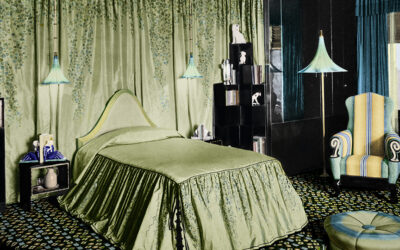
Factory of Illusions: Researching and Reconstructing an Art Deco Bedroom by Joseph Urban
BY TALIA SHIROMA
The Cincinnati Art Museum displays an exhibition based on Joseph Urban’s late-1920s commission for Leo F. and Helen Wormser of Chicago, a bedroom for their daughter Elaine.
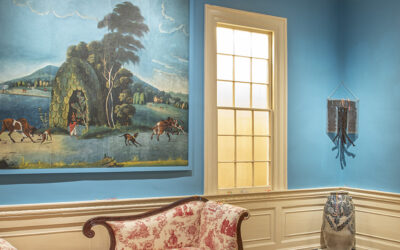
MESDA’s House Party Exhibition
BY MICHAEL J. BRAMWELL
MESDA’s House Party: R.S.V.P. B.Y.O.B. exhibition engages critically with inequities of power and violence that continue as material and cultural legacies within American decorative arts.
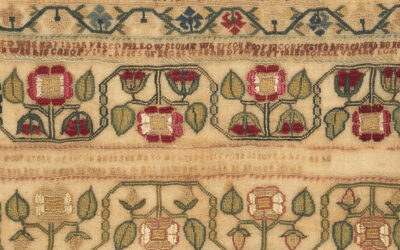
Teaching Needlework: Quaker Mother-Daughter Duo Elizabeth and Ann Marsh
BY ISABELLA ROSNER
Elizabeth and Ann Marsh taught the daughters of elite Quaker and non-Quaker Philadelphia families, establishing a needlework aesthetic popular throughout the Delaware Valley for more than a century.
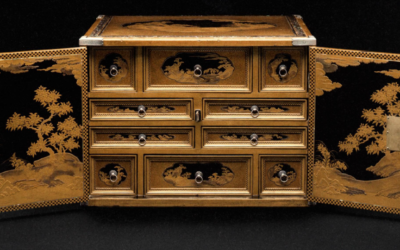
Chinese Porcelain and Japanese Lacquerware in the Cabinets of Amalia van Solms-Braunfels
BY LAURYN SMITH
In the 1600s, wealthy and elite individuals began amassing extraordinary collections, composed of both locally produced and imported works of art. Few were as innovative as Amalia van Solms-Braunfels, Princess of Orange.
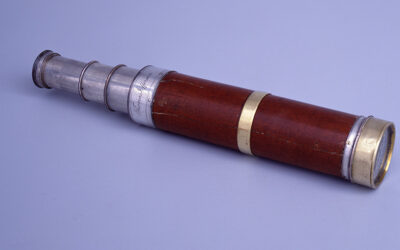
Optics and Enslavement in Charles Willson Peale’s Benjamin and Eleanor Laming
BY MICHAEL W. HARTMAN
A 1789 Maryland inventory recorded seven enslaved people—Beck and her children Juliet, Biddy, and Henry; Mary and her daughter Appolonia; and a man called Dick—as the property of Benjamin and Eleanor Laming, the subjects of a double portrait by Charles Willson Peale.
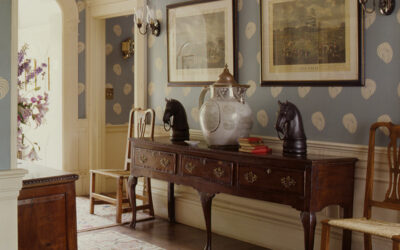
Nancy McClelland: Illuminating the Scope of Her Work Through the Lens of Electra Havemeyer Webb
BY MARGARET WOOD
Best known as an interior decorator and wallpaper historian, Nancy Vincent McClelland’s passion for wallpaper spanned decades. Throughout her nearly 60-year career, she studied, collected, produced, and used wallpapers in her practice.
Louise Brigham’s Box Furniture and the Long History of Democratic Design and Creative Reuse
BY JENA GILBERT-MERRILL
In 1909, a little-known artist and social reformer named Louise Brigham published Box Furniture: How to Make a Hundred Useful Articles for the Home, a collection of instructions for producing simple, modular furniture from repurposed wooden packing crates.