






Country Houses and Collections in Scotland
Our bespoke Scotland programs have been so popular that we were excited to return for two more sold-out tours in June 2026! The Study Trip Abroad, titled Scotland: Country Houses, Craftsmanship, and Collections, showcased under-appreciated and private sites as well as tried-and-true favorites. The groups were accompanied by Scottish historian Alastair Learmont, furniture historian David Jones, and Trust Governors Brock Jobe and Alexandra Kirtley.
The Gorgeous Glasgow Region
An Optional Pre-Tour featured the National Trust for Scotland’s Hill House in Helensburgh with Curator Emma Inglis. Architect Charles Rennie Mackintosh and artist Margaret Macdonald Mackintosh developed the Glasgow style here in the early 1900s. The Hunterian Art Gallery stewards The Mackintosh House, which is a reconstruction of the Mackintoshes’ row house. At the gallery, we were thrilled to participate in a workshop about the drawing and design collections with Joseph Sharples, Curator of Mackintosh Collections & Applied Art.
The main tours kicked off with a captivating introductory lecture by Niall Murphy, Director of the Glasgow City Heritage Trust, at the Kimpton Blythswood Square Hotel. Murphy then guided us on a walking tour, including the Royal College of Physicians and Surgeons with its 1892 College Hall boasting many original features and the Willow Tea Rooms, by the aforementioned Mackintoshes. At the Glasgow Art Club, President Robert Ferguson shared insights into the decor and mission of the late-19th-century site.
The National Trust for Scotland’s Culzean Castle in Ayrshire stands as a masterpiece of late-18th-century country house architecture from Robert Adam, working in his Castellated style. Sarah Beattie, Curator, and David Jones led us through this celebrated space. The King’s Foundation’s Dumfries House in Cumnock was created by John and Robert Adam around 1760. After lunch, we toured the house with David Jones, curator emeritus Charlotte Rostek, and architectural historian Michael Davis and the garden with Thomas Malone, Assistant Head Gardener.
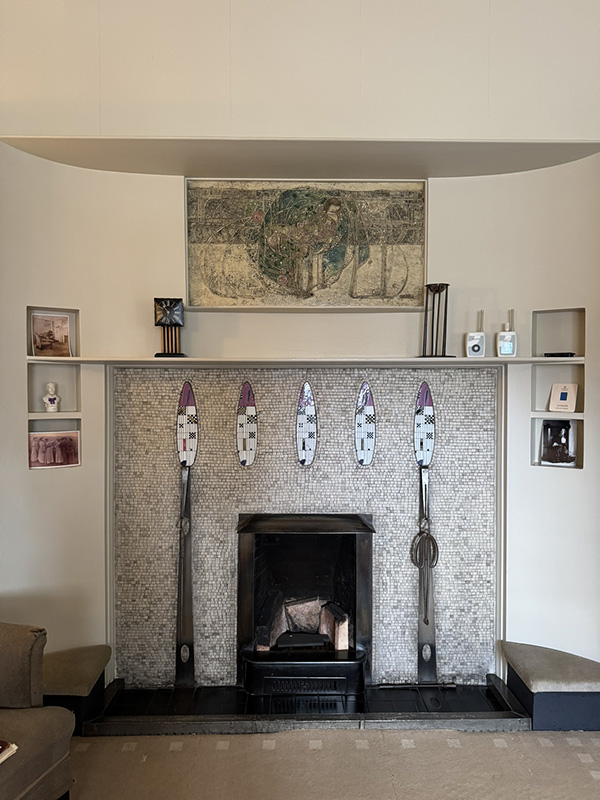
The Hill House.
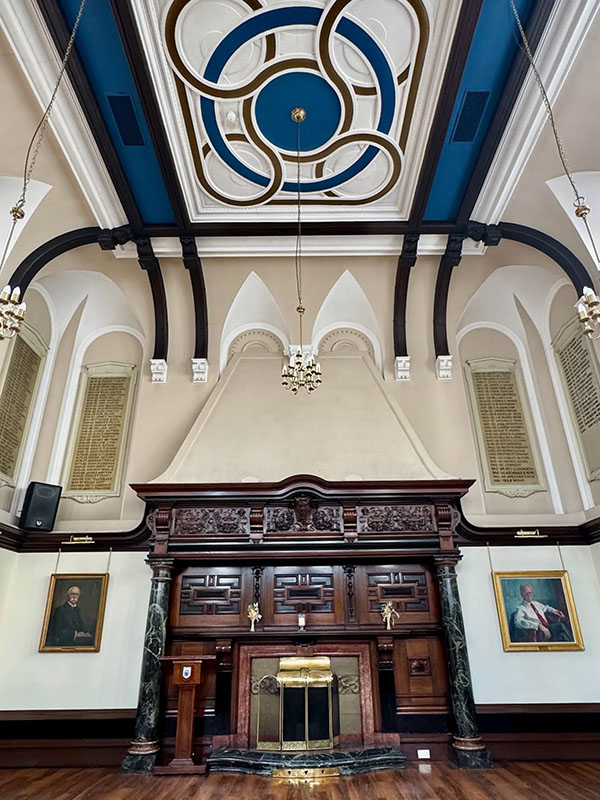
Royal College of Physicians and Surgeons.
Culzean Castle.
Curator Emma Inglis showed us the National Trust for Scotland’s Holmwood House near Glasgow. Alexander “Greek” Thomson developed the home in 1857–58 for James Couper, reinterpreting Classical architecture with inspiration from ancient Greek, Egyptian, and Levantine designs. Moving back into the 20th century, we toured the Mackintoshes’ Windyhill in Kilmacolm, now a private residence. After lunch at Scotts in Greenock, we visited Ardgowan in Inverkip. The residence was built to designs provided by Hugh Cairncross in 1797 shortly after the completion of Culzean Castle, where he acted as Clerk of the Works to Robert Adam.
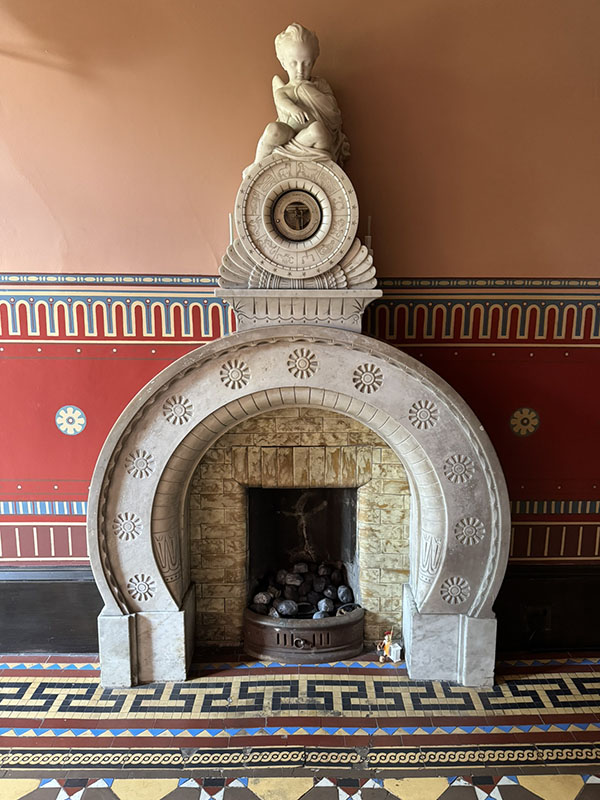
Holmwood.
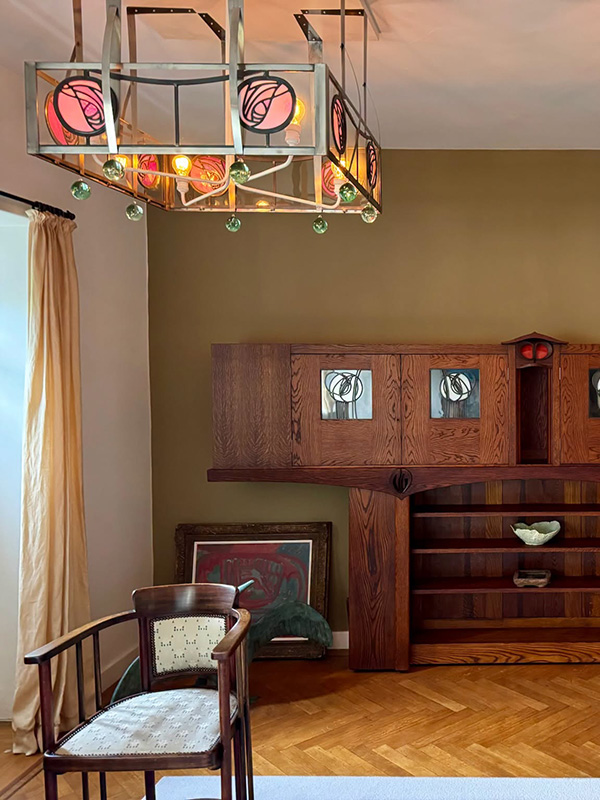
Windyhill.
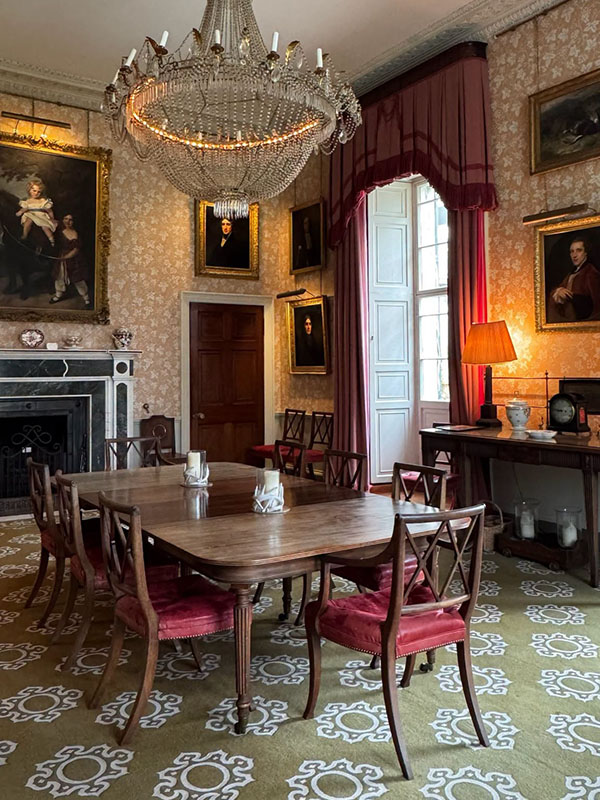
Ardgowan.
Enchanting Edinburgh and Environs
En route to Edinburgh, tour 1 participants explored Drumlanrig Castle in Thornhill, a “Pink Palace” constructed between 1679 and 1689. Tour 2 participants visited Stirling Castle in Stirling, which featured recent restorations of the mid-16th-century Great Hall and Royal Palace, and the Mansfield Traquair Centre, with an exuberant interior painted by Phoebe Anna Traquair, with insights from art historians Dr. Emily Learmont and Dr. Elizabeth Cumming. The Kimpton Charlotte Square Hotel was our Edinburgh headquarters, and we enjoyed a walking tour of the New Town with Alastair Learmont.
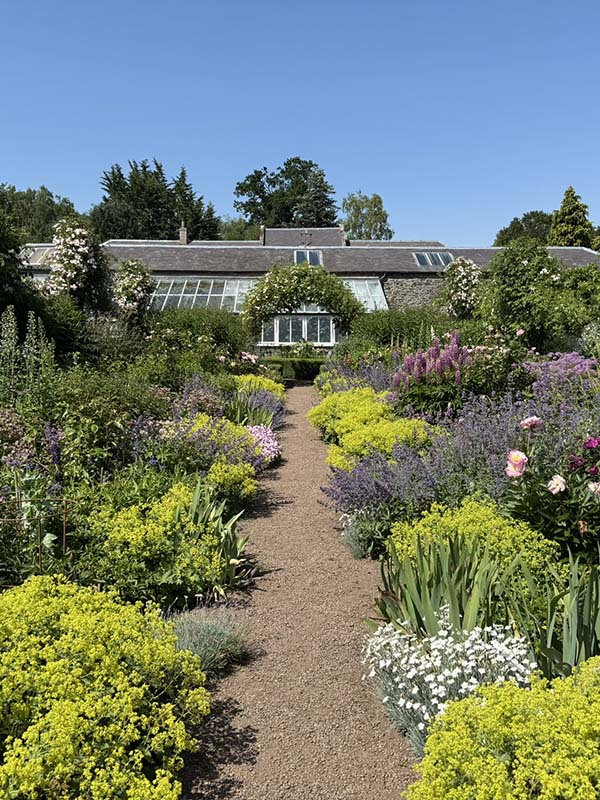
At the National Museum of Scotland, Stephen Jackson, Senior Curator of Furniture and Woodwork, and Claire Blakey, Senior Curator of Modern Decorative Arts, highlighted treasures from the renowned collection. Lunch was served at Greywalls in Gullane, a marvelous site now operating as a boutique hotel that illustrates the collaboration of Edwin Lutyens and Gertrude Jekyll. The privately owned Gosford House in Longniddry was designed by Robert Adam but constructed posthumously between 1791 and 1800. Back in Edinburgh, we explored the Royal Collections Trust’s Palace of Holyroodhouse after hours with Jones and Curator Emma Stead. The palace itself began as a residence built by King James IV of Scotland in the early 16th century and was transformed between 1671 and 1678 by Sir William Bruce into the elegant structure seen today.
In Queensferry, Jones introduced us to the magnificent interiors and collection at Hopetoun House out of hours. Sir William Bruce completed the house in 1703, and William, John, and Robert Adam all had hands in later renovations. Balcarres House, the seat of the Lindsay family for 20 generations, graciously hosted us for lunch, a tour, and time in the garden.
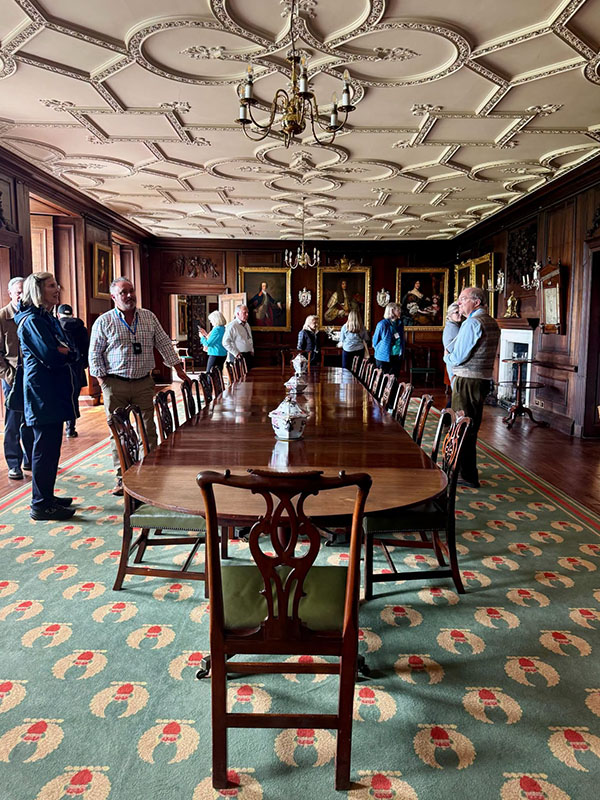
Drumlanrig Castle.
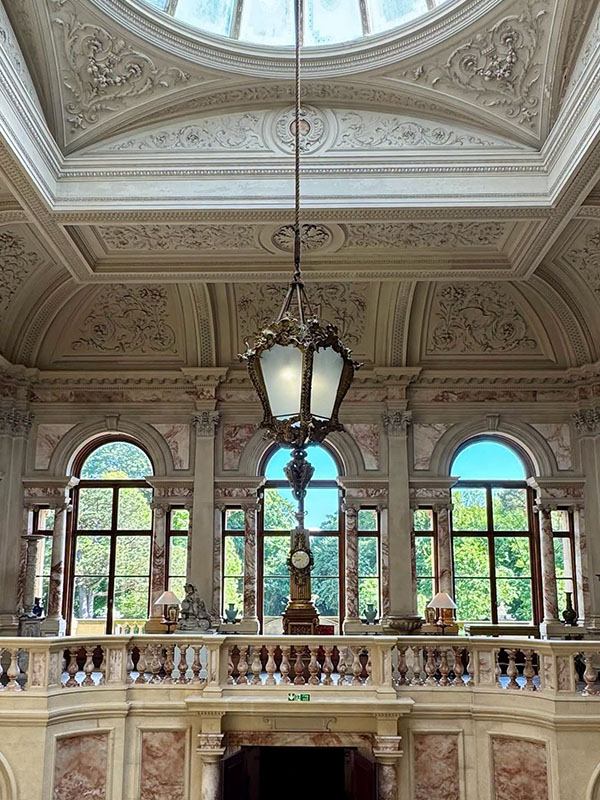
Gosford House.
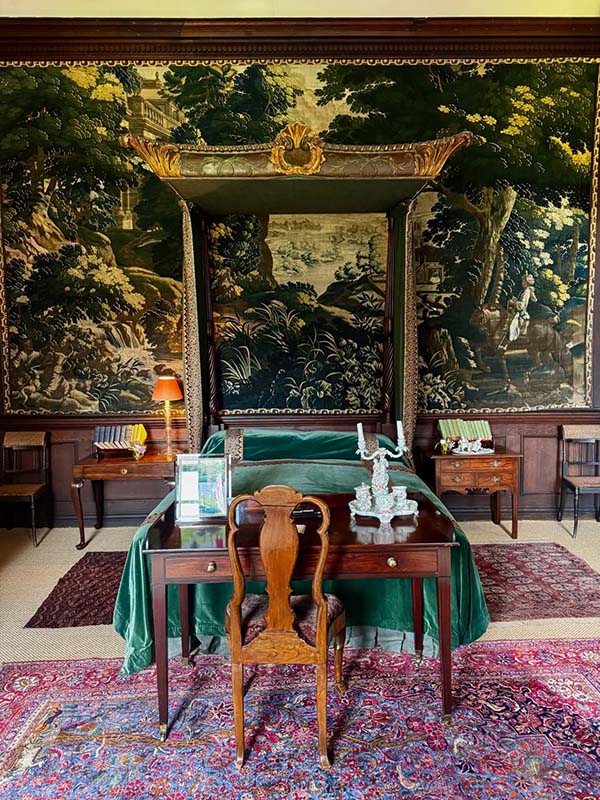
Hopetoun House.
Dovecot Studios with Director Celia Joicey and the St. Mary’s Street shops with Mackenzie Leather and The Scottish Textiles Showcase were highlights of Edinburgh, and then we continued to The Drum for a tour and lunch. The oldest part of The Drum’s extant house dates to 1584, but it is known for being William Adam’s first solo commission, in 1725. In Gorebridge, a private visit to Arniston showcased Adam’s architectural creativity.
The Bountiful Borders
Heading south from Edinburgh into the Borders, , David Jones and Curator Fiona Salvesen Murrell shared insights into the 1758 Paxton House in Berwick-upon-Tweed, attributed to John and James Adam. In Earlston, members enjoyed Carolside, a serene, 18th-century estate with an award-winning rose garden, and, in Duns, David Jones delved into Mellerstain House, to which both William Adam and Robert Adam contributed.
Back in Edinburgh, participants toasted a successful program at the Scotch Malt Whisky Society.
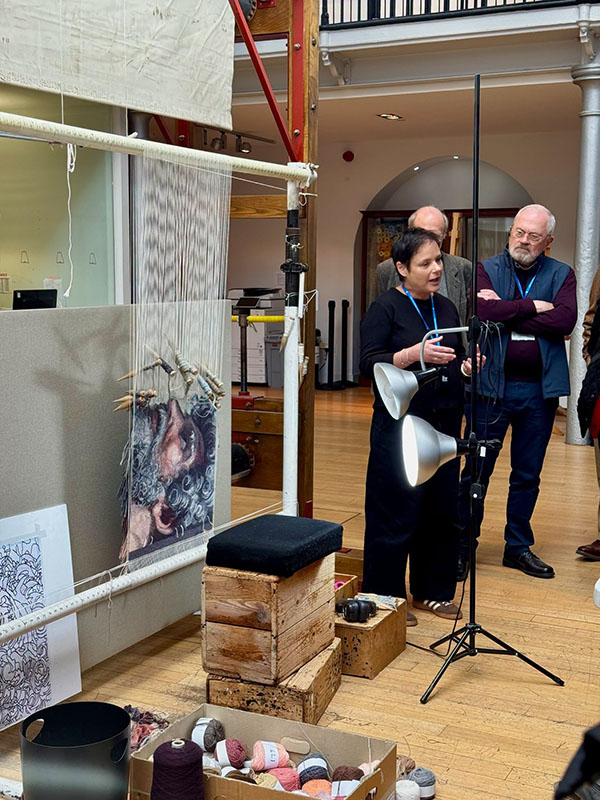
Dovecot Studios.
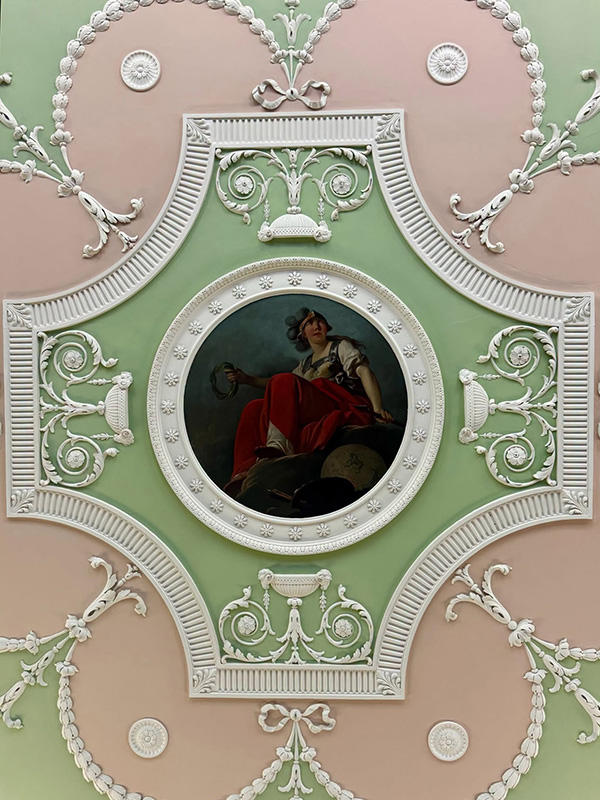
Mellerstain House.
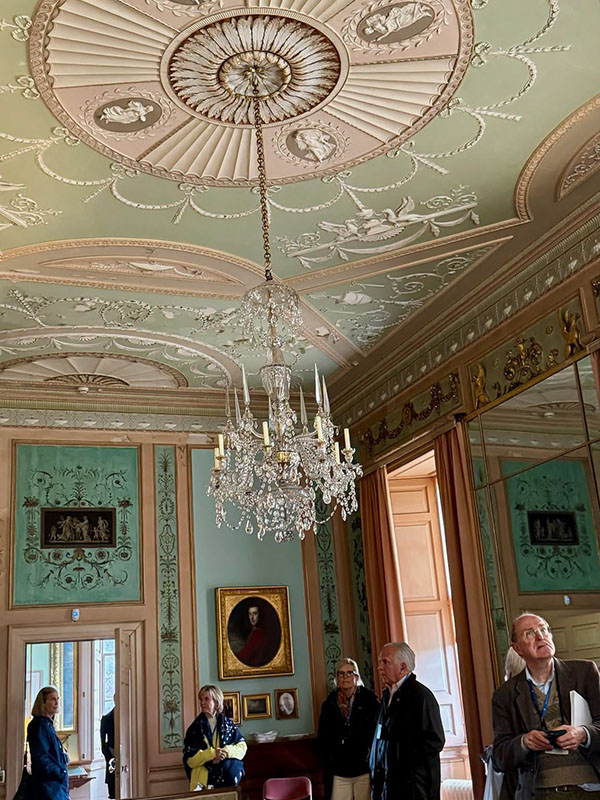
Paxton House.
Of course, Scotland never disappoints, and our 2026 tours were no exception! To learn more about the Decorative Arts Trust’s upcoming programs, see our Calendar of Events. We hope to see you on our travels!
About The Decorative Arts Trust Bulletin
Formerly known as the "blog,” the Bulletin features new research and scholarship, travelogues, book reviews, and museum and gallery exhibitions. The Bulletin complements The Magazine of the Decorative Arts Trust, our biannual members publication.
Click Images to Enlarge
Did you know that clicking on the images in Bulletin posts will allow you to get a closer look? Simply click on an image, and a larger version will open in a pop-up window.