






Woven Riches: Gold-Wrapped Threads in 15th- and 16th-Century Italy
by Kathryn Griffith
Gleaming, lustrous, splendid…few materials have captivated artisans, patrons, and beholders across time and geographies as gold has. My dissertation examines the transformations of gold in Italy throughout the 15th and 16th centuries, when this precious metal was essential to the structure of the monetary economy as well as a medium in the hands of artisans, including goldsmiths, sculptors, painters, and illuminators, goldbeaters, and textile workers. Drawing on economic history and visual and material culture, I examine how gold’s properties—malleable, ductile, reflective, and untarnished—shaped both its forms and how early modern Italians understood the material wealth invested in objects.
In the medieval and early modern periods, the textile trades were major industries in the economies of Italian cities such as Florence, Lucca, and Venice, where weavers and embroiderers produced glittering silks and velvets for ecclesiastical and domestic consumption, as well as for export abroad. Thanks to a generous Research Grant from the Decorative Arts Trust, I traveled to London to view Italian textiles at the Victoria & Albert Museum (V&A) for my chapter on gold-wrapped threads.
Gold-wrapped threads were produced by twisting a thin band of metal—gold or gilt silver—around a core silk thread; they could be then woven, as in cloth-of-gold or lampas fabrics, or used in goldwork embroidery. I was especially interested in a 15th-century Tuscan devotional panel (figure 1) embroidered using the “or nué” (or shaded gold) technique, in which the metallic threads were laid on the surface and stitched to the ground fabric with colored silk. The gold threads would have originally formed the majority of the background, and this panel offers a way of thinking about gold grounds in pictorial compositions other than painting. Art historians have used the shift away from gold grounds in painting to mark the transition between medieval and Renaissance periods. The panel depicts Saint Verdiana, a 13th-century Tuscan nun who was later canonized. Although the identity of the maker is unknown, it was likely intended for, or even produced in, a convent for devotional use. In her study of Florentine convents, Sharon Strocchia discussed records of nuns producing gold-wrapped threads for the textile industry,1 a dynamic that raises further questions about the intersection between the use of gold, personal devotion, and labor in this panel.
The or nué technique was also used for pictorial panels on magnificent vestments for the Baptistery of San Giovanni in Florence (c. 1466–88), which were designed by Antonio del Pollaiuolo, who worked as a painter, sculptor, goldsmith, and engraver.2 This example, in which the original context and function are known, also reminds us that textiles with gold-wrapped threads for religious sites would have been seen and used alongside examples of gold in other media, including gilded vessels, mosaics, altarpieces, and illuminated manuscripts.
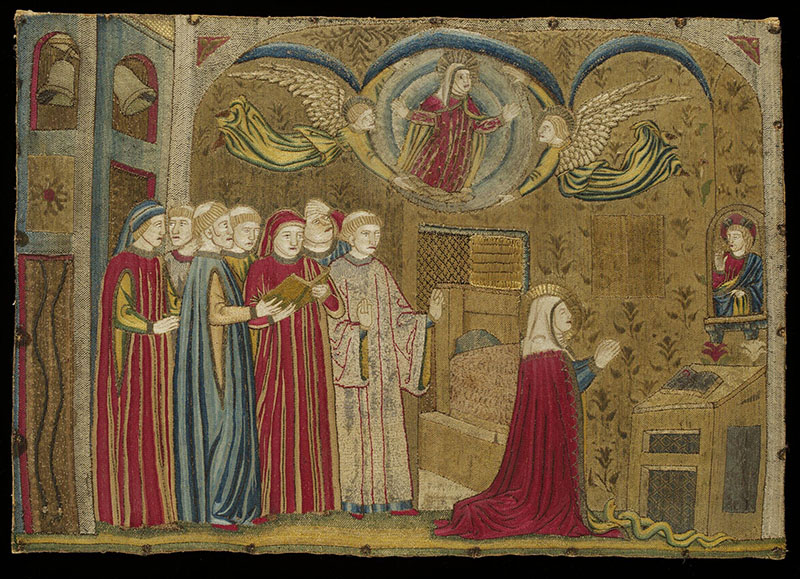
Figure 1. Maker unknown, Embroidered panel with the death of Blessed Verdiana Attavanti, 1425–50, Florence (made). Embroidered linen with silk and metal threads. Victoria & Albert Museum, 4216-1857. © Victoria and Albert Museum, London.
Gold-wrapped threads were also employed in secular garments and accessories. I spent time studying a 15th-century girdle (figure 2) that retains its original buckle and strap end made of gilded metal with enamel and nielloed silver details. While photographs tend to present this object laid out flat on a surface, in the gallery it was arranged over two pins to emphasize the girdle’s flexibility, and perhaps approximate how it was worn close to the body (figure 3). Displayed alongside other objects associated with love and marriage, this girdle likely belonged to a bride from a wealthy family. Silver-gilt threads were woven in a floral pattern, shimmering over a pink silk ground. Much of the gilding on the threads has worn away, revealing tarnished silver underneath. On the impressive buckle, the metalworker incorporated motifs of flowering vines, coils of rope, and interlocking chains. The complex design, with its display of different textiles and materials, attests to their artistic skill.
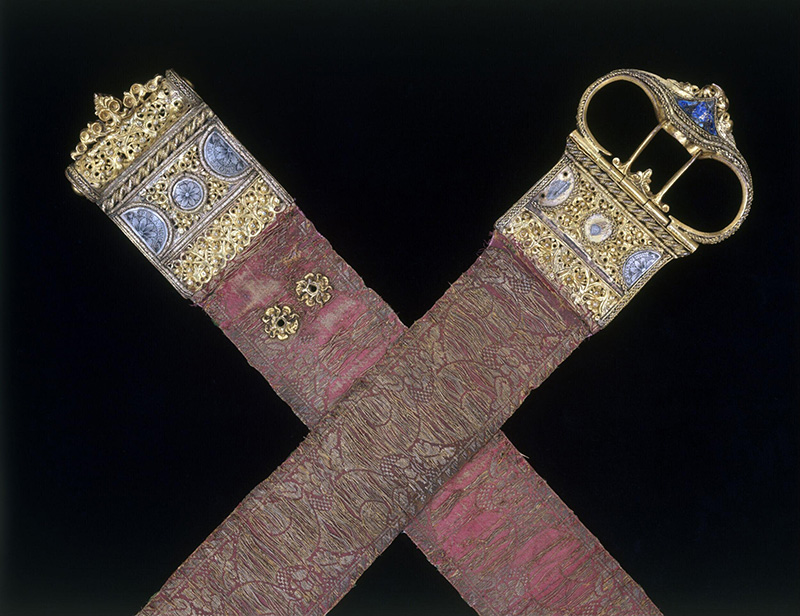
Figure 2. Maker unknown, Girdle, c. 1450. Lucca (made) and Venice (woven). Lampas with gilded and enameled metal, nielloed silver and stamped brass. Victoria & Albert Museum, 4278-1857. © Victoria and Albert Museum, London.
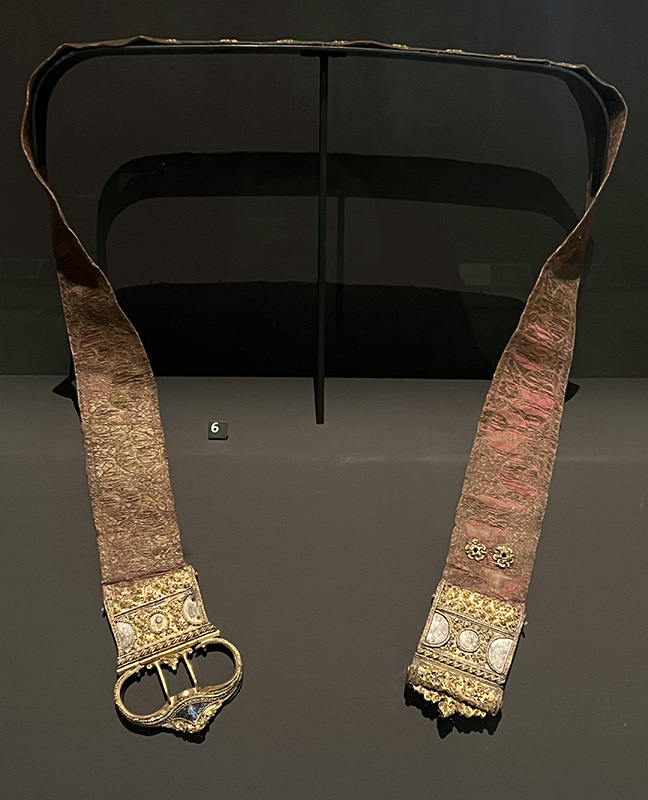
Figure 3. Maker unknown, Girdle, c. 1450. Lucca (made) and Venice (woven). Lampas with gilded and enameled metal, nielloed silver and stamped brass. Victoria & Albert Museum, 4278-1857. Photo by Kathryn Griffith.
In addition to local consumption, Italian textiles were deeply intertwined with international markets as well as the transcontinental movement of materials and techniques. Prior to developing local sericulture, cities such as Florence originally imported silks from the Levant. As Italian silk industries expanded, Florentine and Venetian weavers frequently imitated Near Eastern “pomegranate” patterns, as evidenced by textiles that survive in museums and those depicted in portraiture. In one rich example (figure 4) at the V&A, gold dominates the design through the use of silver-gilt threads to create the ground. But the weavers also employed tiny loops of silver-gilt thread amidst the red velvet, a technique called “allucciolato” or “firefly” effect, so that these areas would shimmer as well.3 This photograph belies the size of this textile, which is nearly six and a half feet in length, and may have been intended for wall hangings. In addition to international inspiration in their production, Italian textiles also circulated widely abroad. As Richard Goldthwaite demonstrated, the silk industry was essential to the growing wealth of Florence in the 15th century, and silk fabrics were the first major category of products that Florence sold both in Italy and through its merchant networks abroad in cities such as Bruges and London as well as international fairs in Geneva, Lyon, and Antwerp.4
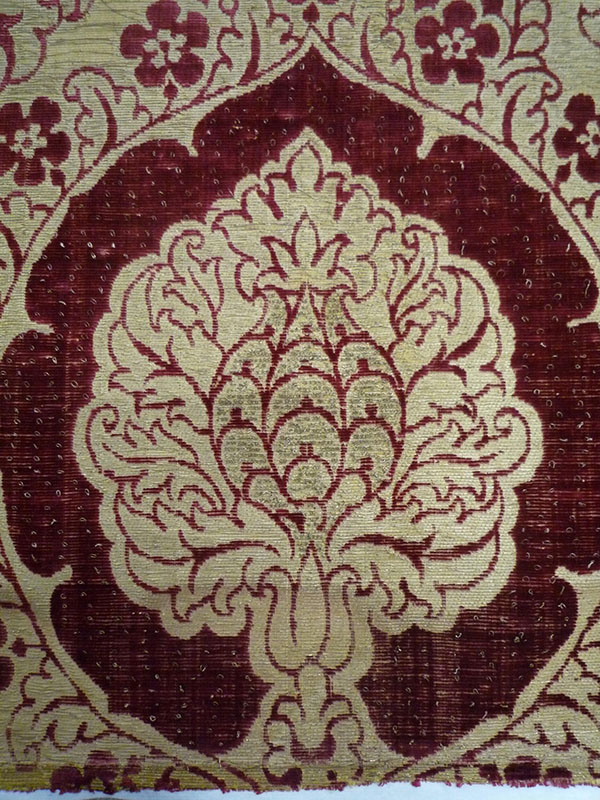
Figure 4. Maker unknown, Woven silk, c. 1475-1500. Florence (made). Velvet cloth of gold, with loops of silver-gilt thread. Victoria & Albert Museum, 81-1892. © Victoria and Albert Museum, London.
Across these examples, gold-wrapped threads signal wealth and prestige, but they also exemplify the versatility and the range of visual possibilities that artisans were able to create with different techniques and patterns. The opportunity to see these objects in person underscored for me how dynamic metallic threads are, as I watched them catch the light differently depending on the time of day. That effect would have been heightened when textiles were worn and moved with the body. While I have focused here primarily on their production and visual aspects, my current research also thinks about the tactile qualities of these objects, the experience of handling or wearing them, and the weight with which they were invested, in gold and otherwise. I am grateful for the opportunity the Research Grant provided to visit the V&A, which has provoked further questions for my research.
1. Sharon Strocchia, Nuns and Nunneries in Renaissance Florence (Baltimore: Johns Hopkins University Press, 2009).
2. Alison Wright, The Pollaiuolo Brothers: The Arts of Florence and Rome (New Haven: Yale University Press, 2005). The surviving panels are part of the collection of the Museo dell’Opera del Duomo in Florence.
3. In addition to V&A, 81-1892, see also Metropolitan Museum of Art, 67.55.101 for a textile created with the “firefly” effect.
4. Richard Goldthwaite, The Economy of Renaissance Florence (Baltimore: Johns Hopkins University Press, 2009).
Kathryn Griffith is a PhD Candidate in Art History at the University of Southern California.
About The Decorative Arts Trust Bulletin
Formerly known as the "blog,” the Bulletin features new research and scholarship, travelogues, book reviews, and museum and gallery exhibitions. The Bulletin complements The Magazine of the Decorative Arts Trust, our biannual members publication.
Click Images to Enlarge
Did you know that clicking on the images in Bulletin posts will allow you to get a closer look? Simply click on an image, and a larger version will open in a pop-up window.