
ONLINE LEARNING
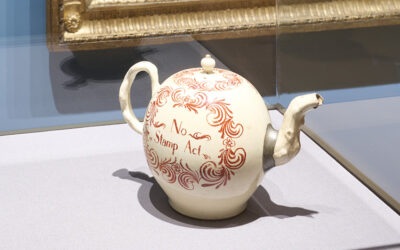
A Nation of Artists: 250 Years of Creativity
BY ALEXANDRA ALEVIZATOS KIRTLEY
In April, the noteworthy private collection of Philadelphians John and Leigh Middleton was unveiled as loans to the Pennsylvania Academy of the Fine Arts (PAFA) and the Philadelphia Museum of Art to herald the opening of each museum’s reinstallations as well as America’s 250th.
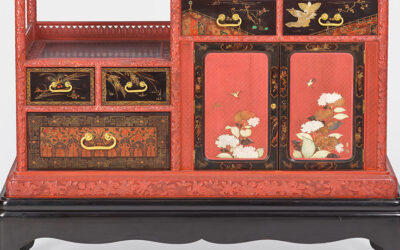
Workshop of the World: Arts and Crafts in Philadelphia
BY DAVID L. BARQUIST AND COLIN FANNING
To celebrate the Philadelphia Museum of Art’s 150th anniversary, the exhibition Workshop of the World: Arts and Crafts in Philadelphia brings together more than 250 works of furniture, ceramics, stained glass, metalwork, textiles, paintings, sculpture, and works on paper by Philadelphia-area artists, architects, and manufacturers.
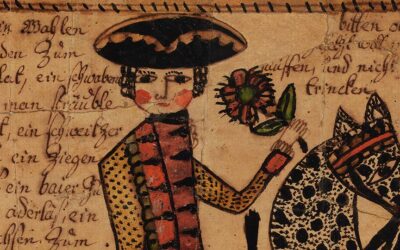
Window to Revolution: Pennsylvania Germans and the War for Independence
BY LISA MINARDI, EMILY SNEFF, CHRISTOPHER MALONE, AND SARAH BOWEN
German immigrants were among the largest and most influential communities in 18th-century Pennsylvania, yet their role in the American Revolution is often overlooked.
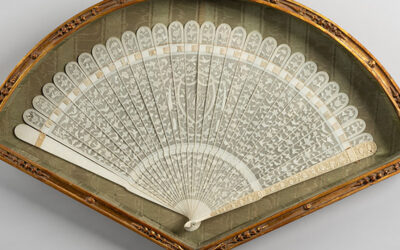
Seeking Profit and Power: Philadelphia, China Trade, and the Making of America
BY PETER SEIBERT
Seeking Profit and Power: Philadelphia, China Trade, and the Making of America at the Independence Seaport Museum explores the complexities of how the fledgling United States established both international trade and diplomatic relations through trade with Asia.
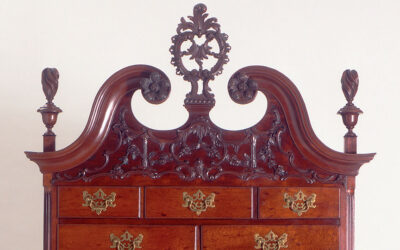
Challenging Masterpieces: Art and Identity in American Furniture
BY JOSH LANE
The exhibition Challenging Masterpieces: Art and Identity in American Furniture and the accompanying catalogue will feature 80 examples of furniture drawn from Winterthur’s renowned collection to mark the 75th anniversary of the museum’s founding.
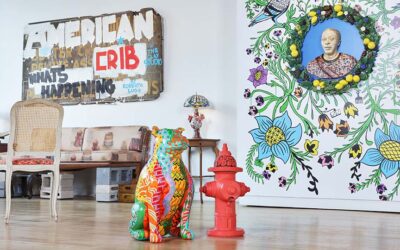
Radical Americana: 45 Artists and 25 Philadelphia-area Sites Celebrate the Semiquincentennial
BY JENNIFER ZWILLING
Radical Americana was born out of a desire to commemorate the 250th anniversary of the Declaration of Independence and to capitalize on the Semiquincentennial in a way that paralleled the major celebrations that accompanied the Centennial, the Sesquicentennial, and the Bicentennial in Philadelphia.
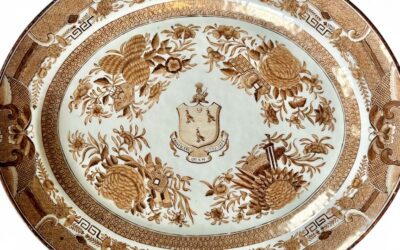
“My Dinner Set from China”: Charles Manigault’s Chinese Export Porcelain
BY CHAD STEWART
In the decades following the American Revolution, Charleston, SC, stood at the cultural, social, and economic center of one of the young nation’s wealthiest regions. The vast resources wielded by the slave-owning planter and merchant classes facilitated the acquisition of expensive, refined objects including splendid furniture, silver, art, and imported Chinese porcelain.
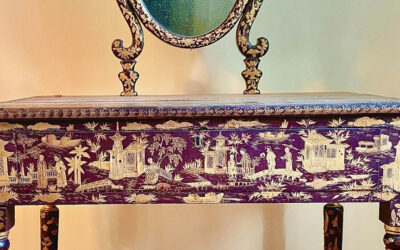
Understanding Wyck’s Chinese Desk
BY GRACE FORD-DIRKS AND CRISTINA FREIRE
For nearly 200 years, a small Chinese writing desk has been the prized and lamented possession of generations of Quaker women in Philadelphia. Today, it sits in the front parlor at Wyck, the ancestral home of nine generations of the Wistar-Haines family in Germantown.
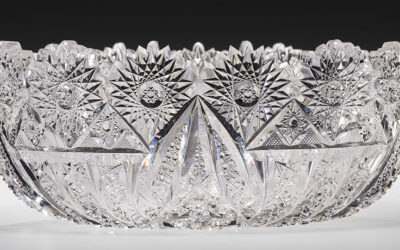
Undercut and Cut Glass “from Below”
BY JOSEPH H. LARNERD
The forthcoming University of Delaware Press publication, “Undercut: Cut Glass in Working-Class Life during the Long Gilded Age,” was supported by a generous Publishing Grant from the Decorative Arts Trust. The book offers a social art history of cut glass—bowls, vases, and other domestic objects incised with geometric patterns against stone and metal wheels—during the medium’s heyday.

Raising the Edge: A Scrutiny of Historic Frames at the Art Gallery of Ontario
BY ERIC BIRKLE
An edge, a border, an ornament, a container—even a fitting—these are various ways in which picture frames have been described, studied, and understood over time. The notion of the frame as a work of art—as either a standalone object or a crucial component of an interdependent whole—is a less familiar concept.