
Croatia: Art and Architecture of the Dalmatian Coast
STUDY TRIP ABROAD
October 4–12, 2026
OPTIONAL EXTENSION
Zagreb and Ljubljana
October 12–17, 2026
The captivating artistry of the region defined by the Balkan Mountains and Adriatic Sea is our focus as we venture to Croatia. Breathtaking scenery sets the stage as we uncover the complex history of the Dalmatian Coast. A reflection of resilient cultures and rich narratives, the built environment and material culture evoke Roman, Byzantine, Venetian, and Ottoman influences alongside local folklife. The itinerary focuses on Dubrovnik and Split and the charming towns and scenic islands that surround them. We also dip into Montenegro for a day-long exploration of Kotor. Along the way, we delight in culinary experiences that highlight the best of Balkan cuisine and its underappreciated vineyards.
This program is sold out. Please contact Catherine Carlisle at thetrust@decorativeartstrust.org to join the waitlist.
REGISTRATION FULL
ITINERARY (subject to amendment)
October 4
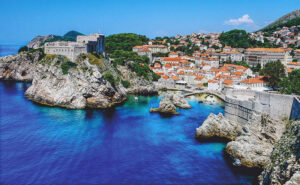
Beneath an iconic flock of red rooftops nestled along the coastal cliffs along the Adriatic Sea, our Balkan travels begin in glorious Dubrovnik. We gather at the Hilton Imperial Dubrovnik, the modern iteration of the historic Grand Hotel Imperial, which has hosted kings, counts, and stars of the silver screen since 1897. The property has been carefully refinished to fuse period charm with contemporary comfort. Outside the front door awaits the Old City, a UNESCO World Heritage Site cherished for its Gothic, Renaissance, and Baroque monasteries, palaces, and fountains. After an introductory presentation by Professor Cathie Carmichael, our lecturer throughout the program, we set out on an orientation walking tour of the monumental 13th-century walls and key sites, including the Pile Gate and the Placa. The Imperial welcomes us back for a convivial opening reception and dinner.
Overnight: Dubrovnik
Included: R, D
October 5
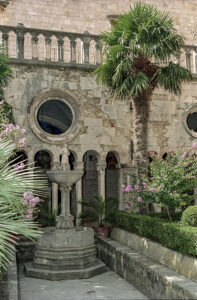
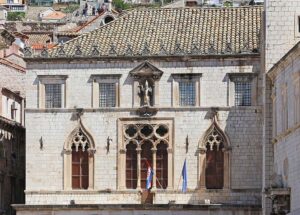
In the morning, we continue our exploration of the Old City’s labyrinth of narrow streets, charming squares, and well-preserved buildings. One of Croatia’s finest examples of Romanesque-Gothic architecture, the 14th-century Franciscan Monastery contains one of the world’s longest functioning pharmacies. Walking down a lively main street, we arrive at the oldest Sephardic synagogue in the world, with a remarkable collection of Judaica. The 16th-century Sponza Palace, a former customs house located in what was once the heart of mercantile Dubrovnik, welcomes us after a hearty lunch. The grand residence now holds the city’s archives, which extend back to the 12th century and are considered some of the richest repositories in all of Europe. The Rector’s Palace, known for its Venetian Gothic architecture, was once the region’s administrative seat and now houses the History Museum. The vast collection of decorative and fine arts features local artisanship and paintings as well as the work of Italian masters who were active here.
Overnight: Dubrovnik
Included: B, L
October 6
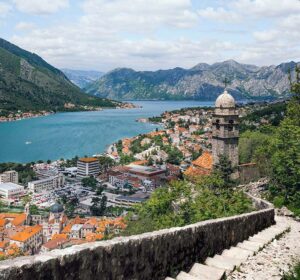
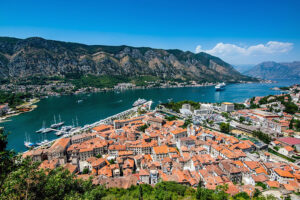
We depart southward along the coast to neighboring Montenegro and enjoy a scenic drive around the spectacular seascape. The city of Kotor, another UNESCO World Heritage Site, is cherished for the fortified palaces and monasteries, all constructed in harmony with the terraced landscape and rolling slopes of the high rocky hills. The beloved 12th-century Cathedral of St. Tryphon holds magnificent frescoes, stone carvings, and silver relics brought from Istanbul in the 9th century. The Maritime Museum tells the story of Kotor’s rich seafaring history with a collection of instruments, maps, and model ships housed in a winsome Baroque palace. Departing by boat, we visit Our Lady of the Rock Church, a tiny chapel on a manmade island that holds an intimate museum of local history. Returning to shore, we reach the idyllic seaside town of Perast. After enjoying lunch, we set off on a walking tour of this picturesque town, which is set against a backdrop of verdant mountains towering over the crystal clear waters of the bay below. The impressive Baroque Bucovic Palace was constructed in the late 17th century for a powerful mercantile family, and the Church of St. Nicholas features the town’s iconic belltower.
Overnight: Dubrovnik
Included: B, L
October 7
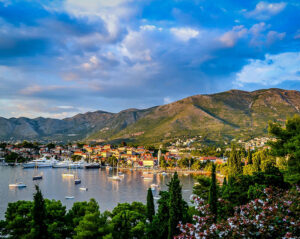
We depart southward for the cozy village of Cavtat, known for its late-15th-century Franciscan Monastery and the 16th-century Rector’s Palace, which preserves the library of Baltazar Bogišić, a legal historian and renowned academic, with more than 15,000 books from his personal collection in addition to his assemblages of prints, paintings, and archaeological materials. We continue to the Bukovac House Museum, birthplace of early-20th-century Croatian painter Vlaho Bukovac. Following lunch, we begin our return to Dubrovnik via the Konavale region with a stop at AR Atelier, where we have the special opportunity to learn about silk embroidery, a time-honored folk art, through a live demonstration and a hands-on workshop. At a nearby household, our education into Dalmatian culture continues with a traditional dance performance and dinner.
Overnight: Dubrovnik
Included: B, L, D
October 8
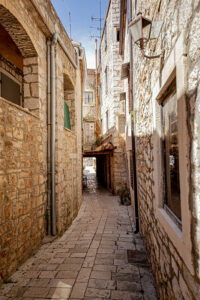
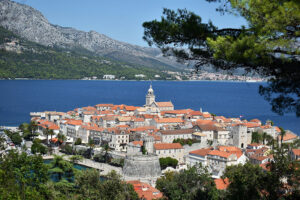
Expanding our horizons northward, we take leave of Dubrovnik with a scenic ferry ride to Korčula. Best known for its attractive beaches and Medieval walled city, Korčula has been a bustling settlement since the 6th century BCE. A walking tour of the Old Town brings us to the Cathedral of St. Mark, a 15th-century architectural wonder built from local limestone in the Gothic-Renaissance style by Italian and Dalmatian artisans. After lunch at a local eatery, we continue to the City Museum in the former Gabrielis Palace, with collections covering the island’s history from Antiquity onward. The 18th-century Bishop’s Palace holds a superb collection of Dalmatian and Venetian art. A ferry returns us to the mainland, where we are whisked away for a drive along the coast to Split. At the foot of Marjan Hill and surrounded by the city and sea, the chic Palazzo President greets us with a delightful dinner and refined lodgings.
Overnight: Split
Included: B, L, D
October 9
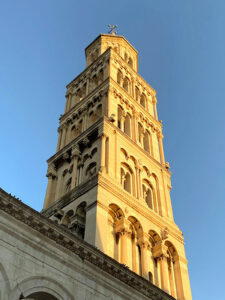
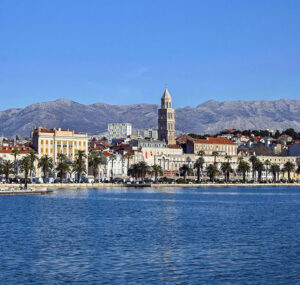
Bustling Split was the key port of the Roman province of Dalmatia and is now Croatia’s largest coastal city. We explore the monumental Palace of Diocletian, one of the largest Roman palace ruins in existence and a UNESCO World Heritage Site. Returning to prominence in the 1760s through Robert Adam’s widely distributed publication about the site, we learn how subsequent occupants converted the Classical structures into churches, apartments, shops, and cafés. For example, the mausoleum of Emperor Diocletian was transformed into the Cathedral of St. Domnius in the 7th century. The Town Museum is housed in the Gothic Papalić Palace. The Meštrović Gallery is dedicated to the life and works of influential Croatian sculptor Ivan Meštrović. Following lunch, we reconvene at the Archaeological Museum, founded in 1820 and containing important finds from nearby Roman, early Christian, and Medieval sites.
Overnight: Split
Included: B, L
October 10
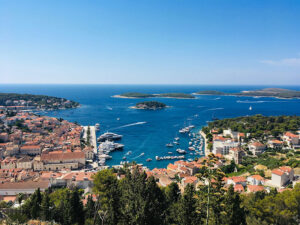
Embarking by ferry, we spend the day on the mountainous island of Hvar, where olives, figs, grapes, lavender, and honey have been cultivated since antiquity. A guided walking tour of the Medieval walled town introduces the Venetian piazza and abundant historic buildings. The 14th-century Arsenal was adapted in 1612 to hold Europe’s first municipal theatre. The Cathedral of St. Stephen is a uniquely Croatian confection of Gothic, Renaissance, Mannerist, and Baroque styles. Hvar’s 15th-century Franciscan Monastery holds renowned artistic treasures, including Matteo Ingoli’s large-scale rendition of the Last Supper housed in the refectory. Our afternoon opens at the Lace Museum before our focus shifts to lunch and then the island’s ancient hillside villages, farms, and vineyards.
Overnight: Split
Included: B, L
October 11
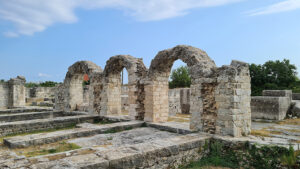
We move inland to the ruins of Salona, one of the largest cities of the late Roman empire and the capital of the province of Dalmatia, complete with a forum, baths, temples, and a 2nd-century ampitheatre that could seat upwards of 20,000. Continuing to the Kaštela region, we sample the wares at a family-run vineyard. Upon reaching the small island of Trogir, whose historic city center is a UNESCO World Heritage Site, we enjoy lunch at a local restaurant. Trogir is celebrated for its well-preserved architecture. The 13th-century doors on the Romanesque-Gothic Cathedral of St. Laurence were carved by the Dalmatian artist known as Master Radovan and are considered the finest expression of Romanesque sculpture in the region. The sparkling Orsini Chapel is a late-15th-century masterpiece holding the sarcophagus of the first bishop of Trogir and sculptures by Nikola Firentinac. The 11th-century Church of St. Nicholaus and the adjacent Benedictine convent contain an important art collection ranging from Antiquity to the Gothic era. We return to Split for a celebratory reception and dinner to toast our marvelous Balkan travels.
Overnight: Split
Included: B, L, R, D
October 12
Guests depart from the Split airport for stateside connections or continue to Zagreb for the Optional Extension (Tour 1 only).
Included: B



OPTIONAL EXTENSION TO ZAGREB AND LJUBLJANA
For those seeking to head inland from the Dalmatian Coast, the Extension brings Trust members to the capitals of Croatia and Slovenia: Zagreb and Ljubljana. Surrounded by natural splendor, both cities are steeped in superb historic sites, cultural institutions, and atmosphere.
October 12
Zagreb is the heart of Croatia’s political, economic, and cultural life with a history extending back to Medieval roots. Gathering in the late afternoon at the elegant Esplanade Zagreb Hotel, we orient ourselves to the region through an introductory lecture before sharing a welcome reception and dinner.
Overnight: Zagreb
Included: R, D
October 13
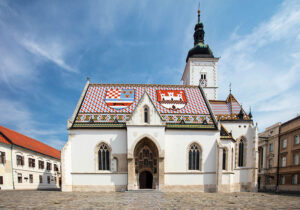
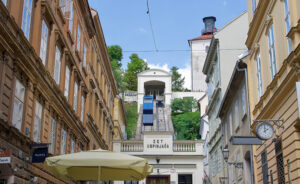
Zagreb’s Old Town beckons, and we set out on a walking tour to enjoy the city’s Medieval core, which is centered around Ban Jelačić Square, a hub of bustling activity amidst shops and cafés. The Church of St. Mark’s in the Upper Town has 13th-century origins but primarily dates to the late 19th-century, when the iconic colored glazed tiles on the roof were added. The Cathedral of the Assumption, Zagreb’s most famous monument, contains a c. 1495 triptych by Albrecht Dürer and was updated in a Gothic Revival mode in the 1880s following an earthquake. Three historic buildings were linked to form the City Museum, which holds a decorative arts collection that charts Zagreb’s cultural development. After a restorative lunch, we visit the Museum of Naive Art, housed in a beautiful Baroque Revival structure and filled with paintings and sculptures indicative of the region. Our day concludes at a ceramic studio, where the proprietors continue to practice time-honored traditions of forming and decorating their wares by hand.
Overnight: Zagreb
Included: B, L
October 14
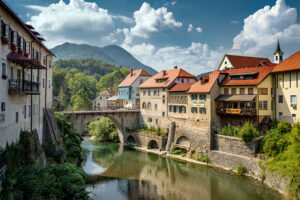
Our final visit in Zagreb is an out-of-hours tour of the Ethnographic Museum, an exuberant Art Nouveau structure where a magnificent collection of historic decorative arts is found within. After crossing into Slovenia, we pause for lunch at Otočec Castle. Picturesquely sited on an island in the Krka River, this handsome 13th-century Renaissance structure is admired for its charming interiors and excellent fare. Just down river lies the beautiful village of Novo Mesto, an important trading center in the Middle Ages that was expanded in the late 14th century by the Habsburg Archduke Rudolph IV. Walking through the Old Town we reach the Cathedral of St. Nicholas, situated at the highest point on the river promontory and featuring an altarpiece by Tintoretto. The holdings of the adjacent Dolenjska Museum include a superb selection of ancient artifacts tied to the Celtic tribes that inhabited the region. Pushing forward to Ljubljana, we arrive at the sumptuous Grand Plaza Hotel in time for a pleasant dinner.
Overnight: Ljubljana
Included: B, L, D
October 15
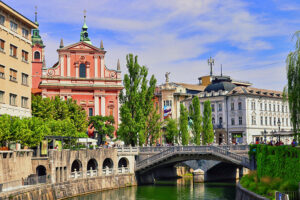
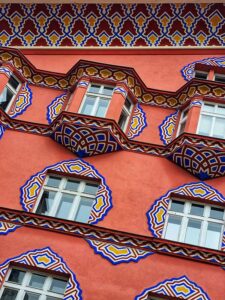
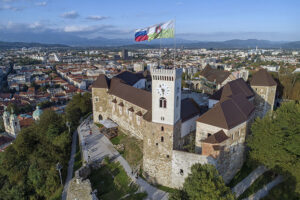
Ljubljana is one of Europe’s most attractive capitals, and our morning walking tour of the photogenic Old Town focuses on the city’s rich architectural heritage, which ranges from the Austrian Baroque to Art Nouveau to Mid-Century Modernism. Designed by leading Jesuit architect Andrea Pozzo, the Cathedral of St. Nicholas contains a richly decorated sequence of side chapels and a trompe l’oeil ceiling by Giulio Quaglio the Elder. The library of the nearby Seminary is among the city’s most important Baroque interiors. The stately yellow façade of Gruber Palace connotes a transition toward the Rococo style initiated by Jesuit priest and engineer Gabrile Gruber to house a school of hydrology and navigation. The great mid-20th-century Slovene architect Jože Plečnik planned the colonnade of the riverside Central Market in homage to the agoras of ancient Greece. The University Library is considered Plečnik’s greatest masterpiece, combining the straight lines of Modern architecture with organic surfaces and decorative details. Following our midday repast, we board the funicular for a ride up to Ljubljana Castle, perched atop a cone-shaped hill above the Old Town. Over the past millennia, the fortified location has served as the ruling family’s base of power, a barracks, and a prison. The 15th-century Chapel of St. George pays homage to the noble families of Carniola and their Habsburg successors. At the Plečnik House we gain further insight into the architect’s life and work through his furniture, library, drawing tools, archive, and personal belongings preserved in situ.
Overnight: Ljubljana
Included: B, L
October 16
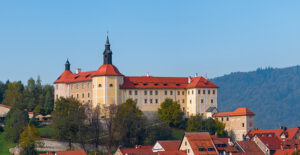
Before departing Ljubljana for an afternoon in the countryside, we take advantage of the opportunity to visit two excellent collections in the Museum Quarter district. The Ethnographic Museum sheds light on the local artisan communities producing furnishings, costumes, and sculpture. The National Museum’s notable holdings include a magnificent range of furniture from the Medieval to the Baroque and then on to Plečnik’s Mid-Century designs. Located northwest of the capitol and surrounded by scenic forested ridges, the Medieval town of Skofja Loka beckons us for lunch among its many architectural treasures. Near the delightful market square sits the 16th-century Homan House, with a lively façade of sgraffito patterns. The Baroque castle served as the seasonal residence of the bishops of Freising and now contains the town’s museum, including the brightly colored ceramics traditional to the region. We return to Ljubljana to toast our new insight into the great capital cities of Croatia and Slovenia during a festive closing dinner.
Overnight: Ljubljana
Included: B, L, D
October 17
Guests depart from the Ljubljana or Zagreb airports for stateside connections or continue to the Dalmatian Coast for the start of Tour 2.
Included: B


Land Arrangement Cost: $10,600 per person, based on double occupancy for 8 nights. For the Optional Extension, $5,250 per person, based on double occupancy for 5 nights.
Included in Trip Cost: Hotel accommodations in 4-and 5-star hotels, 8 breakfasts (B), 7 lunches (L), 3 receptions (R), and 4 dinners (D) for the Main Tour and 3 breakfasts, 3 lunches, 1 reception, and 3 dinners for the Extension. Private coach transportation; local guides; admission in museums, historic houses, and gardens; gratuities for professional guides and coach drivers; and porterage. For those who wish to extend their stay we can arrange extra nights at the hotels listed for an additional cost.
Airport transfers: Private airport transfers for arrivals will be provided on the day immediately preceding the tour and the first day (Tour 1: October 3–4; Extension: October 11-12; Tour 2: October 17–18), as well as departure days (Tour 1: October 12; Extension: October 17; Tour 2: October 26). Participants wishing to arrive or depart from an airport outside of the itinerary will incur supplementary costs.
Not Included in the Trip Cost: Airfare, airport transfers other than specified above, alcoholic beverages other than when provided, personal expenses, and trip insurance are not included. Transatlantic airfare is not included. Please do not make your airline reservations until you have received written confirmation of your registration from the Trust.
Reservations: A deposit of $2,500 per person for the Main Tour and $1,000 per person for the Extension is required at time of registration. Reservations and deposits are taken on an as-received basis. You will receive written confirmation from the Trust when we receive your registration.
Single Supplement: The single supplement is $2,200 for the Main Tour and $735 for the Extension, to be paid with the final balance.
Final Payment: Will be due by June 5, 2026.
Membership: Membership at the Sponsor level is required for participation in Study Trips Abroad. Your membership contribution is tax-deductible. If an increase in your membership level is necessary, the Trust will invoice you for the appropriate level upgrade with your final payment.
Contribution: A $500 donation to the Trust per person is required for Study Trips Abroad. This gift is fully tax deductible and helps support the Trust’s mission and programs.
Itinerary: The schedule outlined in this itinerary is contracted at this time but subject to change as necessary.
Participation: The trip is limited to a maximum of 25 members and requires a minimum of 20. The trip will be canceled if under-subscribed, and deposits will be refunded.
Activity Level: The Trust’s Study Trip Abroad itineraries are planned with care and attention to detail to ensure a memorable and rewarding trip for all participants. This itinerary is strenuous and includes standing for long periods of time, walking on uneven surfaces, and ascending and descending stairs without handrails. Please consider if this program is suited for your health, physical condition, and individual circumstances.
Cancellation and Refunds: If you must cancel your reservation, you are urged to do so as soon as possible in writing to the Trust. All cancellations are subject to a $500 administrative fee per person. Deposits are non-refundable after April 3, 2026. Cancellations arriving by July 5, 2026, will receive a 50% refund. Cancellations arriving by August 7, 2026, will receive a 25% refund. There will be no refunds for cancellations received after August 7, 2026. The Decorative Arts Trust strictly adheres to its cancellation policy to offset costs incurred prior to the commencement of a program and therefore no exceptions can be made. The Trust strongly encourages all participants to purchase travel insurance to protect against cancellations due to illness, injury, and other disruptions.
If you have questions about the Terms & Conditions of this program, please email thetrust@decorativeartstrust.org.