Montreal and Quebec City: Furnishing New France
SOJOURN
July 13–17, 2026
A rich heritage of French Canadian culture and commerce shapes the sparkling skylines of Montreal and Quebec City. Join the Decorative Arts Trust for an unforgettable summer Sojourn as we explore all that the St. Lawrence River Valley has to offer. In Montreal, a Colonial-era cityscape is enmeshed with modern architecture and some of the finest collections of decorative arts in the world. Upriver in Quebec City, the winding 18th-century cobblestone streets of New France are harmoniously intertwined with luxurious Châteauesque structures of the 19th century. These twin cities complement each other for a comprehensive portrait of Québécois culture, built upon a centuries-old legacy that blends Indigenous roots, French foundations, British influence, and waves of later immigration. An exciting fusion of peoples, languages, and material cultures brings magic to the region, reflected today in the warm joie de vivre of its inhabitants.
REGISTRATION NOW CLOSED
ITINERARY
Monday, July 13
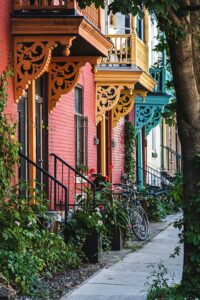
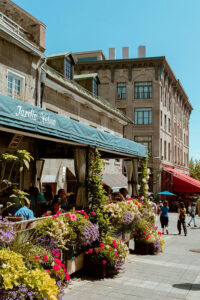
We convene in the heart of Montreal at the stylish Queen Elizabeth Hotel. Built in the 1950s as a modern skyscraper, the hotel signaled the city’s emergence as a major North American business center. From there, we step back in time with an afternoon walking tour of Old Montreal, where French settlers landed along the St. Lawrence River in 1642 and established their vision of New France. Today, cosmopolitan shops and restaurants sit alongside 18th-century buildings and cobblestone streets, forming a historic quarter that has been thoughtfully revitalized. Returning to the hotel, we enjoy an introduction to Canadian decorative arts and design through a welcome lecture by Philippe Halbert, Curator of Decorative Arts and Design at the Montreal Museum of Fine Arts. The day concludes with dinner at Monarque, a refined Old Montreal brasserie led by father-and-son team Richard and Jérémie Bastien.
Overnight: Montreal
Included: R, D
Tuesday, July 14
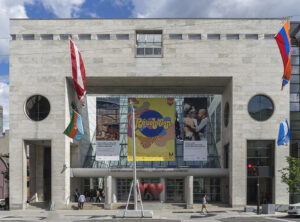
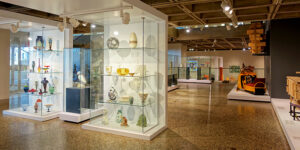
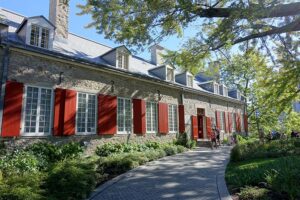
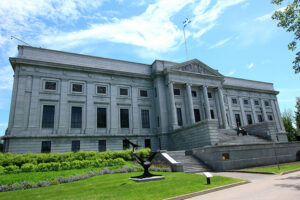
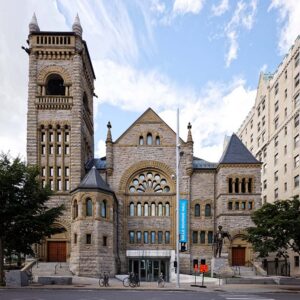
Our morning begins with a visit to the Montreal Museum of Fine Arts where Philippe Halbert accompanies us on a private tour of one of North America’s largest and most important decorative arts and design collections. A 2025 expansion to the Stewart Pavilion—a Brutalist architectural gem designed by Fred David Lebensold—gives a fresh backdrop for more than 900 silver, ceramic, furniture, and textile objects. We continue to the Claire and Marc Bourgie Pavilion where the MMFA’s art collection brings Québec and Canadian history into focus. Originally a Romanesque Revival church, the building now houses a concert hall and features 20 stained glass windows produced by Tiffany Glass and Decorating Company between 1897 and 1904. Our visit includes a close look at works by a pivotal school of landscape painters known as the Group of Seven, who developed a distinct national art movement by showing paintings inspired by direct contact with the Canadian natural environment. Their works from the 1920s and 1930s rejected European academic conventions and celebrated the vibrancy and power of the boreal forests and Arctic landscapes. After lunch near the Lachine Canal, we visit Château Ramezay, built in 1706 for a French aristocrat who later served as governor of Montreal. Among the earliest stone buildings in Old Montreal, the house later functioned as the colonial headquarters of the French West India Company and, during the American Revolution, as a temporary base for the Continental Army. Today, the museum preserves a substantial collection of artifacts articulating early life in Montreal, along with a formal French colonial garden.
Overnight: Montreal
Included: B, L
Wednesday, July 15
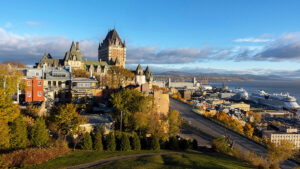
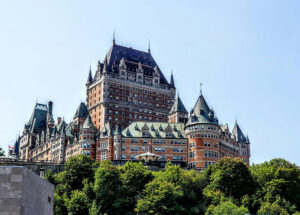
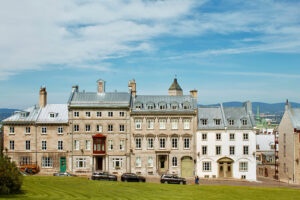
We trace a path northward along the St. Lawrence River for Quebec City, filled with European charm befitting its 400 years of colonial history. The city’s origins date to 1608 when French explorer and diplomat Samuel de Champlain, known as the Father of New France, established a fur trading post and forged strategic alliances with the local Innu, Algonquin, and Wendat peoples. After a three-month campaign during the French and Indian War, British forces captured the city, and New France was ceded to the British in 1763. The city experienced a golden age in the 19th century with economic prosperity and the rise of wealthy industrialists. Le Château Frontenac, an audaciously elegant structure that opened in 1893, testifies to this ascondancy. Reputedly the world’s most photographed hotel, fabulous turrets, winding hallways, and imposing wings graciously complement a dramatic location atop Cap Diamant, a cliff that cascades into the St. Lawrence River. We are welcomed to the capital city of French Canada with an orientation lecture during lunch, and set off on a walking tour to explore the UNESCO-recognized Old Town with its preserved bastions and ramparts, and Normandy-style stone houses flanking winding cobblestone streets. After a respite at the hotel, we reconvene for dinner at a highly regarded local eatery.
Overnight: Quebec City
Included: B, L, D
Thursday, July 16
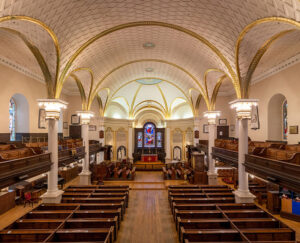
Quebec City’s Upper Town, built atop a cliff, has long served as a religious center, and our morning is devoted to two important ecclesiastical sites. Founded in the 17th century, the Ursuline Monastery established North America’s first school for girls in 1641, educating both Indigenous and French students. The reconstructed chapel retains its original 18th-century carved and gilded wood decoration by Pierre-Noël Levasseur, a rare survivor from New France. The adjacent museum preserves an exceptional collection of gold and silver embroideries created by students educated at the convent. Consecrated in 1804, the Cathedral of the Holy Trinity was the first Anglican cathedral built outside the British Isles. Designed by two officers from the British military engineering corps, it is modeled on James Gibbs’s St. Martin-in-the-Fields in London, with pews built of oak imported from Windsor Castle’s Great Park. Upon completion, King George III sent the cathedral a treasure chest of elaborate objects, including candlesticks, chalices, and silver trays. The Café Québecor at the National Museum of Fine Arts of Quebec hosts us for lunch, after which we visit the Pierre Lassonde Pavilion, which brings together 150 objects created by 20th- and 21st-century artists. At the Quebec Craft Center, students are trained in research and making, with a focus on ceramics, textiles, and sculpture. During a visit to some of their 25 studios, we observe the careful blending of traditional craft, Contemporary design, and internationally renowned artistic expertise. In the evening, we gather for a farewell dinner at Laurie Raphaël, an elegant Old Port restaurant recently awarded its first Michelin star for its celebration of Québec’s local terroir—a fitting conclusion to our Sojourn!
Overnight: Quebec City
Included: B, L, D
Friday, July 17
Guests depart for Quebec City Jean Lesage International Airport or continue travels at their leisure.
Included: B
Registration fee: $4,825 per person based on double occupancy for 4 nights.
Included in the trip cost: Accommodations in 5-star hotels. All breakfasts (B), lunches (L), receptions (R), and dinners (D) referenced above. Private coach transportation; local guides; admission in museums and historic houses; gratuities for professional guides and coach drivers.
Not included in the trip cost: Airfare, alcoholic beverages other than when provided, personal expenses, and trip insurance. Airport transfers can be arranged at a supplementary cost. Please do not make your airline reservations until you have received written confirmation of your registration from the Trust.
Single supplement: The single supplement is $1,100.
Membership: All participants must be members of the Decorative Arts Trust. Click here to see membership levels and benefits.
Itinerary: The schedule, sites, and events outlined in this itinerary are subject to change as necessary.
Participation: The program is limited to a maximum of 25 participants and requires a minimum of 20. We will organize and maintain a waiting list on the basis of the time requests are received. The Trust’s itineraries are planned with care and attention to detail to ensure a memorable and rewarding experience for all participants. This itinerary includes standing for long periods of time, walking on uneven surfaces, and ascending and descending stairs without handrails. Please consider if this program is suited for your health, physical condition, and individual circumstances.
Cancellations and refunds: All cancellations received by April 17, 2026, are subject to a full refund less a $250 administrative fee per person. Participants canceling between April 17 and May 1, 2026, will receive a 50% refund. Refunds will not be made after May 1, 2026. THE TRUST STRONGLY ENCOURAGES ALL PARTICIPANTS TO PURCHASE TRAVEL INSURANCE TO PROTECT AGAINST CANCELLATIONS DUE TO ILLNESS, INJURY, AND OTHER DISRUPTIONS.