
Atlanta: From Railroads to Renaissance
EVENTS > SYMPOSIA
SPRING SYMPOSIUM
April 22–26, 2026
OPTIONAL TOURS
Athens and Madison: Classicism in the Piedmont April 22–23
Roswell: Grand Houses Along the Chattahoochee April 26
Join us as we explore Atlanta’s remarkable transformation from railroad terminus to cultural capital. Rising from the ashes of the Civil War, Atlanta became a beacon of the so-called New South, where early-20th-century architects like Philip Trammell Shutze created stunning estates and visionaries assembled collections that rival the nation’s finest. From the splendor of Swan House to the intimate elegance of private estates, from the folk art traditions of Georgia’s countryside to the sophisticated European porcelain housed in Athens, this Symposium reveals the layered history of a city and region that have always looked forward while honoring their past. As we engage with scholars, curators, and collectors who steward Atlanta’s artistic legacy, we discover how ambition, resilience, and distinctive regional character shaped an impressive decorative arts tradition and created the cradle of the civil rights movement.
REGISTRATION FULL
This program is sold out. Please contact us at thetrust@decorativeartstrust.org to join the waitlist.
SYMPOSIUM ITINERARY
Thursday, April 23, 6:30 pm–9:00 pm
Welcoming Remarks and Opening Program at The Tess Hotel
The Jonathan L. Fairbanks Lecture
Collecting Georgia: Early Decorative Arts and Craft from Hearth to Parlor
Dale Couch, retired, Curator of Decorative Arts at the Georgia Museum of Art
Following our opening lecture, join us for a welcome reception ten stories up in The Tess’s rooftop lounge, where skyline views, regional cuisine, and libations set the tone for our exploration of the city’s refined taste and gracious hospitality.
Sponsored by 
Friday, April 24, 8:30 am–5:00 pm
Atlanta History Center
Welcome
F. Sheffield Hale, Atlanta History Center President & Chief Executive Officer
Something to Last the Years: The Architecture of Philip Trammell Shutze in the South
Barbara Hyde, Shutze Scholar and Keeper of the Goodrum House
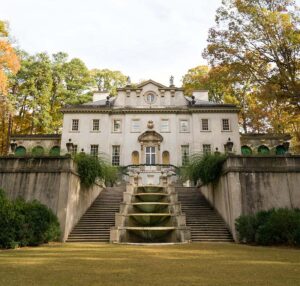
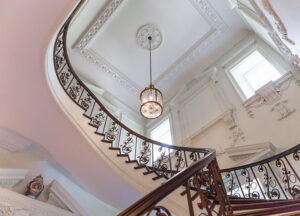
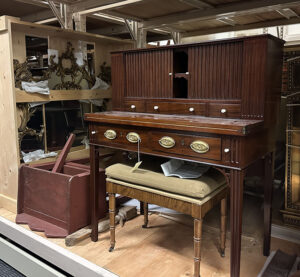
Our day begins with an introduction to Philip Trammell Shutze, the Georgia-born architect who designed many of Atlanta’s most distinguished early-20th-century residences. We then take to the city for immersive visits to the region’s premier collections of decorative and fine arts. Our morning is devoted to the Atlanta History Center, a museum and research center dedicated to stewarding the multifaceted story of Atlanta’s material culture. Its sprawling campus dotted with historic buildings includes the magnificent Swan House. Designed by Shutze in 1928, this confection of Renaissance and Classical styles represents the pinnacle of Atlanta’s Country House Era. The Palladian façade, Italian Renaissance gardens, and lavish collection of porcelain, silver, furniture, and paintings exemplify the sophisticated aesthetics of Atlanta’s elite during the city’s golden age. Our visit also includes special behind-the-scenes access to the Center’s storage facilities where we examine rarely displayed treasures. Guided walks through the gardens showcase the arboreal artistry of Southern landscape design. The Center’s permanent exhibitions provide essential context for Atlanta’s evolution from railroad hub to modern metropolis as we deepen our understanding of the city.
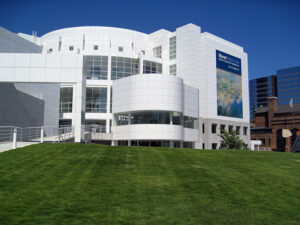
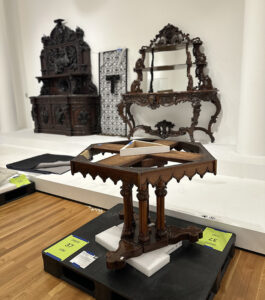
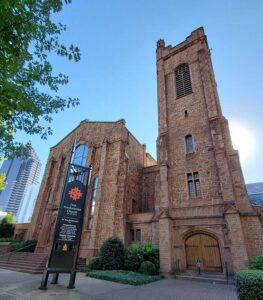
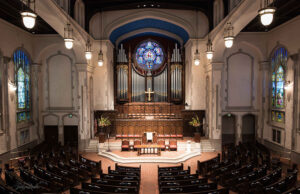
Following lunch, we visit the High Museum of Art, the Southeast’s largest art museum and a gem of 20th-century Modernist architecture, which celebrates its centennial in 2026. We enjoy special access to the American decorative art galleries, closed for renovation but opened exclusively for our group. Expert guides treat us to an investigation of the museum’s significant holdings of material culture from the Virginia Carroll Crawford Collection, including important works by the Herter Brothers, Tiffany & Co., and Frank Lloyd Wright. A curator-led examination of the museum’s impressive ceramics galleries reveals more than 100 years of dedicated collecting of pottery and fine porcelain. Next door is the First Presbyterian Church, built in 1914 in the Late Gothic Revival style by Walter T. Downing and A. Ten Eyck Brown, prolific architects in early-20th-century Atlanta. The church’s sequence of exceptional stained-glass windows include examples by three renowned sources: Louis C. Tiffany, Nicola D’Ascenzo, and the Willet Studio.
Saturday, April 25, 9:00 am–5:00 pm
We begin the day in Buckhead, where exclusive access to the 1929 Goodrum House and gardens, another of Shutze’s fine achievements and one of his personal favorites, allows us to appreciate the architect’s mastery of proportion and detail and the integration of interior and exterior spaces. His unique interpretation of the English Regency style and the ornate mural decoration are not to be missed. We then enjoy a visit to a private residence housing an impressive collection of English material culture, including an extensive collection of furniture from the Georgian period.
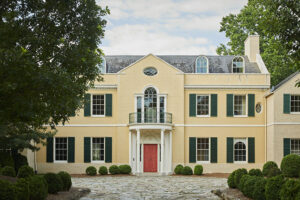
After a traditional Southern lunch, we tour two storied residences. We visit the privately owned 1924 Randolph Lucas Jones House, designed by prominent Atlanta architect P. Thornton Marye. This Georgian Revival mansion’s stately symmetry and detail reveal Marye’s versatility and the aspirations of his Atlanta patrons. The current owner assisted in the home’s relocation and rehabilitation, and shares insights into his approach to preservation and connoisseurship. The Herndon Home Museum was built in 1908 for Atlanta businessman Alonzo Herndon. Rising from slavery to become one of the wealthiest African American businessmen in the South, Herndon and his wife, Adrienne McNeil Herndon, designed the 15-room Beaux Arts-style home in what is today known as the Vine City neighborhood. The home was constructed by African American craftsmen and continues to hold furnishings and objects belonging to the family.
Sunday, April 26, 8:45 am–11:00 am
We conclude our Symposium in the Cresthaven Ballroom with four distinguished presentations that demonstrate different facets of Georgia’s varied decorative art traditions. From emerging scholarship on regional material culture to Georgia quilts and folk art, these lectures showcase the breadth and depth of the state’s contributions to American decorative arts.
The John A.H. Sweeney Emerging Scholar Lecture
Feminine Arts | Fraternal Orders: Masonic Materiality in 19th-Century Georgia
Kelsey Seigert, Curatorial Fellow, Georgia Museum of Art
From Play Mountain to Playscapes: Isamu Noguchi’s Playground for Atlanta
Monica Obniski, Curator of Decorative Arts and Design, High Museum of Art
The James A. Sanders Lecture
Georgia Quilts at the Museum of Early Southern Decorative Arts
Lea C. Lane, Curator, Museum of Early Southern Decorative Arts
Georgia (Folk Pottery) On My Mind
Dr. John A. Burrison, Regents Professor of English and Director of the Folklore Curriculum, Georgia State University



SPONSOR RECEPTION
Friday, April 24, 7:00 pm–8:30 pm
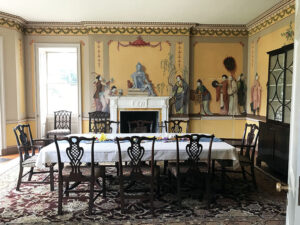
Decorative Arts Trust members at the Sponsor level and above will receive an invitation to this special reception. The historic Piedmont Driving Club is one of Atlanta’s most prestigious private clubs, where we gather in surroundings that embody the city’s enduring traditions of hospitality.
A bastion of timeless elegance tracing its roots to 1887, the Piedmont Driving Club was founded by visionary developer Joel Hurt as a distinguished haven for leisure. The club’s architectural grandeur complements the vision of renowned landscape architect Frederick Law Olmsted Jr., who specialized in harmonizing architectural design with natural beauty. For over a century, the Piedmont Driving Club has captured the essence of Southern charm.
FUNDRAISER FOR THE EMERGING SCHOLARS PROGRAM
Saturday, April 25, 6:00 pm–7:30 pm
We are delighted by the invitation to join Trust members Eileen and Beverly “Bo” DuBose III at their splendid home along the Chattahoochee River for our Emerging Scholars Program Fundraiser. The DuBoses kindly share their exquisite collections of silver, Chinese blue-and-white and armorial porcelain for the English market, English porcelain in the Bengal Tiger pattern, Civil War artifacts, and an extensive array of copper implements. The DuBoses are dedicated supporters of the Trust’s Emerging Scholars Program through the founding of a scholarship enabling burgeoning curators and academics to join the Trust’s Study Trips Abroad. This intimate evening of connoisseurship and conviviality allows us to toast our hosts’ hospitality and lend support to the Trust’s efforts to encourage the next generation of curators and academics through a growing series of grants, scholarships, and internships. In 2025, nearly 70 graduate students and young professionals benefited from the Trust’s Emerging Scholars Program.
A tax-deductible donation of $500 per person and prior registration is required to attend this fundraiser.
PRE-SYMPOSIUM OPTIONAL TOUR
Athens and Madison: Classicism in the Piedmont
Wednesday, April 22, 8:30 am–7:45 pm
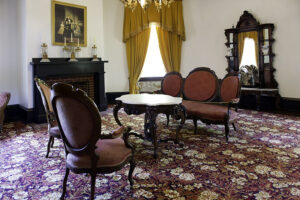
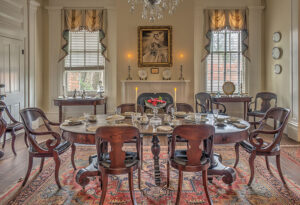
We begin our journey in Athens, Georgia’s celebrated college town, where Antebellum architecture and Classical Revival residences create one of the South’s most beautiful historic districts. Our morning is devoted to rotating tours of two exceptional house museums that reveal the sophistication of Athens’s 19th-century elite.
The T.R.R. Cobb House, built in 1834 and given as a wedding gift in 1844, showcases Greek Revival architecture at its finest. Cobb, a prominent attorney and architect of Georgia’s secession, and his wife, Marion, filled their home with stylish furnishings that reflect both his professional success and their aesthetic acumen. The house’s distinctive features and enticing collections transport us to the intellectual and social world of Antebellum Athens. The c. 1820 Church-Waddel-Brumby House, the city’s earliest extant residence offers insights into domestic life in early-19th-century Georgia. The house narrowly escaped demolition in 1967 when concerned citizens rallied to save and relocate it, ultimately founding the Athens-Clarke Heritage Foundation in the process.
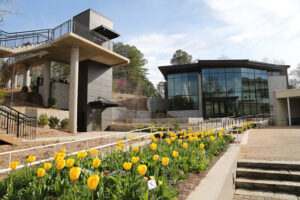
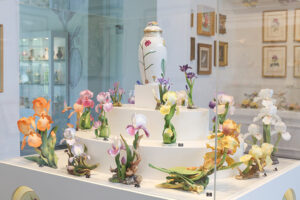
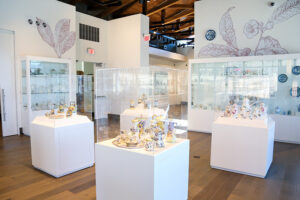
Following our morning rotations, we enjoy lunch at the 1844 Taylor-Grady House, a stunning Greek Revival mansion surrounded by massive Doric columns, once the home of Henry W. Grady, the voice of the New South. Our afternoon takes us to an unexpected treasure: the Porcelain and Decorative Arts Museum, home to an extraordinary collection of European ceramics. Curator-led tours allow us to examine rare examples of Meissen, Sèvres, and other Continental porcelain in intimate gallery settings, followed by a guided walk through the museum’s gardens.
As the day wanes, we journey to the countryside for a memorable reception at a distinguished and expansive private house and horsefarm. We are welcomed by the current owners, who are as passionate about Georgia decorative arts as they are equestrian pursuits. This lovely gathering amid rolling pastures and tasteful stables offers a fitting close to our day before continuing to our overnight accommodations in Athens.
Thursday, April 23, 8:30 am–5:00 pm
After breakfast, we depart for Madison, a jewel miraculously spared from destruction during Sherman’s March to the Sea. This enchanting town stands as one of Georgia’s most remarkable survivors, filled with pristine Antebellum architecture. Our morning tours feature privileged access to exceptional houses that remain in private hands along charming oak-lined avenues, where we gain an appreciation for the city’s enduring preservation efforts and local collections.
Following our tours, we gather for lunch at Heritage Hall, an 1811 Greek Revival residence with a distinguished history. The home was acquired in 1830 by Dr. Elijah Evans Jones, a prominent physician, railroad investor, and chairman of the Georgia Female College. It now serves as headquarters for the Morgan County Historical Society, which maintains the building’s period furnishings and preserves the rich tapestry of regional history.
After lunch, guests are invited to explore Heritage Hall at their leisure before we depart for Atlanta and the Symposium’s official opening lecture and reception.



POST-SYMPOSIUM OPTIONAL TOUR
Roswell: Grand Houses Along the Chattahoochee
Sunday, April 26, 12:00 pm–7:30 pm
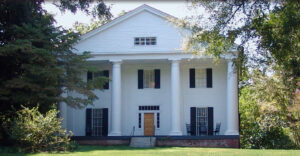
Following our morning lectures, we journey north to historic Roswell, where Antebellum plantations offer a compelling window into Georgia’s complex past. After lunch in a converted textile mill along Vickery Creek, we tour Roswell’s most significant residences. Bulloch Hall, birthplace of President Theodore Roosevelt’s mother, Martha Bulloch Roosevelt, combines architectural distinction with fascinating history. This Greek Revival mansion, completed around 1840, hosted Martha’s wedding to Theodore Roosevelt Sr., connecting Roswell to the broader sweep of American history. Barrington Hall, the most architecturally ambitious residence in Roswell, showcases the Greek Revival style at its most elaborate. Built in 1842 for Barrington King, whose family established Roswell’s textile mills, the house features Doric columns, pleasant interiors, and period furnishings that reflect the wealth generated by cotton and manufacturing.
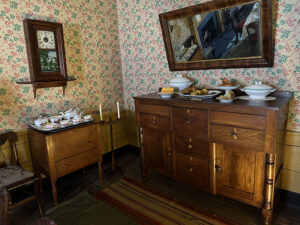
We continue to Kennesaw to visit a private residence with an exceptional collection of Georgia decorative arts, including Georgia silver, Lycett painted porcelain, and the so-called plain style of furniture solidly constructed of local woods, by and for Georgians in the 1800s. Several such pieces were included in the 1983 landmark Neat Pieces exhibition at Atlanta History Center and the 2019 Material Georgia exhibition at the Georgia Museum of Art. Both exhibitions, and accompanying catalogues, continue to provide far-reaching encouragement to scholarship and connoisseurship of the state’s vernacular furniture. We close our time together with a farewell reception at the historic William Root House in nearby Marietta. Built in 1845 for William Root, one of Marietta’s earliest merchants and its first druggist, this dignified residence stands as one of the city’s oldest surviving structures. Carefully restored to its Antebellum appearance and furnished with period antiques, the home now tells the story of daily life for both the Root family and the enslaved people who lived and worked on the property. As we gather amid the restored gardens and beneath the welcoming portico, we celebrate the discoveries and friendships forged during our exploration of Atlanta’s artistic and architectural legacy, reflecting on a journey that has taken us from railroads to renaissance.


ACCOMMODATIONS
The Tess, 415 East Paces Ferry Road NE, Atlanta, GA 30305
Special Room Rates: A block of rooms is reserved for April 21–26, 2026, starting at $259+ per night. These rooms are available on a first-come, first-served basis until March 31, 2026, at 5:00 pm. Please make your reservations as soon as possible by calling 470.600.3510 or booking online via this special Marriott link. If you call, please indicate that you are with the Decorative Arts Trust with the booking agent. If you are attending the Pre-Symposium or Post-Symposium Optional Tours, please reserve a room for the duration of your stay in Atlanta.
TERMS AND CONDITIONS
Registration fee: $1,250 per person, which includes all lectures, tours, meals, receptions, and transportation referenced above as well as a $50 tax-deductible donation to the Dewey Lee Curtis Scholarship Fund to underwrite symposium scholarships. Participants may elect to make an additional donation through registration.
Nonprofit professional fee: $600 per person, reserved for colleagues employed by museums, historic sites, universities, or preservation organizations who focus on the decorative arts or material culture. Interested applicants should contact Jessie Dean at jdean@decorativeartstrust.org. A limited number of discounted registrations are available.
Dewey Lee Curtis Symposium Scholarships: The Trust will offer at least two scholarships for this symposium for students and young professionals within five years of earning a degree. Named in memory of the late Dewey Lee Curtis, a decorative arts historian and founding father of the Trust, scholarships cover the full cost of symposium registration, lodging, and a modest travel stipend. Applications are due by February 24, 2026.
Optional programs: The Pre-Symposium Optional Tour is $650 for a single registration and $1,100 for two participants sharing a room, and includes hotel accommodations at the Hotel Indigo in Athens for the night. For this Pre-Tour, a couple or two people sharing a hotel room should only select the “two people, double room” option once during registration. The Post-Symposium Optional Tour is $375 per person. The Saturday evening fundraiser for the Trust’s Emerging Scholars Program is $500 per person, fully tax deductible. All fees include transportation, admission, and food and beverage as referenced in the brochure. Registration for optional programs is limited.
Membership: All participants must be members of the Decorative Arts Trust. Visit our Membership page for levels and benefits. Members at the Sponsor level and above are invited to the special event referenced above on the evening of Friday, April 24. Prior to the symposium on Tuesday, April 21, Champion level members are invited to a private dinner with Trust leadership.
Cancellations and Refunds: All cancellations received by February 25, 2026, are subject to a full refund less a $100 administrative fee per person. Participants canceling between February 26 and March 18, 2026, will receive a 50% refund. Refunds will not be made after March 18, 2026.
Itinerary: The schedule, sites, and events outlined in this itinerary are subject to change as necessary.
Participation: The program is limited to a maximum of 75 members. We organize and maintain waitlists. The Trust’s Symposium itineraries are planned with care and attention to detail to ensure a memorable and rewarding experience for all participants. This itinerary includes standing for long periods of time, walking on uneven surfaces, and ascending and descending stairs without handrails. Please consider if this program is suited for your health, physical condition, and individual circumstances.