
ONLINE LEARNING
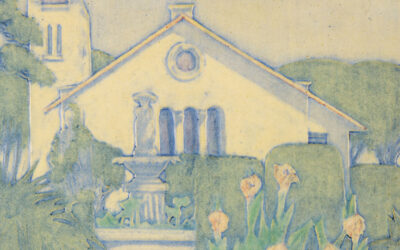
Probing the Mystique: A New Look at Newcomb Pottery
BY ELYSE D. GERSTENECKER
The story of Newcomb College Pottery has been told often. Seeking out a way for alumnae to put their education into practice, the leaders of the art department of H. Sophie Newcomb Memorial College in New Orleans established a pottery. Director Ellsworth Woodward (1861–1939) hired Mary Given Sheerer (1865–1954) to teach china painting courses in 1894, and Sheerer began working toward establishing the Pottery the following year.
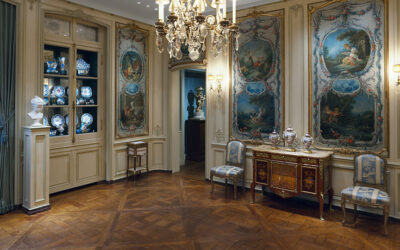
Decorative Arts Shine at the Reopened Frick
BY MARIE-LAURE BUKU PONGO
The Frick Collection recently reopened its doors following a significant renovation, marking a true milestone in the institution’s 90-year history. This project not only restored familiar spaces on the first floor of our historic home on New York City’s Upper East Side but also unveiled the second floor to the public for the first time.
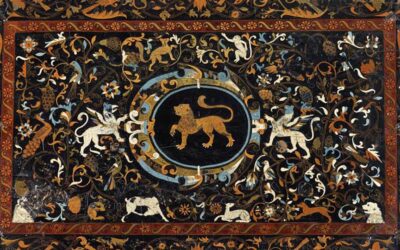
Luster, Shimmer, and Polish: Transpacific Materialities in the Arts of Colonial Latin America
BY JULIANA FAGUA ARIAS
Between the late 16th and the early 19th centuries, the so-called Manila Galleons connected the Southeast Asian port of Manila with the Mexican counterpart of Acapulco. Direct trade between these two essential nodes of the Spanish empire enabled artistic circulation between Asia and the Spanish Americas, a cultural flow that enriched both sides of the Pacific.
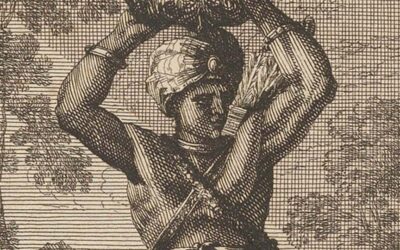
Figuring the Black Body in European Decorative Arts
BY ADRIENNE L. CHILDS
The new book “Ornamental Blackness: The Black Figure in European Decorative Arts” addresses the implications of the depiction of Black bodies in luxury objects from the Baroque period through the 19th century.
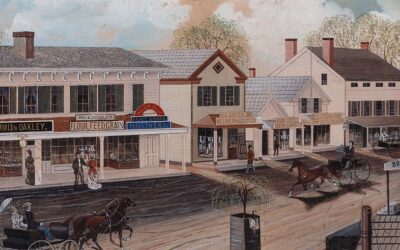
Promoting Long Island: New Book Investigates the Art of Edward Lange
BY LAUREN BRINCAT AND PETER FEDORYK
In February of 1893, Edward Lange (1846–1912) penned a four-page letter from Olympia, WA—one of the few extant documents by his hand—to his longtime friend on Long Island, Carll S. Burr (1831–1916), offering an odd reflection on the nearly 20 years he spent in New York.
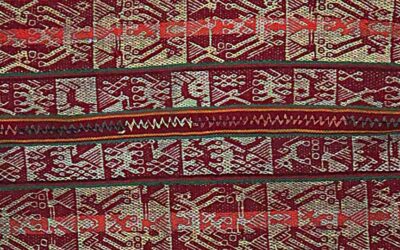
Discovering the Origins of Rare Textiles at Museo De Las Américas
BY YADIRA QUINTERO AND LAURA BEACOM
Museo De Las Américas in Denver, CO, has a growing collection of over 4,000 objects, including approximately 600 textiles, consisting of a wide variety of historical and contemporary garments with accessories, tablecloths, handicrafts, and other housewares.
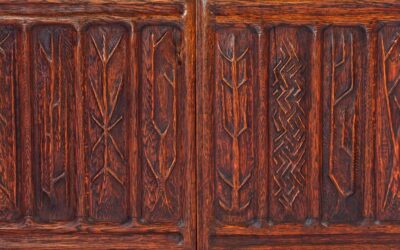
The Crafted World of Wharton Esherick
BY AMANDA C. BURDAN AND EMILY ZILBER
The Brandywine Museum of Art’s new exhibition, “The Crafted World of Wharton Esherick,” explores the interdisciplinary creativity of Wharton Esherick (1887–1970), the famed American artist and designer renowned for his expressive approach to wood, his favored medium.
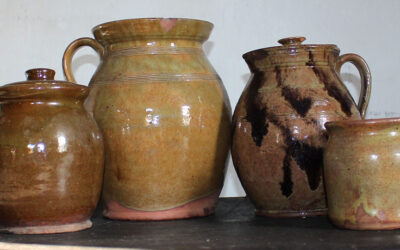
Colonial Architecture, Decorative Arts, and Enslavement at the Colonel John Ashley House
BY LIVY SCOTT
I have spent the last year as the Peggy N. Gerry Curatorial Fellow at The Trustees of Reservations (The Trustees) working at the Colonel John Ashley House. In this two-year fellowship, my role entails cataloging the house’s collection, reinterpreting its historic interiors for a new furnishing plan, and conducting new scholarly research.
Convergence at the Market: Vernacular Artisans and Literati in Late Imperial China
BY DANIELLE ZHANG
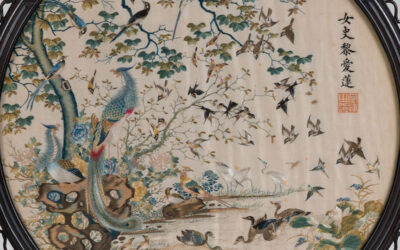
The boundary between vernacular and literati art seemed to change in Late Imperial China (1368–1912). Instead of concentrating on imagery and motifs, some creative and talented vernacular craftspeople started to incorporate themes that belonged to literati.
Crafting Appalachia: Examining Berea College’s History and Traditions
BY MATTHEW E. MONK
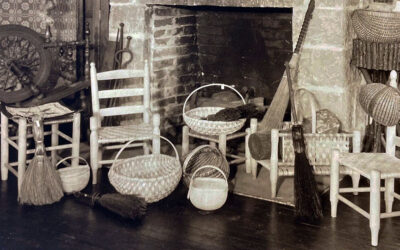
At Berea College in central Kentucky, I worked alongside staff and students and explored material and archival collections. My research, centered on the evolution of craft education at Berea, offered a fascinating window into the ways the institution has both shaped and been shaped by broader societal currents, particularly those affecting the Appalachian region.