
Seeking Profit and Power: Philadelphia, China Trade, and the Making of America
Click on images to enlarge them and view captions.
by Peter Seibert
Seeking Profit and Power: Philadelphia, China Trade, and the Making of America at the Independence Seaport Museum (ISM) explores the complexities of how the fledgling United States established both international trade and diplomatic relations through trade with Asia. The presentation includes more than 120 objects from the ISM’s collection as well as loans from other organizations and private collections.
In the late 18th century, the trade routes to Africa, Asia, and much of the Middle East were monopolized by England, France, and Spain. Ships traveling at sea without the benefit of naval protection were frequent targets for Barbary pirates, and American crews were occasionally forced into British service by zealous Royal Navy vessels. With independence in hand, China was open and welcoming to foreign nations on a nearly equal basis.
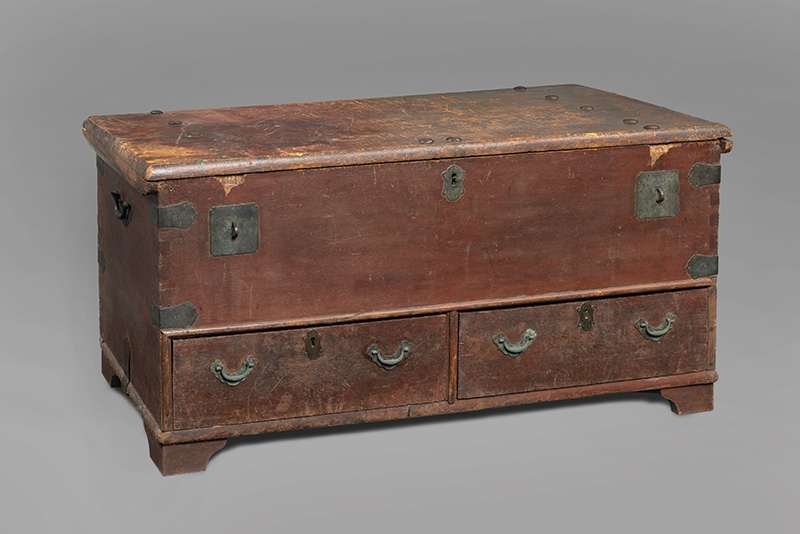
In the fall of 1784, the ship Empress of China sailed from New York Harbor carrying a letter from Congress seeking to open trade with the “emperor and potentates of China.” The ship was captained by the Irish-born John Green (1735–96), an experienced naval officer. Green was a notable officer who served in the Continental Navy. His sea chest (figure 1) is among the featured items in the exhibition. The chest was likely made in Philadelphia or Charleston, two of the several ports called upon by Green. When the Empress of China returned to New York almost 15 months later, it was laden with goods as well as recognition of the United States as an official trading partner with China. Captain Green, perhaps to commemorate his successful voyage, added iron and brass decorative mounts acquired in China to his chest.
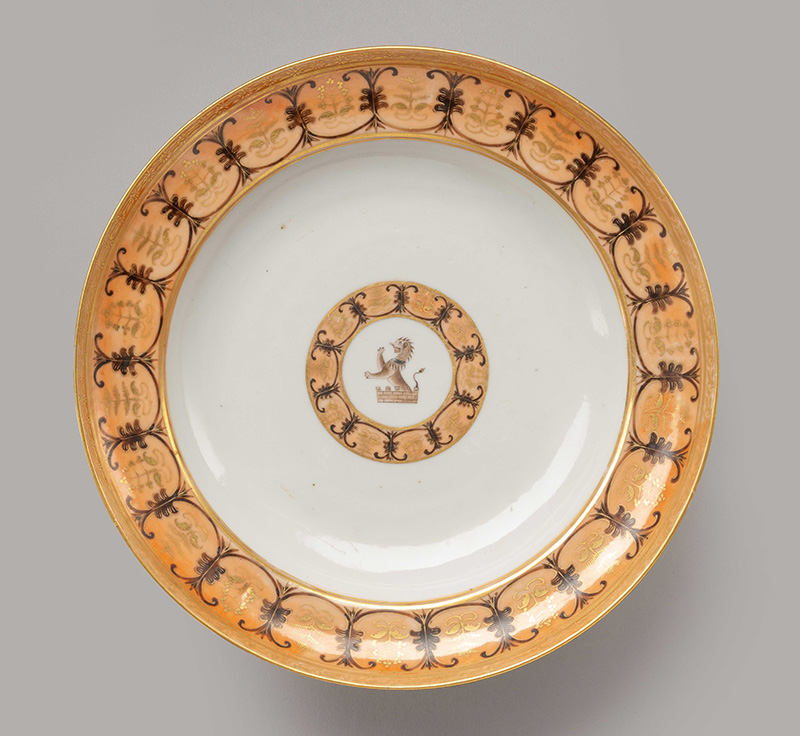
Philadelphia merchant and investor Robert Morris served as a primary underwriter of the Empress of China’s expedition, thereby establishing a significant role for his city in Asian trade. Among his followers, Benjamin Chew Wilcocks pioneered the American opium trade with his brother James Smith Wilcocks, traveling as supercargoes on the first American ship to transport opium in 1805. The Wilcockses were prominent Philadelphia merchants, and Benjamin lived in Canton for extended periods. He was commissioned as consul for Canton in 1813, serving until 1822, after which he remained there as a merchant until 1827 before returning home to Philadelphia where he continued to invest in the China trade. Wilcocks, like many wealthy American contemporaries, desired personalized Chinese porcelain, and Seeking Profit and Power includes a plate from a dinner service he commissioned during his residency in Canton, featuring the Wilcocks crest with the rampant demi-lion at center (figure 2). Although the Fitzhugh pattern was a more common choice among American consumers, Wilcocks opted for a French-influenced design with a gilded border of anthemion. He also sent home gifts for family members, including to his sister-in-law Harriet Manigault, who received shawls, dresses, and jewelry.
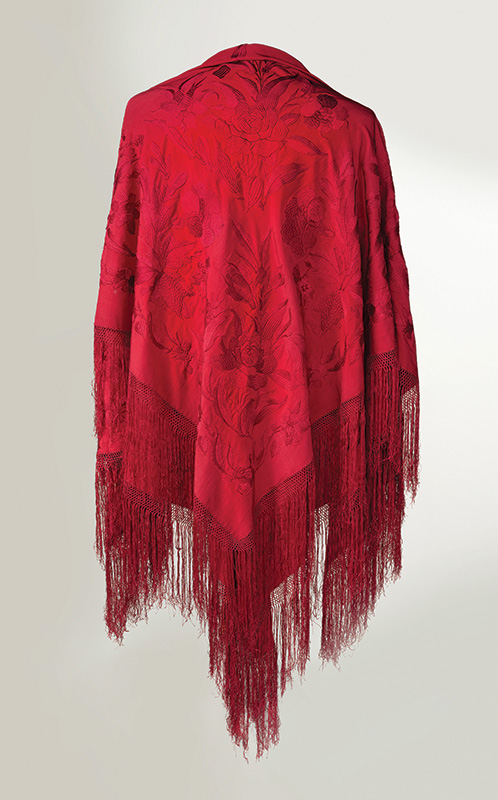
Although textiles were a substantial part of the China trade, few have survived. A rare extant example is featured in Seeking Profit and Power. In the 1840s, prominent Philadelphia merchant Rodney Fisher (1798–1863) purchased an embroidered burgundy silk shawl (figure 3) for his wife, Eliza Bella Fisher (1808–79). Fisher previously served as an unofficial consul to Canton from 1825 to 1827. ISM acquired a vast collection of material from a direct descendant of the Fisher family, in which this shawl was included.
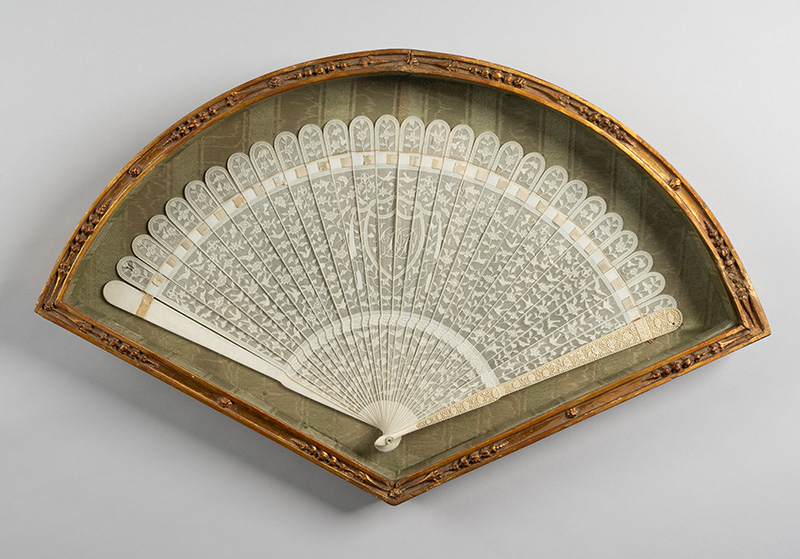
Philadelphia merchants and supercargoes often procured objects for loved ones. Another example in the ISM exhibition is a late-18th-century fan made for Dorothy Dale (1767–1832), the wife of Captain Richard Dale, who served in both the Continental and United States Navies and participated in the China trade. At first glance, this delicate fan, made in Canton, looks like it is fashioned of fine lace, but it is actually made of hand-carved ivory and is customized with Mrs. Dale’s initials.
The narrative of American involvement in the China trade, while rooted in the 18th century, continues to the present. Its impact can be seen in the wide range of goods that still flow into the United States as well as in ongoing political debates about Sino-American relations. Seeking Profit and Power, which is on view through January 3, 2028, is a thought-provoking exhibition that provides important historical context for our nation’s 250-year history with China.
- Letter, Thomas Mifflin, President, Congress of the Confederation of the United States, to the Emperor of China, January 13, 1784. Collection of the Independence Seaport Museum.
Peter Seibert is the President and CEO of the Independence Seaport Museum.
A print version of this article was published in The Magazine of the Decorative Arts Trust, one of our most popular member benefits. Join today!