
Challenging Masterpieces: Art and Identity in American Furniture
Click on images to enlarge them and view captions.
by Josh Lane
The exhibition Challenging Masterpieces: Art and Identity in American Furniture and the accompanying catalogue will feature 80 examples of furniture drawn from Winterthur’s renowned collection to mark the 75th anniversary of the museum’s founding. It will offer the rare chance to see iconic pieces in a new light as they are temporarily relocated from the museum house to the galleries, some for the first time.
Celebrating the breadth and depth of the furniture collection amassed by Henry Francis du Pont, Challenging Masterpieces will foreground design, materials, and workmanship while exploring the historical context of Mr. du Pont’s collecting activities. Arranged chronologically, the first of three sections will explore the emergence of the market for American antique furniture in the 1870s. The second will examine the idea of the aesthetic masterpiece and trace the maturation of this market from the 1920s, when Mr. du Pont began to collect, to his death in 1969. The third will consider the expansion and diversification of Winterthur’s collection as the field branched in new directions starting in the 1970s. Throughout, visitors will engage the questions: What makes a masterpiece? Who decides? How might a deeper understanding of the legacy of “masterpiece” inform inclusive, expansive visions of furniture-making, collecting, and connoisseurship today?
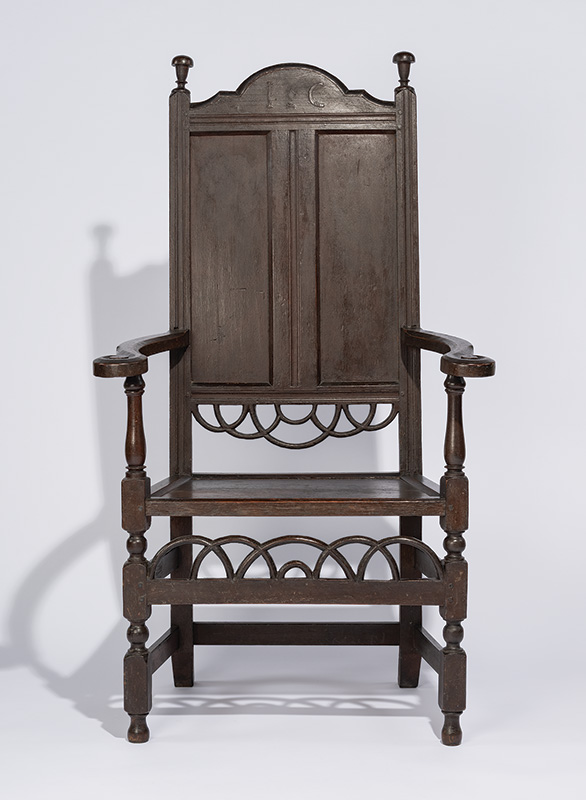
Before the 1870s, appreciation of antique American furniture was largely relegated to their value as relics or heirlooms. A great chair that descended in the Conklin family of Huntington, Long Island, exemplifies this perspective (figure 1). The chair was probably made for Israel Conklin Sr. (1718–77) and Deborah Smith Conklin (b. 1723) around the time of their marriage in 1743. According to the inscription on a plaque that a descendant affixed to the back of the crest, the chair gained additional significance when George Washington occupied the seat while visiting the family during his 1790 tour of Long Island.
Through the late 19th century, displays at world’s fairs like the 1876 Philadelphia Centennial Exhibition and 1893 World’s Columbian Exposition helped raise the profile of early American furniture as aesthetically worthy in its own right. But the watershed moment occurred in 1909 when The Metropolitan Museum of Art opened the Hudson-Fulton exhibition. Organized to commemorate the 300th anniversary of Henry Hudson’s travels up the Hudson River and the 100th anniversary of Robert Fulton’s earliest commercially successful steamboat, it was the first time a major art museum exhibited American antiques. On loan from private collections, notably that of Boston lawyer Eugene Bolles, many of the objects were previously unknown. For collectors and the curious alike, the show proved revelatory—and popular—establishing the allure of American furniture. The success of the show prompted Bolles, with collector Luke Vincent Lockwood and Met administrator Henry Watson Kent, in January 1910, to found the Walpole Society, a selective, all-male club for American antiques collectors and curators. Along with other connoisseurs and dealers—a loosely aligned group of elite white men—they established the criteria for identifying prestigious aesthetic masterpieces of American antique furniture.
After 1909, public interest in antiques connoisseurship and collecting quickened, further spurred by the opening of the American Wing at The Metropolitan Museum of Art in 1924. Richard T. H. Halsey, Walpolean, Met trustee, and founding curator of the American Wing, extolled furniture masterpieces as embodying true American taste, values, and artistic genius. In his view, their display would elevate public taste and “Americanize” new immigrants by “mustering resistance to imported alien tendencies.”1
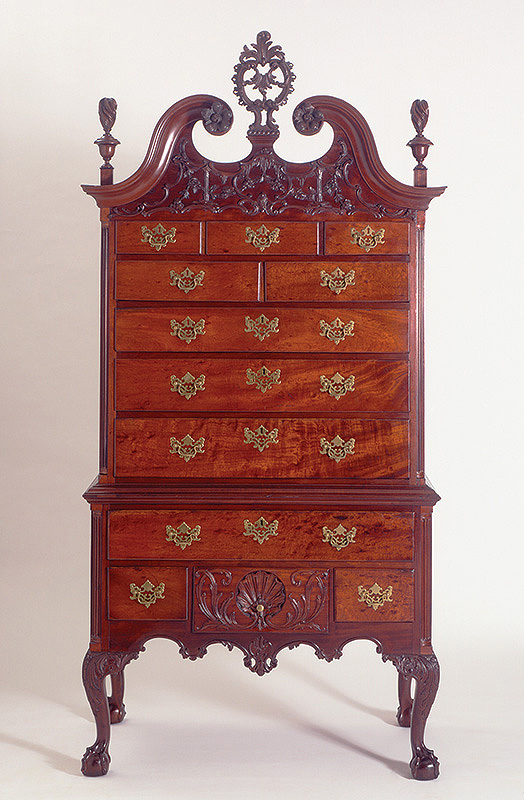
The Magazine ANTIQUES debuted in January 1922, just as Mr. du Pont began to buy American antiques and interior woodwork, first for his summer home, Chestertown House, in Southampton, Long Island, and then for his ancestral home, Winterthur, in Wilmington, DE. In late April 1929, his winning bid for the celebrated Van Pelt high chest set an auction record (figure 2). Other prestige masterpieces soon followed, many of which had been featured in ANTIQUES.
Mr. du Pont ensured the continuation of traditional connoisseurship when he established Winterthur Museum in 1951. He hired Joseph Downs (a Halsey protégé from The Met) and Charles F. Montgomery to catalogue the collection and help with the transition from private home to public institution. After Downs’s death in 1954, Montgomery assumed greater leadership responsibilities, playing a pivotal role in establishing the Master’s Program in Early American Material Culture in association with the University of Delaware in 1956. In 1961, under the auspices of the Walpole Society, he published “Some Remarks on the Science and Principles of Connoisseurship,” codifying the traditional method of evaluating objects that continues to undergird furniture scholarship to the present.
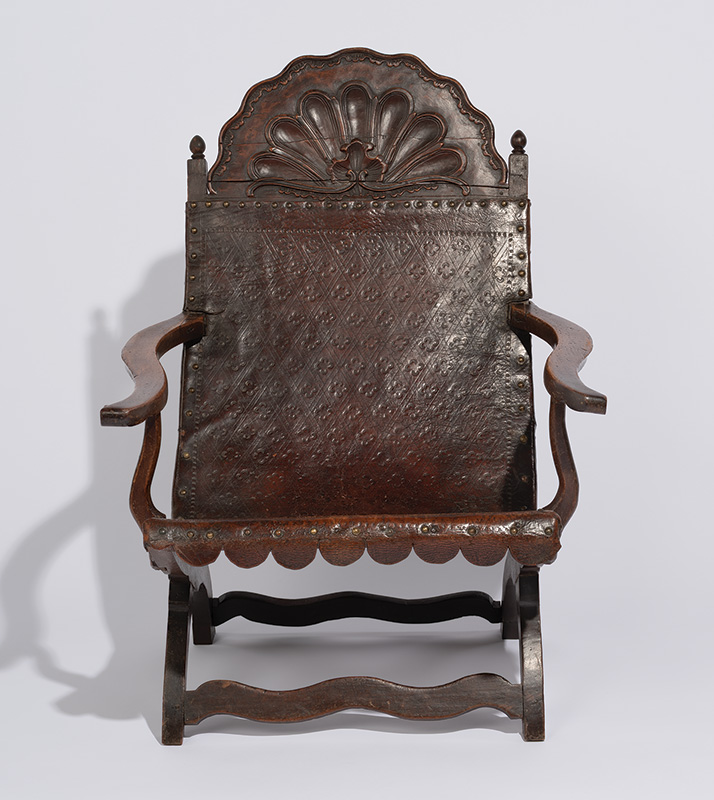
Winterthur continues to lead the way in challenging and revising the idea of masterpiece. Featuring acquisitions made after Mr. du Pont’s death in 1969 alongside familiar favorites, Challenging Masterpieces showcases curatorial efforts to expand the canon. The museum now advocates for a more inclusive definition that acknowledges a wider range of artists, and the creativity of craftspeople working in time periods previously deemed outside the scope of the collection. Recent additions—such as a mid-18th-century butaca from Campeche (figure 3), an early-19th-century Martinique armoire, and a late-19th-century Mi’kmaq quillwork chair—offer fresh insights into the global circulation of goods and the cross-pollination of design. Moving forward, the expanded parameters of the masterpiece label will honor Mr. du Pont’s legacy by embracing underrepresented regions, communities, and eras, ensuring the collection remains a catalyst for dialogue on design and creativity, and source of inspiration for all. Challenging Masterpieces will be on view from September 2026 through May 2027.
- Stillinger, Elizabeth. The Antiquers (New York: Alfred A. Knopf, 1980), 205.
Josh Lane is the Lois F. and Henry S. McNeil Curator of Furniture at Winterthur Museum, Garden & Library.
A print version of this article was published in The Magazine of the Decorative Arts Trust, one of our most popular member benefits. Join today!