
Workshop of the World: Arts and Crafts in Philadelphia
Click on images to enlarge them and view captions.
by David L. Barquist and Colin Fanning
To celebrate the Philadelphia Museum of Art’s 150th anniversary, the exhibition Workshop of the World: Arts and Crafts in Philadelphia brings together more than 250 works of furniture, ceramics, stained glass, metalwork, textiles, paintings, sculpture, and works on paper by Philadelphia-area artists, architects, and manufacturers. In response to the aesthetic and social challenges of industrialization, these makers looked to pre-industrial forms and techniques to improve the quality of manufactured goods and reshape daily life through artistic collaboration. They embraced the British Arts and Crafts movement’s principles of handwork, simplicity in design, and truth to materials—influentially articulated by writers and makers like John Ruskin and William Morris—with the goal of transforming the things people lived with and how they were made.
Although the American Arts and Crafts Movement has received extensive study and has been the subject of several major museum exhibitions, less attention has been paid to its Philadelphia manifestations, aside from monographs on a few figures such as Violet Oakley, William Lightfoot Price, Henry Chapman Mercer, and Samuel Yellin. Although these leading artists are a prominent part of this exhibition, the project re-surfaces many lesser-known artists and other actors who shaped Philadelphia’s arts and industries. Many of these are women artists, immigrant craftspeople, or community-builders who are not currently well integrated into histories of American art, and the exhibition offers a valuable opportunity to bring their stories to light.
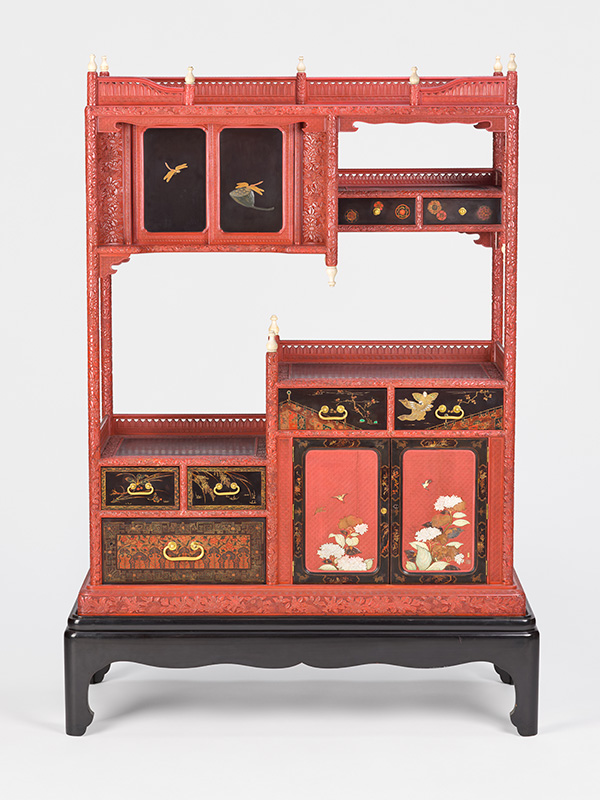
The exhibition unfolds following a largely chronological organization, beginning with the Centennial Exhibition, which celebrated the nation’s emergence as an industrial powerhouse. The fair also exposed visitors to design-reform principles and craft works from many nations, such as Japan (figure 1), inspiring new ambitions for American art and design. Among the Philadelphia institutions founded after the Centennial was the Pennsylvania Museum and School of Industrial Art—later to become the Philadelphia Art Museum and the University of the Arts—modeled on London’s South Kensington Museum and National Design School. This institution had a formative influence on many Arts and Crafts artists, creating collections that inspired them and teaching both hand skills and industrial processes.
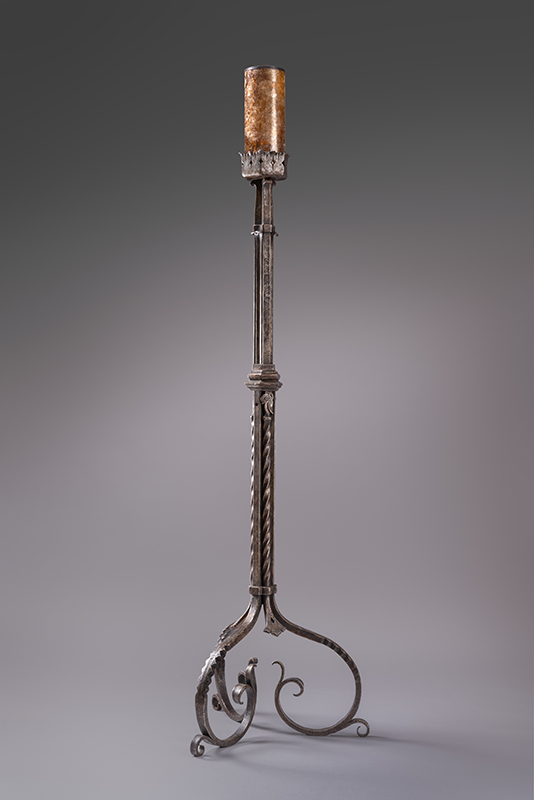
Situated within the larger context of industrial Philadelphia, artists such as Samuel Yellin and Nicola d’Ascenzo championed the inherent value of craft and its potential for reshaping the industrial world. They established successful, large-scale workshops that relied on a factorylike division of labor to reach a national market. At the same time, works like Yellin’s Standing Candelabrum (figure 2) drew upon Medieval models and were created using labor-intensive hand techniques. Philadelphia architects brought these artists together to work on projects ranging from the Mask and Wig Clubhouse in Philadelphia, to the Washington Memorial Chapel at Valley Forge, inscribing Arts and Crafts principles on Philadelphia’s urban and suburban fabric.
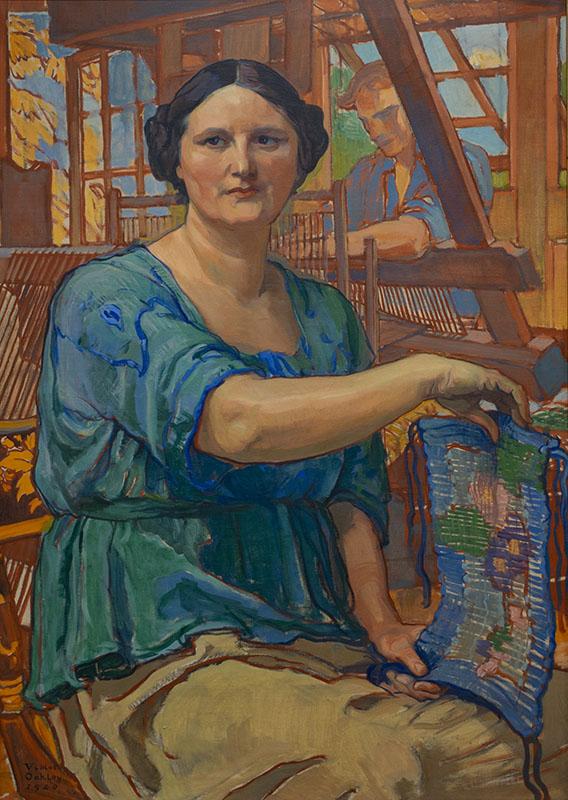
Other Philadelphia followers of the Arts and Crafts movement left the industrialized city to create rural communities with small-scale workshops, inspired by William Morris’s novel News from Nowhere or C.R. Ashbee’s Guild of Handicraft in the Cotswolds. These included Rose Valley in Delaware County, New Hope in Bucks County, Bryn Athyn in Montgomery County, and Arden in Delaware. Ethel and Donald Davenport were paradigmatic examples: both graduates of the Pennsylvania Museum School, they left their respective careers in social work and textile manufacturing to take up handweaving in New Hope. Violet Oakley’s powerful portrait of the couple (figure 3) underscores the collaborative nature of these idealistic efforts.
Arts and Crafts concepts evolved further after World War I, amid shifts in taste towards European Modernism on the one hand and Colonial Revival on another. These two trends came together in the 1926 Sesquicentennial Exhibition, where a re-creation of Philadelphia’s 18th-century High Street coexisted with Art Moderne pavilions celebrating economic and technological innovations. A new generation of Philadelphia artists who embraced Arts and Crafts principles, such as Wharton Esherick, pursued individual paths outside the mainstream instead of forming intentional collectives, carving out space for self-consciously modern approaches to craft.
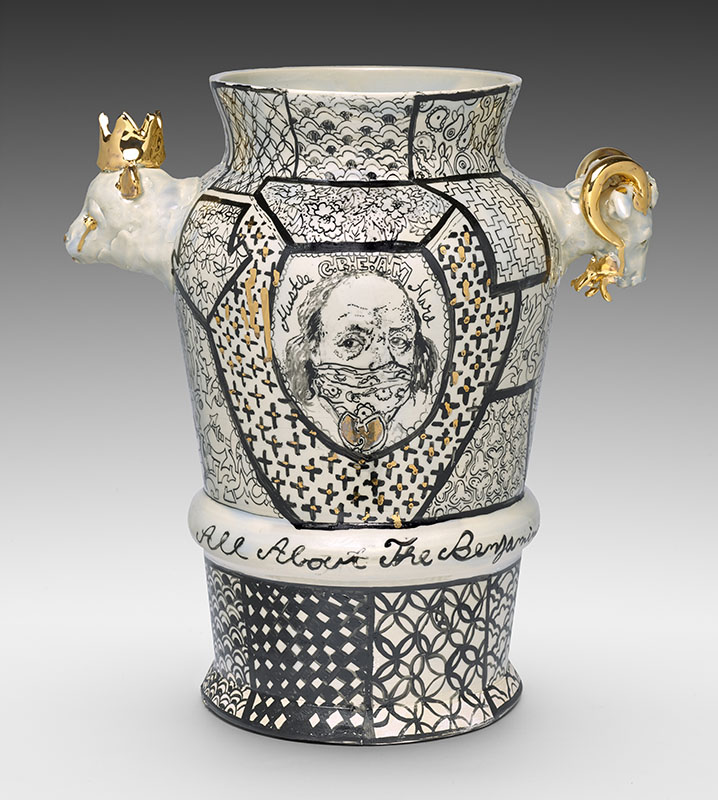
The exhibition concludes with a selection of contemporary artists who built upon the legacy of Arts and Crafts in the Philadelphia region. Artists like Roberto Lugo (figure 4) trained in, taught at, and otherwise shaped the institutions that had formed in earlier generations, mining and remixing the principles of the movement to respond to the specific social and political challenges of our own time. In doing so, they have renewed and transformed debates around the value of the handmade, the integration of art into daily life, and the importance of beauty. Together with their forebears, their stories illustrate the diverse strategies of American artists and institutions in grappling with the impacts of industrialization and reimagining the ideals of the Arts and Crafts movement.
Workshop of the World: Arts and Crafts in Philadelphia is on view at the Philadelphia Museum of Art from July 12 through October 11, 2026.
David L. Barquist is the H. Richard Dietrich, Jr., Curator of American Decorative Arts and Colin Fanning is the Louis C. Madeira IV Assistant Curator of European Decorative Arts at the Philadelphia Museum of Art.
A print version of this article was published in The Magazine of the Decorative Arts Trust, one of our most popular member benefits. Join today!