
The Politics of Taste: The Presidential Houses of Virginia and Washington
Click on images to enlarge them and view captions.
by Amy Hudson Henderson
“The true character of Americans is mirrored in their homes,” asserted Moreau de Saint-Méry in 1798 after he found refuge in the United States during the French Revolution. The members of the Trust’s May 2026 Sojourn tested this observation during our tour of presidential houses in Virginia and Washington, D.C. As we visited George and Martha Washington’s Mount Vernon, Thomas Jefferson’s Monticello, James and Dolley Madison’s Montpelier, Lewis and Betty Washington Fielding’s Kenmore, and the White House, we considered Moreau’s words and how a house can serve as a symbol of self. Walking through these homes, we examined what bricks and stones, spatial layouts, furniture, fabrics, ceramics, silver, and glassware could reveal about the first presidents, their spouses, children, and domestic servants (enslaved and free).
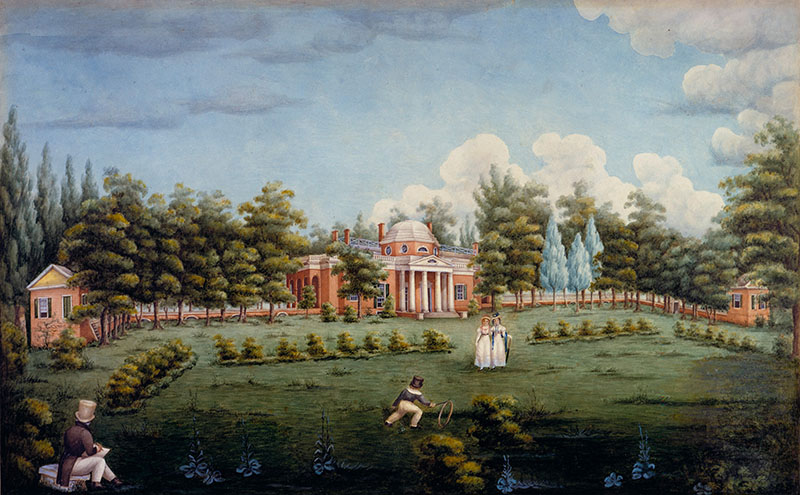
One key theme was the idea of gentility. Great houses such as these were designed to be much more than mere shelter from the elements, or private retreats from the world. Rather, they were conceived as centers of social and cultural life (figure 1). Guests visited to see family and friends as well as for business, learning, and politics. And, once inside the front halls, parlors, and dining rooms, guests appraised their hosts by the size of the house, the elaboration of its ornaments, the stylishness of its furnishings, and the grace with which owners navigated the spaces. Scholars have long written about the house—and all its contents—as material markers of an owner’s refinement and, in turn, his or her taste, gentility, politeness, sociability, and civility. These concepts describe the behaviors and attitudes of elite people in the founding generation that informed their perceptions of authority, status, and leadership.
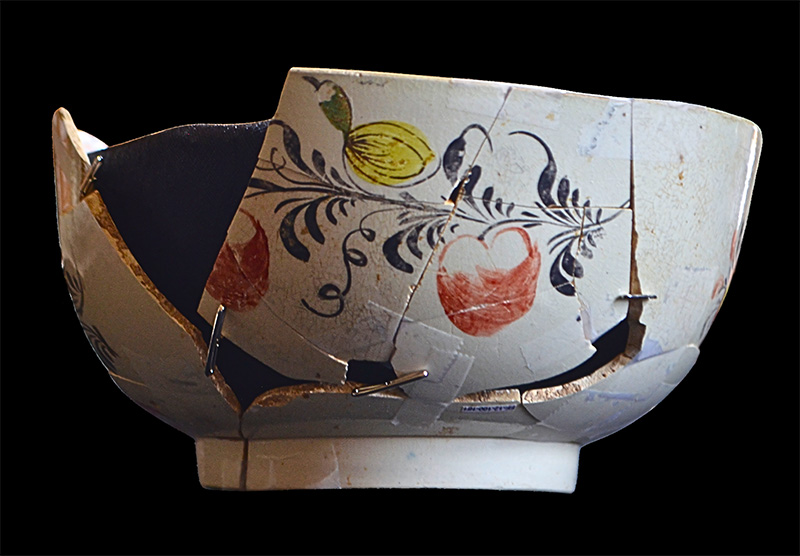
We had the opportunity to see first-hand objects that give insight into several significant families. The evidence of an at-home repair on a small creamware punch bowl speaks to the importance of owning stylish goods (figure 2). Mary Ball Washington (George Washington’s mother) likely acquired this drinking vessel in the 1760s when creamware was just entering the American market. As a hostess, Mary Washington measured expensive, imported spirits, spices, citrus, and sugar into the bowl, took a sip, then passed the punch around the table for each guest to take their turn. With this ritual, she exhibited not only her financial resources, but also her hospitality and sociability—behaviors of a genteel lady. As a young widow raising a large family, though, Mary needed to conserve those very resources. So, when the bowl broke, she had her enslaved servants make a glue and repair it. No longer watertight and useful for drinking, the punch bowl still retained its symbolic value. Although found at Kenmore today, we can envision Mary displaying the bowl high on a shelf at Ferry Farm, her home near Fredericksburg, VA, knowing that even when damaged, the punchbowl reinforced her gentility and thus elite status.
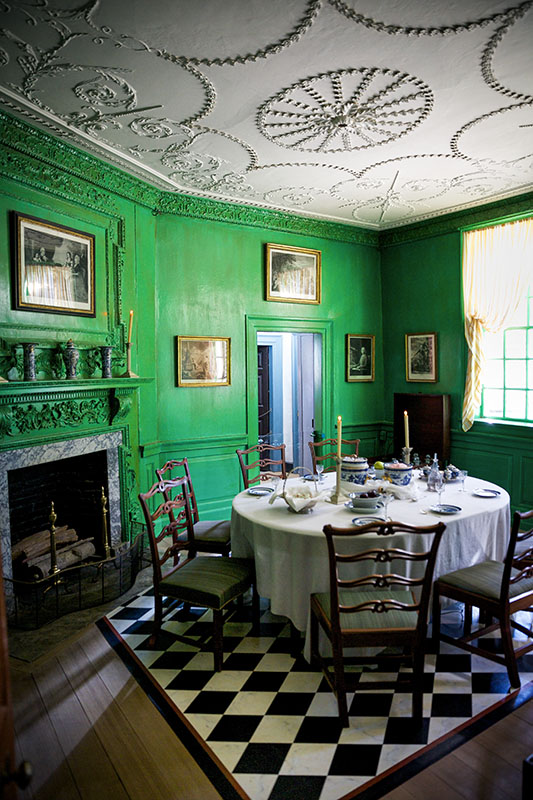
Together, Mount Vernon and Kenmore illustrated design mimicry, another strategy Americans used to reinforce their taste and emphasize their membership within a network of genteel families. As we examined the exquisite plaster ceilings of the two houses, we learned that George Washington so admired the impressive work of his sister and brother-in-law’s home, he hired the same artisan (figure 3). Likely trained in Europe, this “stucco man” employed his knowledge of patterns from popular British books by Abraham Swan and Batty Langley. The resulting four ceilings (three at Kenmore, one at Mount Vernon) are defined by medallions and rosettes intertwined with cascading scrolls, arabesques, ropes of leaves, baskets of fruit and flowers, and festooned husks. They are truly masterpieces, the likes of which are found in few other residences from this region or period, and the exclusivity of the plaster ceilings draw the Washington and Lewis families closer together.
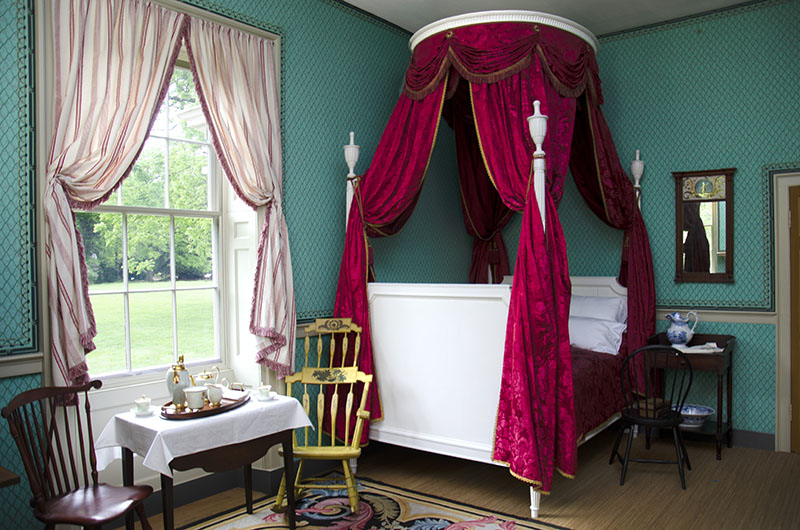
Finally, a bed at Montpelier, of a French design known as lit à la polonaise, highlighted how Americans relied upon friends to develop their genteel style (figure 4). Newly married, Dolley and James Madison trusted Elizabeth and James Monroe to shop for them in Paris, where the latter was stationed as ambassador. Believing the Monroes had excellent taste and would send them affordable—yet elegant—furniture, they commissioned a bedstead and curtains just like this one. Such proxy shopping brought the cosmopolitan fashions of Europe to America and simultaneously united the two families as they invested in a shared, material culture that proclaimed their refinement.
Many scholars have written about these homes. It is one thing to read about the presidents and their families, yet quite another experience to walk in their footsteps, to see their objects, and to hear their stories. The talented and dedicated staff at all these sites made this trip truly special.
- Moreau de Saint-Méry, Moreau de Saint-Méry’s American Journey, 1793-1798, translated by Kenneth Roberts and Anne M. Roberts, introduction by Stewart L. Mims (Garden City, NY: Doubleday & Co., 1947), 263.
Amy Hudson Henderson, PhD, is an independent art historian and museum consultant. Her book, Furnishing the Republic: Material Culture, Gender, and Politics in the Nation’s Capital, 1789–1800, will be released by Oxford University Press in early 2027.
A print version of this article was published in The Magazine of the Decorative Arts Trust, one of our most popular member benefits. Join today!